Chicago Offers Ballots in 12 Languages Despite English Proficiency Requirements
Chicago provides ballots in 12 languages, including Gujarati and Arabic, despite English proficiency rules for citizenship.
2 min read
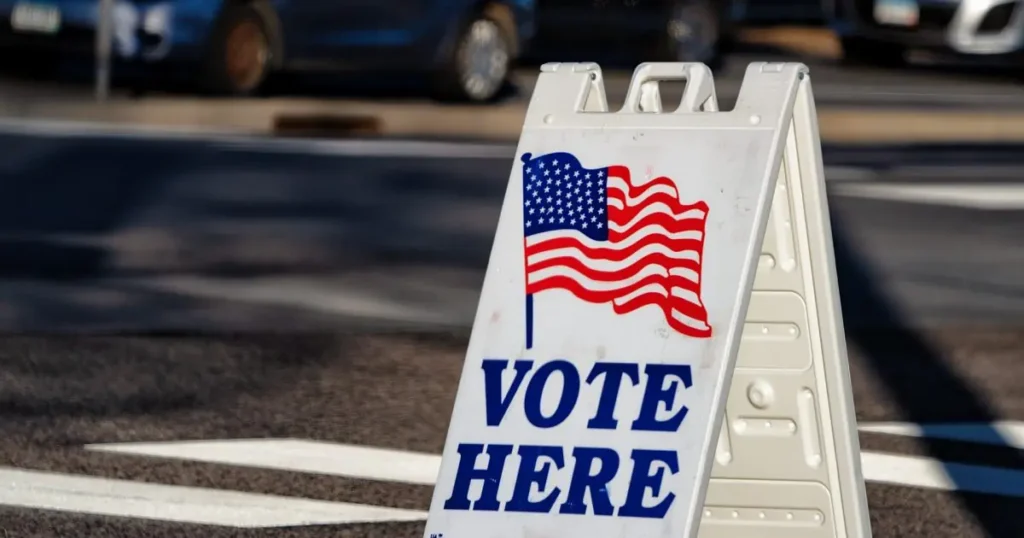
Chicago has expanded its ballot language options to include 12 languages, including Gujarati, Urdu, Arabic, and Tagalog, despite the city’s naturalization requirements that generally mandate English proficiency for citizenship applicants. The city’s Board of Elections claims the move aligns with a Cook County ordinance to ensure uniformity in language access across the county.
Language Options and Assistance
The language options include English, Spanish, Chinese, Hindi, Korean, Tagalog, Polish, Gujarati, Urdu, Ukrainian, Arabic, and Russian. Paper ballots in a smaller set of these languages are available by request in designated precincts. Bilingual poll workers are assigned in some locations for Spanish, Chinese, Hindi, Korean, Tagalog, and Polish.
Federal Requirements and Expansion
Federal law under Section 203 of the Voting Rights Act requires language assistance for Spanish, Chinese, and Hindi speakers based on population thresholds. The Chicago Board added the remaining languages to maintain consistency with county-wide standards.
Riddle me this…Ballots in Chicago are being printed and offered in 12 different languages including…Gujarati, Urdu, Tagalog, Ukrainian, Arabic and Russian and it’s available on touchscreen machines at every polling place.
Illinois Republican Party Chairman Bob Grogan has criticized the expansion, calling it a ‘solution in search of a problem’ and ‘big-city virtue signaling.’ He argued that the sheer number of translations complicates election monitoring, as most judges do not speak Gujarati, Urdu, Arabic, or other less common languages. Grogan also noted that many immigrants from these communities already speak English, and English is an official language in India, the source of Gujarati and Hindi.
Ballot Usage Data
Foreign language ballot usage from the March primary reported by Fox showed only nine ballots cast in the English-Gujarati option, 15 in English-Urdu, 10 in English-Arabic, and 25 each in English-Russian and English-Ukrainian. Higher numbers appeared for more established languages: 4,474 English-Polish, 2,183 English-Chinese, and 664 English-Hindi. Overall, multilingual ballots made up about 1.85 percent of ballots cast citywide.
Grogan argues that even a small number of ballots in an obscure language creates a verification vulnerability, and the risk increases if volume grows. Naturalization applicants must generally demonstrate the ability to read, write, and speak basic English and pass a civics test. Exceptions apply for those over 50 with 20 years of residency or over 55 with 15 years, who may take the civics test in their native language with an interpreter.
Source: The Gateway Pundit