U.S. Military Deploys Counter-Drone Tech to Combat Cartel Threats
U.S. military enhances border security with counter-drone technology as cartel drone activity rises along the U.S.-Mexico border.
3 min read
As the need for advancements in counter-drone technology becomes increasingly evident, the southern border has emerged as a critical testing ground for the evolving challenges posed by small, unmanned aircraft systems (sUAS). In response to the growing threat of cartel drone activity, a joint order from the Departments of Transportation, Defense, and Homeland Security has imposed strict restrictions on unauthorized drone operations within 1.15 miles of the U.S.-Mexico border, with a 400-foot altitude ceiling in effect from October 2026 through October 2027. This measure is a direct response to the escalating use of drones by cartels to disrupt border security operations.
Cartel Drone Activity Surges, Prompting Enhanced Security Measures
Recent data from the Department of Homeland Security highlights the urgency of the situation. Between August 22 and September 24, 378 cartel drones were detected along the southern border. Of these, 75 were intercepted and turned back, 15 were engaged by countermeasures, and one was captured intact. This surge in drone activity has forced the U.S. military to ramp up its efforts to counter these threats effectively.
Training and Deployment of Counter-sUAS Fly-Away Kit
In response to the increasing drone activity complicating border operations, U.S. Northern Command (USNORTHCOM) has been actively addressing these technological and operational challenges. One of the key initiatives has been the training of soldiers from Joint Task Force-Southern Border (JTF-SB) on the use of the Counter-small UAS fly-away kit (FAK), a mobile system capable of detecting, tracking, and neutralizing rogue drone incursions.
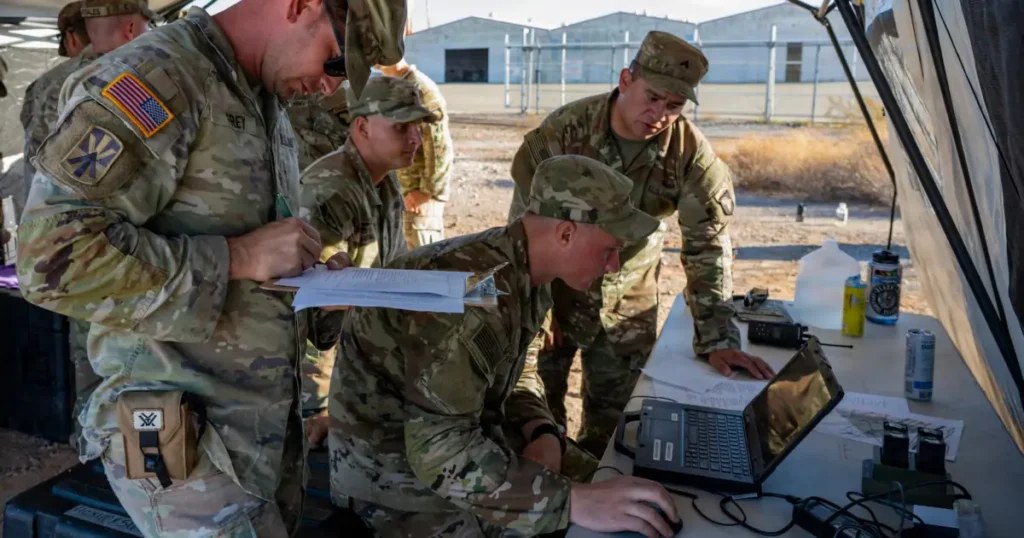
Last month, a 22-member team of soldiers completed their FAK training and certification at Yuma Proving Ground in Arizona. This team is now equipped to deploy the FAK along the southern border or to other locations in the U.S. as needed. Chief Warrant Officer 3 Joey Frey, the lead evaluator, explained that soldiers first received classroom instruction on the FAK, which encompasses various sensors and effectors designed to detect, identify, track, and neutralize potential drone threats. After the indoor training, they engaged in hands-on practice in the Arizona desert.
“Each soldier seeking certification had to demonstrate proficiency in setting up and operating the FAK, as well as utilizing its command and control systems during simulated drone incursions,” CWO 3 Frey explained. The training process ensured that soldiers were well-prepared to handle real-world scenarios involving drone threats.
Leadership Endorses New Counter-drone Technology
Rear Admiral Willie Carmichael, the Operations deputy director for USNORTHCOM, emphasized the significance of the validation of the JTF-SB’s new counter-sUAS FAK in an October 8 news article. He noted that this advancement is a crucial step in supporting installations and interagency partners in their defense against drone incursions.
First Lieutenant Zachary Irwin from the 101st Airborne Division expressed his excitement about working with the FAK, describing it as a valuable tool that would enhance the JTF-SB mission and contribute to creating a “sky fence” to bolster security along the border. He highlighted the difference between theoretical knowledge and hands-on experience, noting that observing the FAK’s capabilities in action was enlightening.
Plans for Expanding FAK Training and Deployment
According to CWO 3 Frey, this new technology promises to change the game in terms of security measures around the country. “As USNORTHCOM continues to expand its capabilities,” he pointed out, “plans are in place to train a third FAK team in Alaska later this year, further strengthening the command’s ability to counter drone threats across the continental United States.”
The successful training and deployment of the counter-sUAS fly-away kit not only enhance operational readiness but also pave the way for future advancements in drone defense technology. With ongoing initiatives to expand training and capabilities, the U.S. military is poised to effectively address the multifaceted challenges posed by unmanned aerial systems, ensuring a fortified response to emerging threats and reinforcing the safety and security of the nation’s borders.
Source: The Gateway Pundit