France and UK Develop New Supersonic Strike Missile
France and Britain are developing a new supersonic missile capable of striking warships and targets far beyond current anti-ship weapons.
2 min read
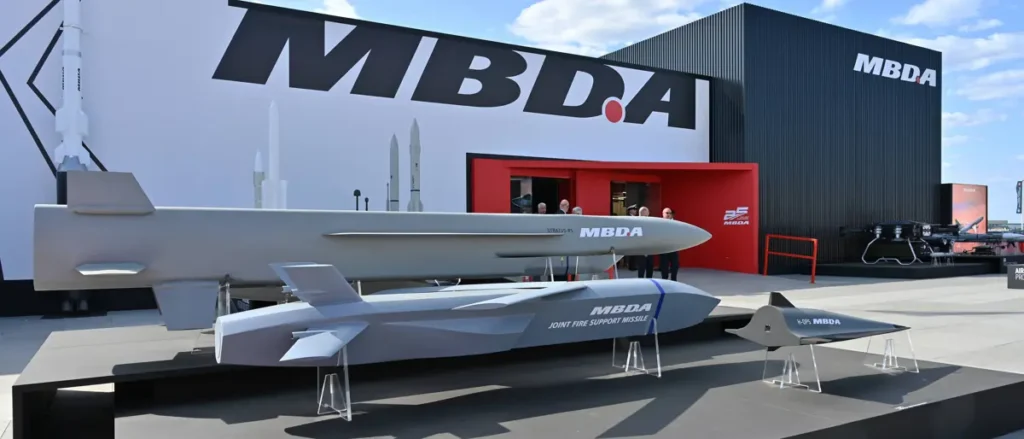
France and the United Kingdom are collaborating on the development of a new supersonic strike missile, the Stratus RS, designed to significantly enhance Europe’s long-range offensive capabilities. This missile is expected to surpass the range of the existing Exocet anti-ship missile, which can travel over 124 miles, according to European defense manufacturer MBDA.
Advanced Capabilities and Mission Flexibility
The Stratus RS is engineered to perform multiple missions, including targeting enemy warships, striking deep inland military assets, and neutralizing sophisticated air defense systems. Its design also includes the potential to threaten high-value aircraft such as airborne early-warning platforms and aerial refueling tankers.
The missile will be equipped with a throttleable liquid-fueled ramjet engine, enabling it to maintain supersonic speeds while maneuvering against enemy defenses. This capability, combined with its ability to fly at both high and low altitudes, complicates interception efforts, according to Defense News.
Technology and Guidance Systems
The missile incorporates radio-frequency guidance and synthetic aperture radar technology, allowing it to engage targets on land and strike enemy vessels from above. French defense electronics manufacturer Thales is supplying the targeting technology for the weapon.
MBDA is also developing a second missile, the Stratus LO, which prioritizes stealth over speed. This subsonic weapon will carry a larger warhead, suitable for attacking fortified positions such as bunkers.
Deployment and Strategic Context
Both missiles are intended to operate independently or cooperatively, combining high-speed attacks with stealth capabilities to overwhelm enemy defenses. They are expected to be launched from French Rafale fighters, Eurofighter Typhoons, and future aircraft under the British-Italian-Japanese Global Combat Air Programme. Modified versions could also be deployed from warships and ground-based platforms.
The project is part of NATO’s broader strategy to strengthen long-range offensive capabilities amid growing military threats from Russia. Britain has committed over £400 million to hypersonic and long-range weapons programs this year, including cooperation with France, Germany, and Italy.
The Stratus RS remains years away from deployment, with flight testing expected before 2030 and operational use planned for the early 2030s. MBDA is awaiting a formal development contract from France’s Directorate General for Armament.
Source: Daily Caller