Trump Expands Guard Role in D.C. as Dems Push for Troop Withdrawal
White House authorizes more military equipment for D.C. law enforcement as Democrats seek to recall out-of-state National Guard units.
4 min read
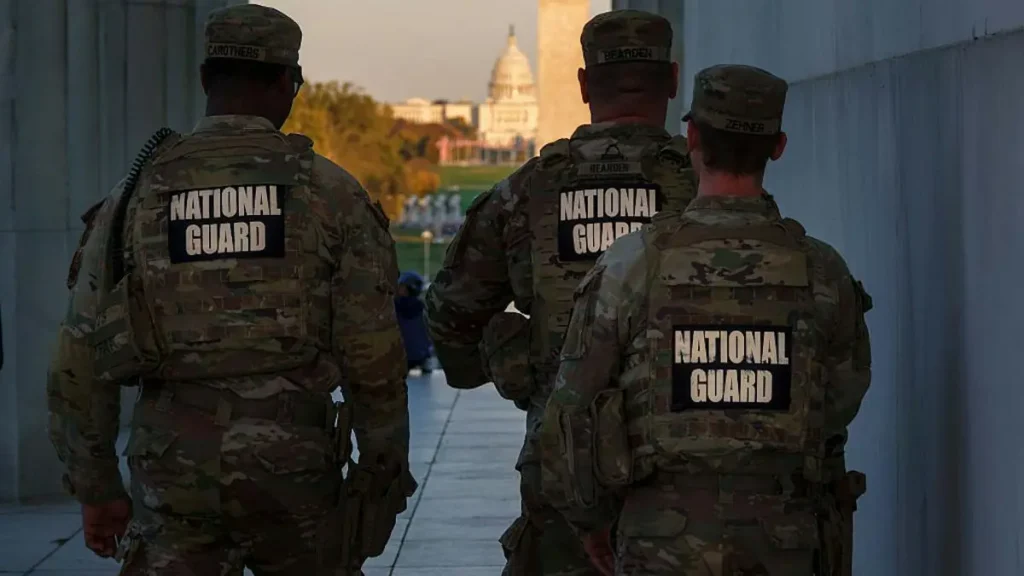
President Donald Trump’s administration has authorized the National Guard to use military vehicles, marked police cars, and boats to support law enforcement operations in Washington, D.C., in what officials describe as an effort to address the city’s so-called ‘crime emergency.’ The expansion comes as local Democrats move to push hundreds of out-of-state guardsmen out of the capital, signaling a growing political and legal battle over the military’s role in the nation’s seat of government.
Expanded Military Support for D.C. Law Enforcement
Secretary of War Pete Hegseth issued an October 29 memo authorizing the National Guard to use several dozen marked police vehicles, Humvees, light medium tactical vehicles, and boats through the end of the year. The equipment is intended to support law enforcement operations, including drug busts and perimeter security for operations targeting suspected gang leaders and drug traffickers in the Anacostia area of Southeast Washington.
The memo explicitly prohibits Guard members from pursuing suspects or making arrests, but it does require that federal law enforcement officers ‘must always be on board’ Guard vessels to handle arrests, including when suspects attempt to escape by jumping into the river. The authorization also prohibits the boats from conducting surveillance on American citizens, emphasizing the distinction between military support and direct law enforcement actions.
Political Shifts and Democratic Pushback
The timing of the expansion comes just days after the November 3 midterm elections, which handed Democrats control of both chambers of Congress and victories in several states that currently have National Guard personnel deployed in Washington. D.C. Councilmember Brooke Pinto, a Democrat who chairs the Council’s public safety committee, announced her intention to urge incoming Democratic governors in five states to withdraw their troops from the District as soon as they take office, according to The Washington Post.
Pinto noted that approximately 628 National Guard members currently deployed in Washington come from Georgia, Iowa, Nevada, Ohio, and Texas — all states that elected Democratic governors this week. ‘After Tuesday night, the tide is turning,’ Pinto said during a Council hearing on the federal law enforcement and military presence in the city. ‘A tsunami of change is coming to our city.’
Other Democratic officials, including Councilmember Elissa Silverman and former Councilmember Robert C. White Jr., the Democrat elected Tuesday as the District’s nonvoting delegate to Congress, supported the effort to recall the troops. However, the incoming governors have not yet announced whether they intend to withdraw their National Guard personnel, leaving the Trump administration’s response to such a move uncertain.
Legal Challenges and Cost Concerns
The deployment of National Guard units in D.C. faces mounting legal and political challenges. D.C. Attorney General Brian Schwalb has challenged the administration’s authority to deploy out-of-state National Guard units, arguing that the president exceeded his legal powers. A federal appeals court heard arguments in October, but has not set a deadline for a decision.
Trump first deployed National Guard troops to Washington in August 2025 after declaring a crime emergency. The mission has been extended repeatedly and is currently expected to continue through Inauguration Day 2029. Troop levels have fluctuated, reaching approximately 5,000 during the summer, with personnel drawn from 20 states and Puerto Rico.
The deployment carries a significant price tag. Defense Department officials told Sen. Elizabeth Warren (D-MA) in August that the operation was expected to cost taxpayers approximately $1.4 billion through the end of 2028. The financial burden has sparked criticism from both sides of the aisle, with some lawmakers questioning the necessity and long-term implications of the military’s involvement in the city’s law enforcement.
Broader Implications for National Guard Use
The latest dispute highlights a broader debate over the use of National Guard units in domestic operations. While the Trump administration frames the deployment as a necessary measure to combat crime and ensure public safety, critics argue that the use of military force in civilian affairs is both legally and politically problematic. The situation also raises questions about the balance of power between federal and state authorities, particularly as incoming Democratic governors consider whether to recall their troops.
As the political landscape shifts, the role of the National Guard in D.C. remains a contentious issue. The administration’s continued reliance on military assets for law enforcement underscores the deepening divide over how to address urban crime and the growing influence of state-level political actors in shaping the federal response.
Source: Daily Wire