El-Sayed Claims Michigan Is ‘Capital of Arab America’ as Senator-Elect
Michigan Senator-elect Abdul El-Sayed declares the state the ‘capital of Arab America’ amid political and religious controversies.
2 min read
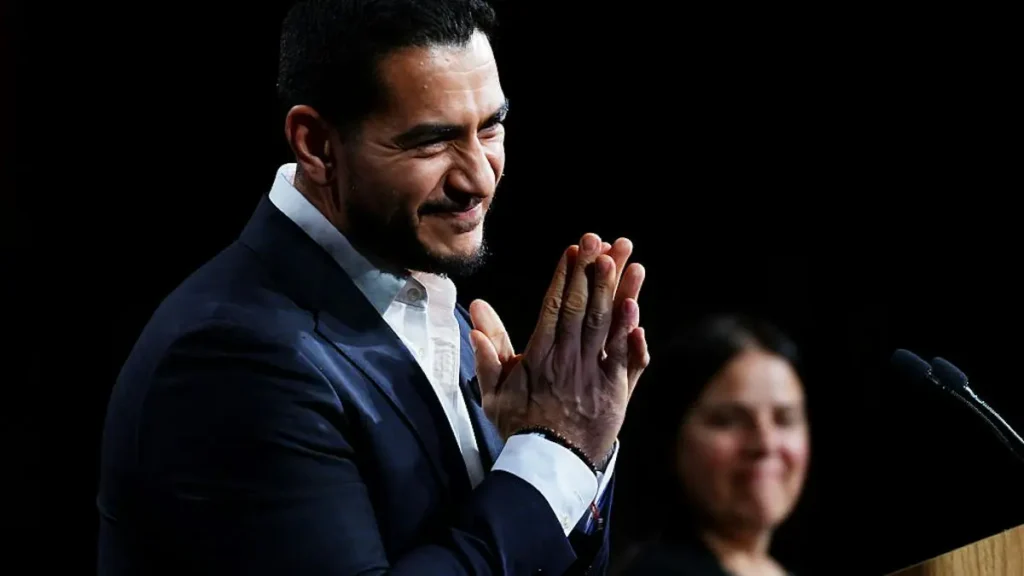
Abdul El-Sayed, the newly elected senator from Michigan, has made his Arab-American identity a central theme in his post-election remarks, declaring that the state is the ‘capital of Arab America’ rather than Washington, D.C. El-Sayed, who defeated Republican Mike Rogers, emphasized his cultural and political ties to the Arab community during his victory speech in Detroit.
Political Identity and Religious Statements
El-Sayed’s remarks came after a campaign marked by criticism of Israel and the U.S. relationship with the Jewish state. He also faced scrutiny over his associations with activists who have made controversial statements about the October 7 Hamas attacks. During his election-night speech, El-Sayed switched between English and Arabic, using the phrase ‘Inshallah’ to express hope and later ‘Alhamdulillah’ to celebrate his victory, highlighting his Muslim and Arab heritage.
Controversies and Associations
El-Sayed’s election makes him the first Muslim in U.S. Senate history, giving Michigan’s Arab-American and Muslim communities a prominent voice in Washington. However, his post-election rhetoric has raised questions about his political movement and the company he keeps. He has appeared with Hasan Piker, a communist influencer who has made controversial comments about Israel and the 9/11 attacks, and with Osama Siblani, a community leader who has referred to Hamas and Hezbollah as ‘freedom fighters.’
Wikipedia Edits and Controversies
A separate controversy emerged over edits to El-Sayed’s Wikipedia page, with an anonymous editor altering content to downplay controversies and remove references to tensions with Michigan’s Jewish community. The edits included changing descriptions of El-Sayed’s medical background and his associations with Piker, raising questions about the motives behind the changes.
Broader Implications
El-Sayed’s victory and his post-election statements have sparked broader discussions about the role of Arab-American and Muslim voices in U.S. politics. His stance on Israel and the Gaza conflict has drawn mixed reactions, with some praising his advocacy for Palestinian rights and others criticizing his views as controversial. As he prepares to take office, the focus will likely remain on his policies and the impact of his political movement on national discourse.
Source: Daily Wire