Vance: H-1B Should Enrich Economy, Not Replace U.S. Workers
Vice President Vance calls for H-1B reforms to boost American economy, not displace workers with foreign labor.
2 min read
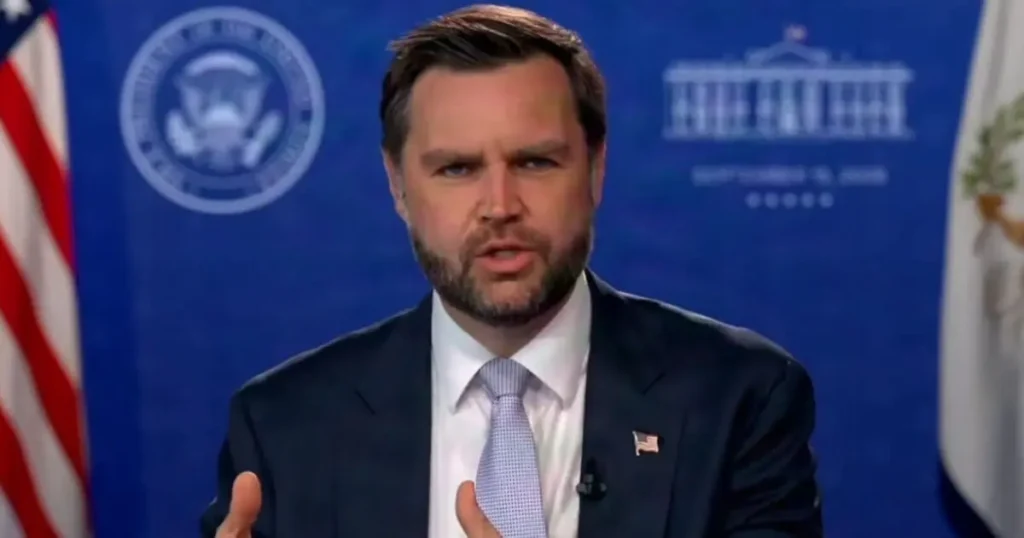
Vice President JD Vance has called for H-1B visa reforms that prioritize enriching the American economy rather than displacing U.S. workers with low-wage foreign labor. In a recent post on his official X account, Vance stated, “The H-1B should not exist to replace American workers with low-wage foreigners. It should exist to enrich the American economy.” This statement aligns with the Trump administration’s ongoing efforts to reshape the H-1B visa program.
Trump Administration’s H-1B Reforms
Earlier this month, President Donald Trump extended a proclamation that restricts entry for certain H-1B workers who are still overseas, requiring a $100,000 payment unless the petition is under narrow national-interest exceptions. This move is part of a broader strategy to limit the use of H-1B visas for outsourcing firms that have been accused of using the program to bring in cheaper foreign labor.
Trump also signed an executive order instructing the secretaries of State, Labor, and Homeland Security to consider recent or planned layoffs of similar American workers when reviewing labor condition applications, petitions, and visas. The order asserts that Congress created the H-1B visa to bring in uniquely skilled individuals who supplement the U.S. labor market, not to replace American workers.
Impact of H-1B Reforms
The White House reported that in the first year of the fee, the largest IT staffing and outsourcing firms significantly reduced their H-1B registrations, cutting them from 24,946 to 2,055, a 92 percent drop. This decline has also affected consular requests for workers, which fell nearly 97 percent between the FY 2025 and FY 2027 cap seasons.
Registrations for individuals with at least a U.S. master’s degree increased from 45.1 percent of FY 2026 registrants to 66.1 percent for FY 2027. Selections tied to the two highest wage levels reached 46.3 percent, while the lowest wage level was 17.8 percent. These figures reflect a shift toward higher-skilled workers and a reduction in lower-wage foreign labor.
Before the 2025 proclamation, unemployment among recent computer science graduates was 6.1 percent, and 7.5 percent for computer engineering graduates. These statistics underscore the administration’s concern about the impact of H-1B visas on the domestic workforce.
Source: The Gateway Pundit