Why Messy Homes Can Actually Improve Social Connections
A family hosts guests in a messy home, arguing that imperfection can foster genuine connection in an increasingly isolated world.
4 min read
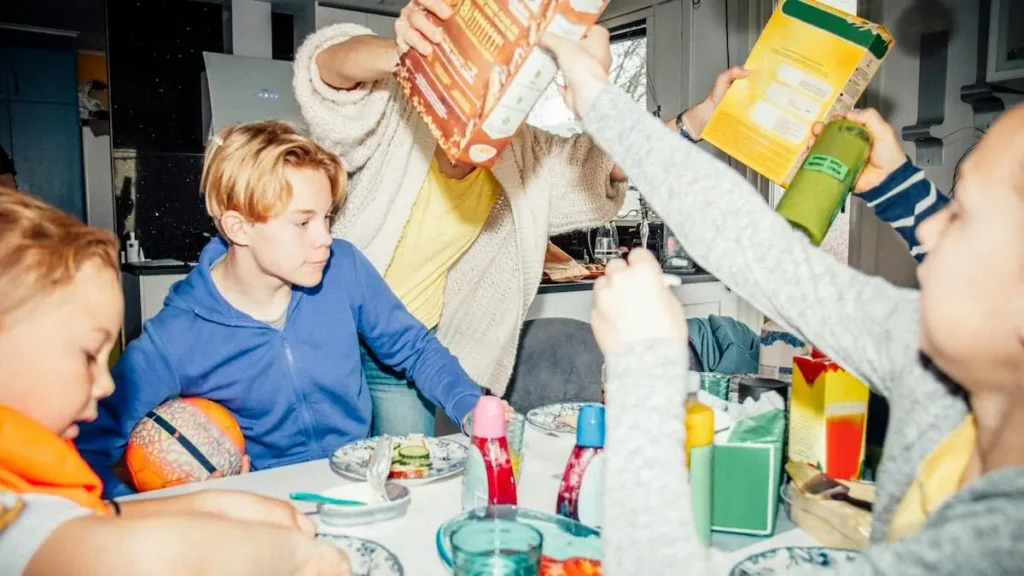
For a family of six with four children, two careers, and a packed schedule, hosting guests is not a luxury—it’s a necessity. Yet, the reality is that their frequent hosting comes with its own set of challenges. The family admits they often host poorly, which led them to a surprising conclusion: inviting people into a messy house might be the best way to build real connections in an era of growing loneliness.
The Messy House as a Gateway to Connection
During a recent panel at a women’s convention in Rochester, Leah Sargeant suggested that inviting people into one’s messy home could be a powerful act of hospitality. This idea resonates with the family, who regularly host friends and family despite their chaotic living conditions. In a world dominated by domestic influencers and their curated, often perfectionist, content, the family argues that normal busyness—especially for those juggling multiple responsibilities—should not be a barrier to hosting.
For many, the fear of opening their doors to guests on an unclean day is a real obstacle. The family acknowledges that they, too, have felt unprepared to welcome friends and family when their home hasn’t been scrubbed and shined. But they also recognize that for those who are already engaged in community efforts—whether coaching little league, serving on the PTA, or organizing meal trains for new moms—there simply isn’t enough time to achieve the kind of pristine home that social media often promotes.
Addressing the National Loneliness Epidemic
The family is not alone in their observations. They point to the broader issue of growing national loneliness, which they attribute to a combination of factors: far-flung and estranged families, falling birth rates, hollowed institutions, and secularization. These systemic issues, they argue, are not easily solved by any one family, and they are unlikely to be resolved anytime soon.
Compounding the problem is the rise of technology that allows people to be entertained and satiated without ever leaving their homes. This shift has significantly reduced the opportunities for real-life interaction, contributing to a decline in sociality. In this context, the family believes that opening one’s door—even when the space isn’t picture-perfect—can be a meaningful step toward building genuine connections.
Practical Advice for Hosting in a Messy Home
To make hosting more manageable, the family suggests a balance between high standards and acceptance of imperfection. They reference the parable of Mary and Martha from Luke’s Gospel, where Jesus commends Mary for her presence with him, while rebuking Martha for her focus on domestic chores. The family interprets this as a call to prioritize presence and hospitality over perfection.
They advocate for a “Martha in private, Mary in public” approach. This means maintaining a relatively uncluttered home with basic cleanliness—such as a wiped-down kitchen, clean dishes, and a vacuumed floor—while not obsessing over aesthetics. They also emphasize the importance of daily routines like doing laundry, even if it’s not always put away.
Despite their messy home, the family has learned to welcome guests by focusing on the essence of hospitality: generosity of spirit. They argue that the people you invite into your home should be those who value real connection over curated perfection. In their experience, the right guests are those who prioritize what matters most—genuine human interaction over the appearance of a spotless space.
Hosting Styles: Simplicity and Abundance
The family’s approach to hosting is rooted in simplicity and abundance. They do not focus on aesthetics or design, but rather on creating a warm, welcoming environment. They often prepare hearty and tasty meals, whether homemade or ordered, and avoid the pressure to make everything organic or gourmet.
They also acknowledge that hosting styles vary. Some friends host in more elaborate ways, reflecting their worldviews, while others host in simpler, more spartan ways. The family believes that these differences are not what make a welcome warm or genuine. What matters most is the heart behind the hospitality—the willingness to connect with others in a real, human way.
The Importance of Real-Life Connection
In an age where much of our interaction is mediated through screens, the family emphasizes the value of in-person connections. They argue that hosting in a messy home can be a powerful act of resistance against the isolation that technology often fosters. Real-life interactions, they believe, lead to mutual understanding, support, and the kind of deep connections that are hard to replicate in a digital world.
Ultimately, the family’s message is one of acceptance and authenticity. They encourage others to open their doors, even when their homes aren’t picture-perfect, because the real value of hospitality lies not in the appearance of a spotless space, but in the presence of loved ones and the opportunities for genuine connection that come with it.
Source: Daily Wire