Second Annual MAHA Summit Unites Leaders to Fight Chronic Disease
Federal officials, medical experts, and industry leaders gather in D.C. for the second MAHA Summit, focusing on health reform and corporate influence.
5 min read
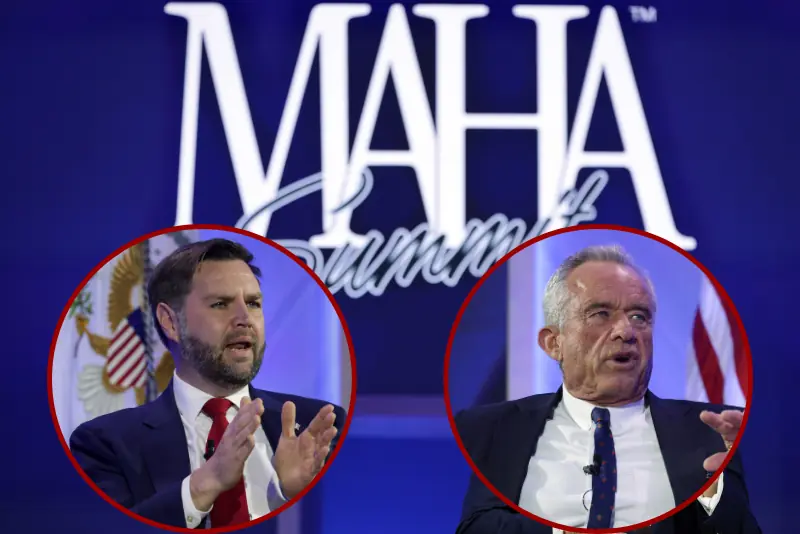
On Tuesday, September 29, 2026, senior federal officials, medical practitioners, industry executives, and policy advocates converged in Washington, D.C., for the second annual Make America Healthy Again (MAHA) Summit, hosted at the Waldorf Astoria. The one-day event, organized by MAHA Center Inc., brought together leaders from healthcare, agriculture, technology, and federal agencies to address critical issues such as chronic disease prevention, food policy, and regulatory reforms.
The summit featured a distinguished lineup of speakers, including Vice President JD Vance and HHS Secretary Robert F. Kennedy Jr., Agriculture Secretary Brooke Rollins, EPA Administrator Lee Zeldin, CMS Administrator Mehmet Oz, and other officials from government, private industry, and wellness communities. Actor Russell Brand served as a featured host, moderating panel discussions and utilizing his extensive online presence and background in Hollywood and independent commentary to engage the audience.
While the summit initially teased a brief slot for actress Cheryl Hines, the wife of RFK Jr., to deliver an “exciting announcement” before the closing fireside chat with Vance and her husband, her role was kept as a tightly timed surprise lead-in. Hines shared a personal message focusing on maternal wellness and lifestyle reform, emphasizing the vital role mothers play in driving health changes in American homes. Her remarks revolved around the broader “MAHA Moms” initiative, which advocates for clean food, whole ingredients, and reduced toxin exposures, not as a political crusade, but as a practical, everyday mission for families.
Hines also highlighted her personal support for her husband’s public health reforms and introduced upcoming advocacy efforts aimed at empowering parents to make cleaner, nutrient-dense food choices. She then transitioned the stage to usher in the summit’s keynote closing discussion featuring Kennedy and Vance.
A central focus of the summit was the Trump administration’s work in addressing childhood chronic disease, with the goal of reducing what organizers and MAHA reports have called “industry influence” or “corporate capture” over regulatory processes. Presenters outlined ongoing progress on certain health-related executive actions and agency guidelines, including voluntary commitments by major food manufacturers and the dairy industry to phase out petroleum-based synthetic dyes, with industry timelines extending into 2026–2027.
The USDA supported efforts to restore whole-milk options in school nutrition programs, including backing for the Whole Milk for Healthy Kids Act. Additionally, the USDA approved roughly 18 or more state-level SNAP waivers that restrict purchases of high-sugar beverages, candy, and ultra-processed items. The discussions and Commission materials focused heavily on reducing exposure to environmental chemicals like PFAS, microplastics, and pesticides, with speakers also targeting youth health, pointing to over-prescribed pediatric medications, poor diet, and lack of exercise.
To address these issues, HHS officials under the Trump administration have called for adding mandatory nutrition and metabolic training to medical school curricula. The HHS has also outlined recent spending updates that shift more resources toward addiction treatment, mental health support, and rural care facilities.
Despite the summit’s focus on health reform, the event reportedly triggered pushback from within the movement itself. Some MAHA activists voiced frustration over certain corporate sponsorships and pharmaceutical or tech industry involvement, labeling it a contradiction of the group’s “anti-corporate roots.” Critics within the health faction argued that charging high ticket prices and inviting corporate tech/wellness sponsors “contradicts the core ethos” of a populist movement meant to fight corporate influence.
Nonetheless, despite the minor criticism, organizers made it clear that they plan to continue with their policy vision at both the state and federal levels, aiming to implement reforms that prioritize public health and reduce the influence of corporate interests in regulatory processes.
Key Outcomes and Future Directions
The summit underscored the administration’s commitment to addressing childhood chronic disease through a combination of regulatory reforms, industry collaboration, and public health initiatives. The voluntary commitments by major food manufacturers and the dairy industry to phase out synthetic dyes represent a significant step toward reducing the presence of harmful chemicals in the food supply.
The USDA’s support for whole-milk options in school nutrition programs and the approval of state-level SNAP waivers further demonstrate the administration’s efforts to promote healthier eating habits among children. These measures align with the broader “MAHA Moms” initiative, which seeks to empower families to make informed choices about their food and lifestyle.
Additionally, the focus on reducing exposure to environmental chemicals like PFAS, microplastics, and pesticides highlights the growing awareness of the role these substances play in chronic disease. Speakers emphasized the need for stricter regulations and greater transparency in the use of these chemicals, particularly in food and consumer products.
The push for mandatory nutrition and metabolic training in medical school curricula represents a long-term strategy to equip healthcare professionals with the knowledge and tools necessary to address public health challenges. This initiative aims to ensure that medical practitioners are better prepared to educate patients on dietary and lifestyle choices that promote health and prevent chronic conditions.
The HHS’s recent spending updates, which shift more resources toward addiction treatment, mental health support, and rural care facilities, reflect a broader commitment to improving access to healthcare services and addressing the social determinants of health. These investments are expected to have a significant impact on communities that have historically faced barriers to care.
Challenges and Criticisms
Despite the summit’s achievements, the event was not without its challenges. Some MAHA activists expressed concerns about the inclusion of corporate sponsors and the high ticket prices for attendance. These criticisms highlight the tension between the movement’s populist roots and the practical realities of organizing large-scale events that require financial support.
Organizers acknowledged these concerns and emphasized their commitment to continuing their policy vision at both the state and federal levels. They pledged to work with a diverse range of stakeholders to ensure that their initiatives remain aligned with the core mission of the MAHA movement: to promote public health and reduce the influence of corporate interests in regulatory processes.
Conclusion
The second annual MAHA Summit served as a platform for leaders across government, industry, and the wellness community to address pressing health issues and advance a shared vision for the future of public health. While challenges remain, the summit underscored the importance of collaboration, innovation, and a steadfast commitment to improving the health and well-being of Americans.
Source: OANN