Trump Signs AI Accord with Tech Leaders for Light Regulation
President Trump signs AI agreement with tech leaders, promoting self-regulation and external oversight.
2 min read
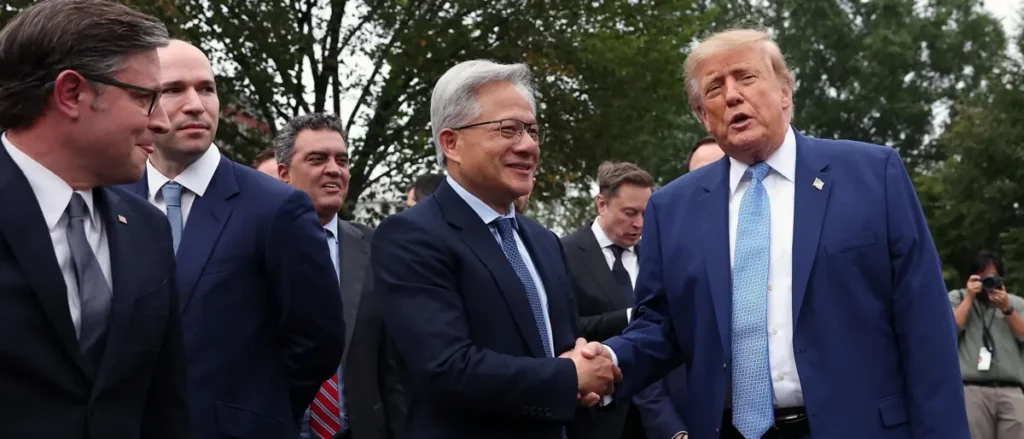
President Donald Trump on Tuesday signed a significant agreement with tech leaders, calling it a “morally binding” document on artificial intelligence. The accord outlines a light-touch regulatory approach, emphasizing that tech companies should self-regulate and implement internal controls to mitigate AI-related risks.
Industry Self-Regulation and External Oversight
The White House Accord on Super Intelligence states that AI companies must implement internal controls to prevent risks and partner with independent auditors to assess their effectiveness. The agreement acknowledges the need for external oversight, with the Federal Trade Commission (FTC) planning to compel AI companies to provide documents and testimony about potential dangers their models may pose.
Trump, accompanied by top tech executives, stated that he has seen “tremendous self-policing” and announced plans to establish a 10-person committee to oversee the AI industry. He also intends to name a new AI czar within the next week.
Yesterday at the White House, leaders from across our industry came together to sign the White House Accord on Super Intelligence. The principle is simple: the companies building this technology have the primary responsibility to develop and deploy it safely, and to be… pic.twitter.com/RGMDYs9bhs
Despite the optimism, critics argue that AI companies cannot be trusted to self-regulate, citing past incidents where AI models have hacked government websites and caused other risks. AI safety experts warn that self-regulation has led to issues such as teen suicides and international cybercrime.
Industry Response and Support
Pro-AI groups have praised the accord, believing it will prevent companies from pushing regulations that may favor their own interests. The Innovation Council spokesperson called it a “win for the president, a win for freedom, and a win for the American public.” However, the agreement is “voluntary on behalf of the industry,” according to House Speaker Mike Johnson.
Anthropic CEO Dario Amodei emphasized the importance of collaboration, stating that potential rulemaking to address AI safety risks is “still under discussion.” Nvidia CEO Jensen Huang also supported the accord, stressing the need for responsible development of AI technology.
Democrats are trying to dismiss the White House Accord on Super Intelligence as optional self-policing. But although the agreement was entered into voluntarily, the governance that follows from it is not. As Gavin Baker points out, once an independent auditor reports a safety… https://t.co/PjWiz32VWN
David Sacks, Trump’s former AI and crypto czar, defended the agreement, arguing that independent auditors and board oversight can ensure safety. He pointed out that existing FTC and securities laws still apply to any public claims made by companies that fail to keep safety commitments.
While the Trump administration and tech executives express confidence in the accord, AI safety experts remain skeptical, questioning whether the industry can truly self-regulate. The debate over AI regulation continues as the U.S. seeks to balance innovation with safety.
Source: Daily Caller