Energy Secretary Says Trump Accepted Higher Prices to Stop Iran Nuclear Threat
Energy Secretary Chris Wright details Trump’s decision to prioritize national security over rising energy costs.
2 min read
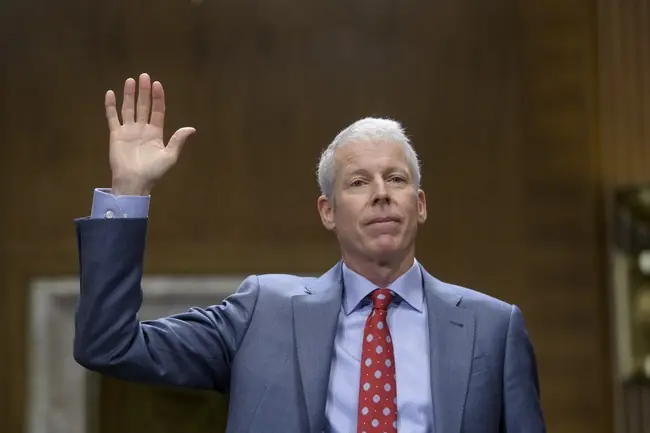
Energy Secretary Chris Wright has provided a detailed account of President Donald Trump’s decision to confront Iran, despite the potential for higher energy prices. Wright said Trump understood the short-term economic impact of the policy but believed the long-term risks of a nuclear-armed Iran were far greater.
Understanding the Trade-Off
Wright emphasized that Trump was ‘well aware’ of the risks to energy flows from the Persian Gulf and the potential for price increases. He stated that the president chose to accept the economic cost to prevent a nuclear-armed Iran, which he believed would pose a significant threat to national security and long-term energy stability.
‘If his decisions were political, he would have just kicked the can down the road and delivered a nuclear-armed Iran to the next president,’ Wright said. ‘You’ve got to respect that. That’s an incredible move to lean in and say I’m not going to let them become nuclear-armed.’
Economic Impact on Americans
The latest federal data shows that regular gasoline prices have risen significantly, with the national average reaching $4.465 per gallon, up $1.347 from a year earlier. Diesel prices also hit a high, averaging $6.382. These costs directly affect families, truckers, farmers, and small businesses.
Despite domestic refineries operating at near capacity, the global nature of diesel as a commodity complicates efforts to stabilize prices. Ukraine’s attack on Russian diesel refineries has further constrained the administration’s ability to address rising costs.
Volatility and Market Reactions
Wright noted that the Iran situation has a direct impact on energy prices, with recent volatility around the Strait of Hormuz affecting both crude and gasoline prices. After a June agreement reopened the Strait of Hormuz, gasoline prices fell below $4 for the first time since March, but they climbed again by September due to renewed tensions.
Wright believes that prices will ease, citing rising energy flows through the Strait of Hormuz, record U.S. gasoline production, and falling seasonal demand. However, he acknowledged that there are no guarantees, as Iran still has the potential to disrupt shipping, Gulf production, and global markets.
Political and Economic Balance
Trump’s policy toward Iran has always focused on preventing Iran from acquiring a nuclear weapon. The administration has argued that a nuclear-armed Iran would threaten U.S. forces, embolden terrorism, and encourage a regional arms race. Trump framed the issue as one he would not pass to a future president.
Wright’s comments add an important dimension to this history, highlighting that Trump understood the economic consequences of his decision but prioritized national security. The challenge now is to convince voters that the sacrifice served a purpose and that the administration can bring prices back down.
Source: PJ Media