Israel’s Election Looms Amid Political and Security Uncertainty
Israelis prepare for a pivotal election as Netanyahu faces legal and political challenges amid ongoing security threats.
5 min read
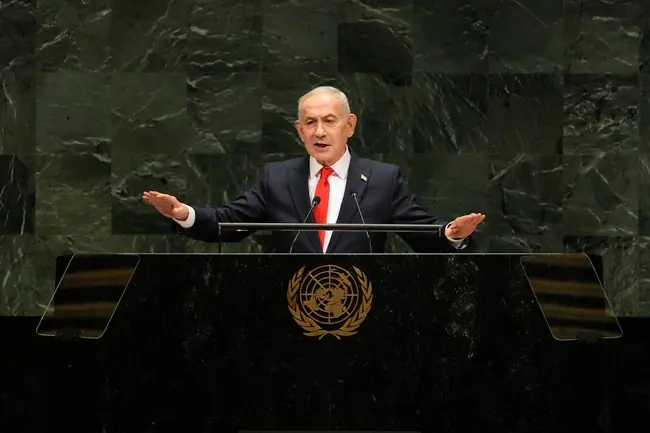
As Israel approaches its next parliamentary election in just three weeks, the nation finds itself at a crossroads, with Prime Minister Benjamin Netanyahu at the center of a political and cultural reckoning. The October 7 attacks, which marked a turning point in Israel’s modern history, have left deep scars and continue to shape the country’s political landscape. Netanyahu, who has led Israel through three separate terms as prime minister since 1996, remains a dominant figure in Israeli politics, despite growing calls for reform and accountability.
The Weight of Leadership
Netanyahu is widely regarded as the most influential political, social, and cultural figure in Israel’s history. His leadership has been characterized by both strength and controversy, with critics arguing that his far-right coalition has driven the country into increasingly polarized divisions. The 2023 judicial reform law, which aimed to strengthen the government’s control over the judiciary, sparked massive protests that split the military reserve corps and deeply divided Israeli society. Many argue that a more centrist government could have avoided these domestic tensions, potentially preserving greater internal cohesion leading up to the October 7 attacks.
Despite these challenges, Netanyahu remains a unifying figure on the issue of national security. Confronting Hamas, Hezbollah, and particularly Iran has become a point of widespread political consensus. Any Israeli leader would have acted to eliminate the terrorist threat and the prospect of an Iranian nuclear program. However, the question of how to achieve this remains deeply contentious, with Netanyahu’s approach often seen as both necessary and controversial.
Political Uncertainty and Legal Challenges
Netanyahu’s political future is now on shaky ground. His far-right coalition, which he leads through his Likud Party, is wobbling, with polls showing a wide range of outcomes. Some polls suggest a potential landslide victory for Netanyahu, while others predict a deadlocked nation. Even the most pessimistic polls for the prime minister still leave room for him to remain in power, though the prospect of sharing power with the center-right remains uncertain.
At the same time, Netanyahu’s legal troubles continue to loom over his political career. Since 2020, he has faced three corruption charges, with prosecutors presenting dozens of exhibits and hundreds of witnesses to demonstrate that he received gifts and granted favors to powerful interests. The trial, which has been stalled since the defense rested in June 2026, has become a focal point of political debate. Opponents argue that the charges prove Netanyahu is unfit to govern, while his supporters claim the cases were fabricated to remove a right-wing leader from power.
Netanyahu’s defense is that the political system in Israel is inherently corrupt, and the favors he received were part of the push-pull of tumultuous Israeli politics. As long as he remains in power, any resolution to these legal issues is unlikely. Israeli voters, many of whom have already made up their minds about Netanyahu, are unlikely to be swayed by court proceedings, as they are aware of his policies and stance.
Security Failures and the October 7 Attacks
The October 7 attacks, which resulted in the deadliest loss of Jewish life since the Holocaust, have left a lasting impact on Israeli society. Netanyahu has refused to take responsibility for the security lapses that led to the attacks, despite the fact that every other national security official who was in office at the time has resigned. Instead, he has blamed his security chiefs for deliberately keeping him in the dark, a claim that has fueled a whispering campaign among his supporters that the chiefs betrayed him for ideological reasons.
There is also evidence that Netanyahu was given intelligence about the attacks but chose not to act on it. Haaretz reported that United Arab Emirates President Mohammed bin Zayed warned Netanyahu days before the attacks that Hamas was planning a major operation. Three sources with knowledge confirmed that UAE intelligence gave a general warning to its Israeli counterparts, and that MBZ spoke to Netanyahu to ensure he received it. A former U.S. official said that then-CIA Director Bill Burns was told several months later by MBZ that he had warned Netanyahu. Similar warnings were also reported from Egyptian intelligence chief Abbas Kamel.
Netanyahu has denied ever receiving these warnings and has sued several media outlets and journalists for reporting the allegations. The refusal to acknowledge these warnings has further fueled criticism of his leadership and raised questions about his preparedness for the threats facing Israel.
Legacy and the Path Forward
As the election approaches, Israelis are eager to “take stock” and move past the trauma of October 7. However, the political and security challenges facing the country are unlikely to be resolved quickly. The election itself, with Netanyahu running for a fourth term, has become a moment for reflection on Israel’s successes and failures. The country has experienced both devastating losses and remarkable victories, including the attacks on Iran’s nuclear weapons program.
Elliot Abrams, a former Middle Eastern hand, has described Netanyahu’s legacy as a reflection of a leader who has navigated a country under constant threat. His approach, often summarized as “believe those who say they want you dead and gone, and count their missiles and soldiers,” has been both a source of strength and controversy. Abrams argues that this mindset is necessary for a country that has faced a knife at its throat for nearly 80 years.
As Israelis prepare to vote, the outcome of the election will have significant implications for the country’s future. Whether Netanyahu remains in power or is replaced by a more centrist leader will shape the direction of Israeli policy for years to come. The election is not just about choosing a leader but also about deciding the trajectory of a nation that continues to face immense security and political challenges.
Source: PJ Media