California Bans Human vs. Robot Fight Nights
California’s athletic commission orders halt to human vs. robot cage fights after event sparks legal debate.
2 min read
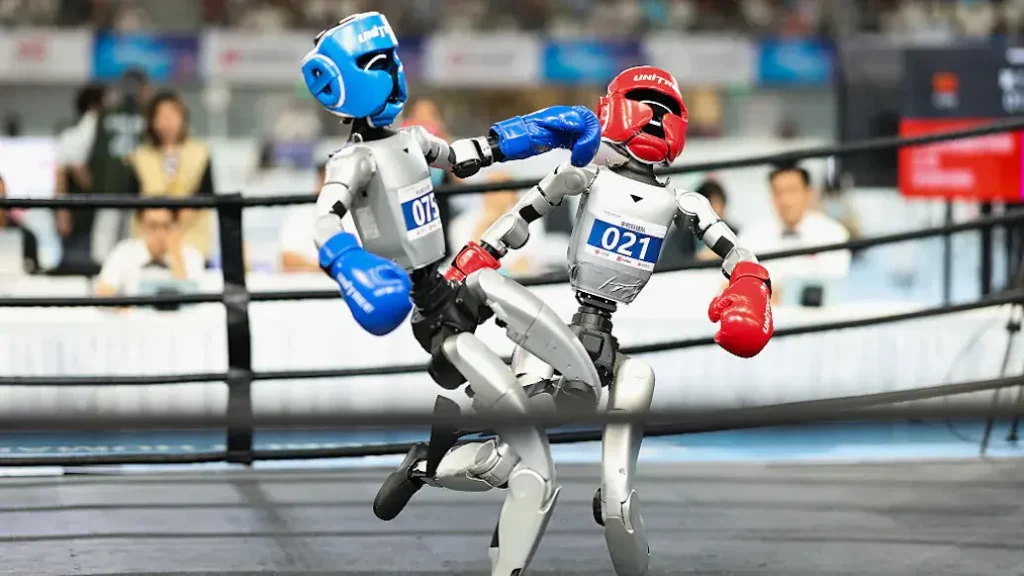
In a striking move, the California State Athletic Commission (CSAC) has issued a cease-and-desist letter to a San Francisco tech startup following a controversial event where a human fought against three humanoid robots. The incident, which took place on September 18, drew 100 spectators and was organized by Robot Entertainment Kombat (REK), a company that describes itself as ‘the humanoid robot fighting league.’ The event, featuring social media influencer Frankie LaPenna, ignited a legal and ethical debate over the boundaries of sanctioned combat sports.
Legal Challenge and Regulatory Response
The CSAC’s letter, sent five days after the event, stated that the fight was unsanctioned and thus a violation of state regulations. The commission emphasized that boxing and mixed martial arts events must be approved, and that unsanctioned activities pose risks to the physical and financial well-being of participants. The letter classified the event as a misdemeanor, highlighting the potential legal consequences for organizers.
Cix Liv, CEO of REK, responded by arguing that the company did not require the commission’s approval, citing a legal definition of a ‘match’ as being between two persons. Liv suggested that regulators could attempt to prove that humanoid robots are human, a claim that has yet to be substantiated. This stance reflects a broader tension between emerging technologies and existing regulatory frameworks.
Event Context and Public Reaction
LaPenna, who signed a liability waiver before the event, had repeatedly requested to fight the robots, expressing a desire to ‘get some good shots without actually hurting Frankie.’ The company’s goal, as stated by Liv, was to create a safe and engaging spectacle. However, the incident has sparked discussions about the ethics of human-robot combat and the potential for legal liability in such events.
REK has also organized similar events in Canada and Japan, and is set to host what it calls ‘the world’s first humanoid weapon fight’ in San Francisco. This upcoming event will feature robot-to-robot combat, with no human participants, signaling a shift in the company’s approach following the legal backlash.
Broader Implications for Technology and Regulation
The rise of humanoid robots in the technology sector has led to new industries and competitions, such as the World Humanoid Robot Games in Beijing, which featured over 2,000 robots and 666 teams. As these technologies continue to evolve, the need for clear regulatory guidelines becomes increasingly apparent. The California case underscores the challenges of integrating new forms of entertainment and combat into existing legal structures.
Source: Daily Wire