Iowa Pastor Condemns Satanic Prayer at City Council Meeting
A pastor in Iowa condemns a satanic prayer at a city council meeting, sparking debate over religious tolerance.
2 min read
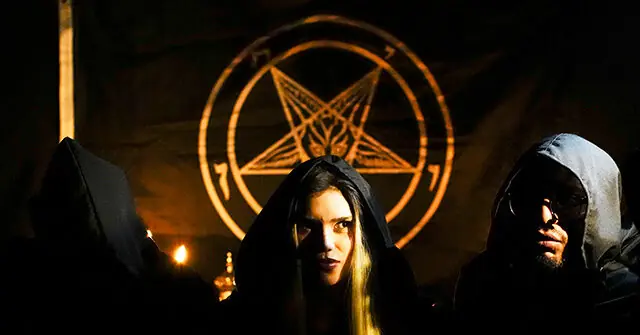
During an October 6, 2026, city council meeting in Ottumwa, Iowa, a former city council member delivered a prayer invoking Satan, prompting a pastor to stand up and denounce the act. Matthew Dalbey, a former city council member, led the controversial invocation, addressing the ‘dark father’ and urging listeners to ’embrace the Luciferian impulse to eat of the tree of knowledge, and dissipate our blissful and comforting delusions of old.’
Controversial Invocation Sparks Outcry
Dalbey’s speech, which included references to Luciferian philosophy and calls for rejecting arbitrary authority, was met with strong opposition from a local pastor present at the meeting. The pastor criticized the invocation, stating that the ‘curse’ placed on the city by the satanic prayer was not welcome there and should be reversed immediately.
Councilmember Cara Galloway, however, argued that the invocation should be addressed at the end of the meeting. Despite her objection, the city’s mayor, Benjamin Foote, overruled the councilmember’s objection and allowed a 30-second time of prayer or silence for reflection.
Religious and Philosophical Context
Dalbey, who is a member of the Church of Satan, clarified that he does not worship Satan but adheres to the philosophy of self-centered doctrines. The Church of Satan, known for its focus on individualism and rejecting traditional religious dogma, often uses symbolic references to satanic figures as a form of critique against religious and societal norms.
The incident has sparked broader discussions about religious tolerance, the role of public officials in religious expressions, and the boundaries of free speech. Councilmember Galloway defended Dalbey’s right to express his views, emphasizing the council’s commitment to neutrality and allowing diverse viewpoints.
Broader Implications
The event highlights the growing tensions between religious groups and secular institutions, particularly in public forums. While some argue that such invocations are a form of free expression, others see them as a challenge to the values of the community.
Source: Breitbart