Supreme Court Lets Felon Gun Law Stand
Supreme Court declines to hear appeal on gun possession for felons, leaving lower court ruling in place.
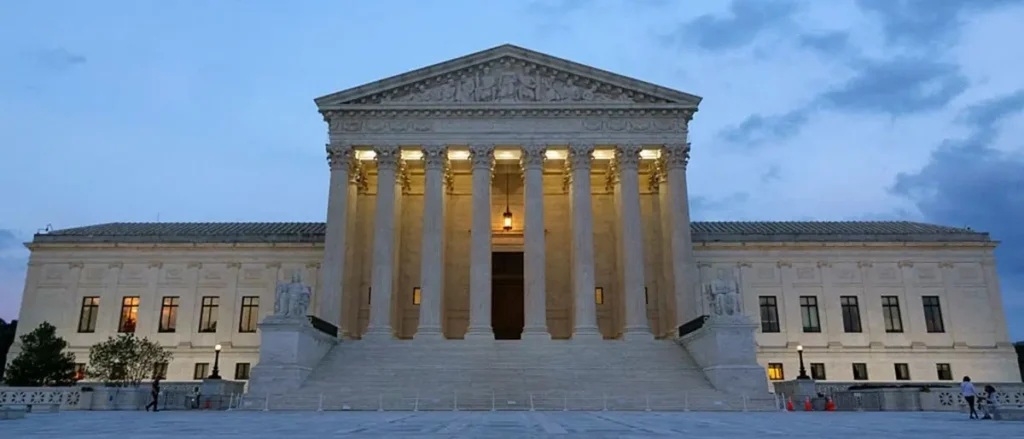
2 min read
The U.S. Supreme Court has declined to hear an appeal challenging a federal law that prohibits felons from possessing firearms, allowing a lower court ruling to stand. The case, involving Joseph Frederick Johnson, who was convicted of growing marijuana, was not reviewed by the high court despite a previous ruling in Hemani v. United States that struck down similar charges against Ali Hemani, a regular marijuana user.
Lower Court Ruling Remains in Effect
On October 5, the Supreme Court turned down Johnson’s appeal, which came roughly two months after the high court’s decision in Hemani v. United States. While the Hemani ruling invalidated the use of a gun charge due to Hemani’s marijuana use, the Supreme Court allowed the charges against Johnson to remain, citing his felony conviction for marijuana cultivation.
Legal Arguments and Circuit Split
Bill Sack, Senior Director of Legal Operations at the Second Amendment Foundation, emphasized that the proper metric for disarming individuals should be actual dangerousness, not simply a felony conviction. He argued that there is no historical basis for permanently disarming all felons, as the category of felony crimes has expanded far beyond what the founders envisioned.
The decision allows the ruling by the United States Court of Appeals for the Tenth Circuit to stand, despite a circuit split. Five circuits follow the Tenth Circuit’s reasoning, while three have ruled in favor of challenges to such gun possession charges.
Previous Rejections of Similar Cases
The Supreme Court had previously declined to hear an appeal by the Justice Department regarding a ruling that invalidated Charles Hembree’s conviction for being a felon in possession of a firearm. The ruling was based on Hembree’s 2018 conviction for possession of methamphetamine, highlighting the ongoing debate over the application of federal gun laws to non-violent offenders.
These decisions underscore the complex and evolving nature of gun law enforcement and the legal arguments surrounding the balance between public safety and individual rights.
Source: Daily Caller