AI Deepfakes Pose Verification Challenges for Courts
OpenAI and Meta warn courts face growing difficulty in verifying AI-generated media as deepfake technology advances.
2 min read
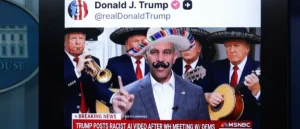
Federal judges in Boston have raised concerns about the increasing difficulty of verifying AI-generated images and videos, as courts grapple with whether new rules are needed to address deepfakes. The U.S. Judicial Conference’s Advisory Committee on Evidence Rules has been studying the issue since 2023, with representatives from OpenAI and Meta warning that detecting such fakes will only become harder over time.
Experts Warn AI Media Is Hard to Distinguish
Shira Anderson, OpenAI’s policy counsel, told the committee that AI-generated images are improving rapidly and may soon be indistinguishable from real content. “AI images are only getting better, and I do not think that there will be a scientific way going forward to detect them,” she said. Devin Norder of Meta echoed this sentiment, stating that the latest AI models produce media that is “indistinguishable by humans from authentic or AI-generated media.”
Norder added that the cost and time required to create convincing fakes have become negligible. “Producing convincing fakes no longer takes much effort or money,” he said. Despite these challenges, both companies have developed tools to verify the authenticity of visual content, and lawmakers in California and the European Union have passed laws requiring watermarking to flag AI-generated material.
Committee Divided on Need for AI-Specific Rules
However, the committee remains split on whether courts need new rules specifically for AI-generated evidence. While some argue that existing legal frameworks are sufficient, others warn that the threat of deepfakes is growing. US District Judge Jesse Furman, who chairs the committee, noted that there has been little evidence of deepfakes appearing in courtrooms, despite academic predictions to the contrary.
“There’s a lot of academic commentary predicting that courts will be dealing with deepfakes, but we haven’t actually seen a whole lot of that yet,” Furman said. Meanwhile, Judge Valerie Caproni argued that courts already have the tools to handle fake evidence, stating, “We’ve dealt with bad actors presenting fake evidence since Cain and Abel.”
Deepfakes Pose Real Threat to Regular Americans
While the legal debate continues, AI deepfakes are already causing real-world problems. According to the FBI, AI-related scams accounted for over 22,000 complaints and nearly $893 million in losses in 2025. Wynton Hall, author of “Code Red: The Left, the Right, China, and the Race to Control AI,” warned that AI tools can be used to mimic loved ones and deceive victims through social media data.
“These tools are now becoming democratized so that they’re cheap, they’re easy to use, and that means they’re accessible at a mass scale,” Hall said. As AI technology continues to evolve, the challenge of verifying its authenticity will only grow, raising urgent questions about how the legal system should adapt.
Source: Breitbart