Gas Tax Subsidies for EVs Spread Across States Without Voter Approval
California’s hidden gas tax funds EV subsidies now spreading to other states, raising concerns over unapproved fuel mandates.
4 min read
California’s push for electric vehicles has taken an unexpected turn, with a gas tax disguised as a green subsidy now spreading across multiple states without voter approval. The state’s low-carbon fuel standard, which has been quietly funding electric truck rebates and charging infrastructure, has become a model for other states, including Oregon, Washington, and New Mexico. This hidden tax, passed on to drivers through higher fuel costs, is being used to subsidize electric vehicles, raising concerns about regulatory overreach and the lack of democratic accountability.
California’s Green Subsidy: A Hidden Gas Tax
California’s program offers rebates of up to $120,000 for electric trucks, with over $1 billion in funding available through 2030. The state’s website claims these subsidies are not funded by customer or ratepayer dollars, but this is misleading. The program is actually funded through California’s low-carbon fuel standard, which regulates the lifecycle greenhouse-gas emissions of all fuels, including gasoline and diesel.
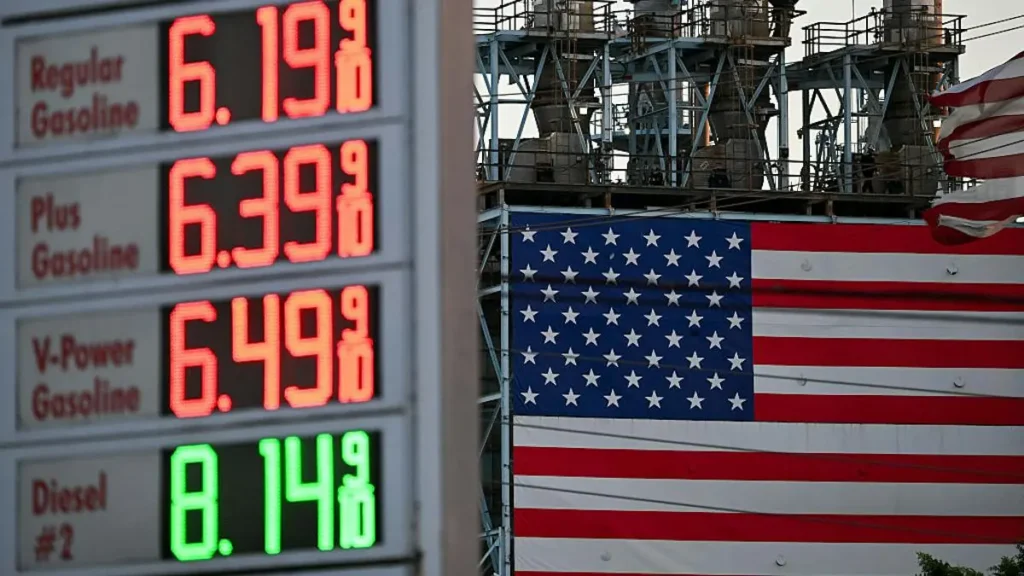
Under this standard, refiners must purchase credits from producers of biomethane, renewable diesel, or electricity to offset the carbon intensity of their fuels. These credits are then used to fund rebates, charging infrastructure, and transportation electrification. In effect, this is a regulatory cross-subsidy that passes the cost of these subsidies onto drivers at the pump. Economists refer to this as a hidden gas tax, which has grown significantly over the years.
Weeks after Congress revoked California’s authority to ban gasoline cars, a tightened standard took effect, requiring a 30% carbon-intensity cut by 2030 and 90% by 2045. This has effectively created an electric-vehicle mandate through the back door. California’s own economists estimated that the new rules would add 47 cents per gallon of gasoline in 2025 and $1.15 per gallon after 2030. Independent analysts put the figure at nearly $1.50 by 2035. To date, the program has already extracted about $22 billion from gasoline and diesel sales, a number expected to rise as the intensity cuts increase.
States Follow California’s Lead, But At What Cost?
California’s program has not gone unnoticed. Oregon and Washington have adopted similar measures, while New Mexico’s version took effect in April and Hawaii’s governor signed the fifth such program into law in July. Seven more states are considering similar regulations. The implications are far-reaching, as these lifecycle standards regulate fuel produced in states like Texas and Iowa, not just the fuel sold within the state itself.
For example, Oregon produces no gasoline at all, yet it has a compliance system that ensures out-of-state entities bear the full brunt of the law’s burden. A Ninth Circuit judge observed that this creates a situation where the costs of these programs are passed on to drivers in other states, even though they have no direct connection to the policies being implemented.
What do drivers get for the money? Not less pollution. These programs reward and punish carbon intensity, not actual pollutants like smog or soot. The so-called climate impact is vanishingly small. Oregon, for instance, claims its Clean Fuels Program reduced greenhouse-gas emissions by roughly 3 million metric tons in 2024. However, this is just 0.005 percent of global emissions, as the United Nations reported that the world emitted nearly 58 billion metric tons of greenhouse gases that same year. To put this in perspective, Oregon could eliminate those 3 million tons every year for a century, and the cumulative reduction would equal only about two days of current global emissions.
In February, the Environmental Protection Agency (EPA) used its own climate modeling to estimate that eliminating every greenhouse-gas emission from every vehicle in America would change projected global temperature in 2100 by just 0.037 degrees Celsius. Yet drivers are being asked to pay billions into a patchwork of state fuel mandates chasing a rounding error on a rounding error.
Legal Challenges and Federal Oversight
Congress anticipated this kind of state mismanagement and provided a remedy. Under section 211(c)(4) of the Clean Air Act, once the EPA finds that controlling a fuel characteristic is not “necessary” and publishes that finding in the Federal Register, state controls on that characteristic fall. California alone has a carve-out, while every other state must show its rule is needed to meet a federal air-quality standard.
The Ninth Circuit has already held that a low-carbon fuel standard falls within this provision, and the states have written the rest of the EPA’s finding for it. Oregon’s rule claims the program will reduce Oregon’s contribution to global greenhouse gas emissions, but there is no federal air-quality standard for carbon dioxide or any other greenhouse gas. A fuel rule aimed at the planet’s atmosphere is not “necessary” to clean up Oregon’s air.
In April, the American Energy Association petitioned EPA Administrator Lee Zeldin to make that finding. Drivers in Oregon, Washington, and New Mexico never voted for a gas tax to pay for other people’s electric trucks. Mr. Zeldin should end it and lower pump prices before more states sign on.
Conclusion: A Hidden Tax Without Democratic Approval
California’s hidden gas tax, disguised as a green subsidy, is now spreading across multiple states, raising serious concerns about regulatory overreach and the lack of democratic accountability. These programs, which pass costs onto drivers, are not just financially burdensome but also have a minimal impact on actual pollution. As more states adopt similar measures, the need for federal oversight and a reevaluation of these policies becomes increasingly urgent.
Source: Daily Wire