Polling Firm Admits Faking Data, Sparks Debate Over Media Trust
A polling firm admits to fabricating data, raising concerns about media credibility and election integrity.
3 min read
A polling firm that spent months releasing fabricated data in key races has now admitted that nearly all its numbers were fake. Wedgewood Polls claimed Tuesday evening that its entire operation was a social experiment meant to expose the lack of scrutiny in the polling world. However, election observers are skeptical, especially given the timing of the confession.
Wedgewood Claims It Was a Social Experiment
In its statement, Wedgewood cast itself as a kind of whistleblower. “Having previously worked in the polling and research sector, we watched as the public’s trust in polling eroded alongside a rise in unverified, low-quality methodology,” the firm said.
It described the project’s goal as testing the ease with which a fabricated polling firm could gain traction and be taken seriously. “The short answer: Far too easy,” the firm added.
Wedgewood also turned to the aggregators that published its work. “Despite having no history, formal credentials, or real data behind the vast majority of our releases, Wedgewood Polling was added to major polling aggregators, including The New York Times, FiftyPlusOne, and VoteHub, and repeatedly treated as a legitimate data source,” the firm claimed.
Wedgewood is absolutely correct that bogus polls get widely spread with no thought to validity, especially by naked partisans who are shoveling slop. That said, Wedgewood publicly lied to the American people, so that's a NO from me, dog.
Mark Mitchell, the head pollster of The Honest Poll, didn’t buy that explanation for a second.
Experts Dispute the Firm’s Explanation
Cooper Burton, a data scientist at FiftyPlusOne, responded to Wedgewood’s statement within hours.
This is incredibly misleading. @50plus1news was planning to publish an investigation into Wedgewood's polls tomorrow morning, and reached out to them this morning for comment. This is just an attempt to save face after they realized we caught them.
Once Wedgewood went public, FiftyPlusOne published its investigation. The report took on the firm’s claim that nobody checked its credentials.
“Their statement alleges that FiftyPlusOne, the New York Times, and other poll aggregators did not conduct appropriate vetting of their firm prior to aggregating their polls; this is false,” the report stated. “We reached out to them to ask who they were and confirm the methodology statement on their website. We were given two names, Jack Sims and Andrew Prater. We were able to independently confirm that Sims had previous experience in the polling industry and reviewed their methodology statement in detail. It is not atypical for a pollster to leave an existing firm, form their own, and self-fund some surveys to build reputation; we had no reason at the time to believe this case was any different. Wedgewood operated as if it were a legitimate polling firm, including collecting money from donors to conduct crowd-funded polls, and sharing raw survey data (which we now have confirmed was fraudulent) with FiftyPlusOne on Oct. 15, 2026.”
Imagine that — Wedgewood took money from donors and handed over raw data it had invented. Sorry, but that’s not a harmless experiment. In fact, these phony numbers did have real-world impact.
Fake Polls Can Influence Elections
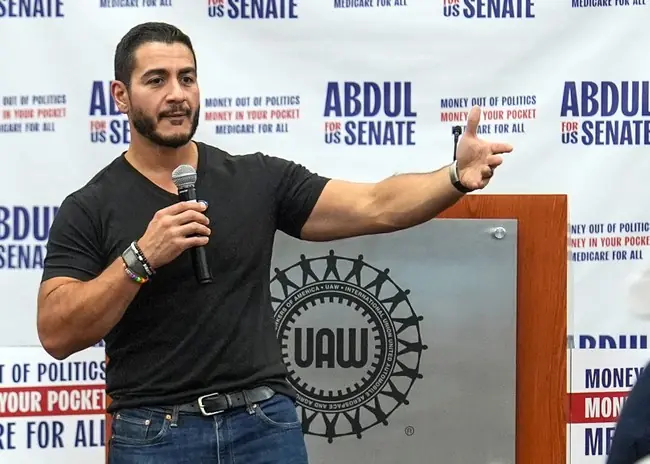
El-Sayed leaned heavily on Wedgewood’s polling to sell Democrat voters on his electability. Mallory McMorrow, who ran against him in the Michigan primary, took to X to describe what the stunt cost her campaign. She pointed to a late-June Wedgewood poll that showed her sinking into single digits, numbers she said contradicted her campaign’s internal polling. In the aftermath, her donations dried up, her volunteers were left devastated and begging for direction, and reporters bombarded her with calls to get out of the race.
Without a doubt, a fake poll can affect an election. It can stop a candidate from raising money, boost another candidate, or cause a party to invest in a place it otherwise wouldn’t. And it can lead voters to think the result is already decided before any ballot has been cast.
Source: PJ Media