Kagan Criticizes Supreme Court’s Role in Polarizing Elections
Justice Elena Kagan accuses the conservative majority of undermining democracy through gerrymandering and campaign finance rulings.
2 min read
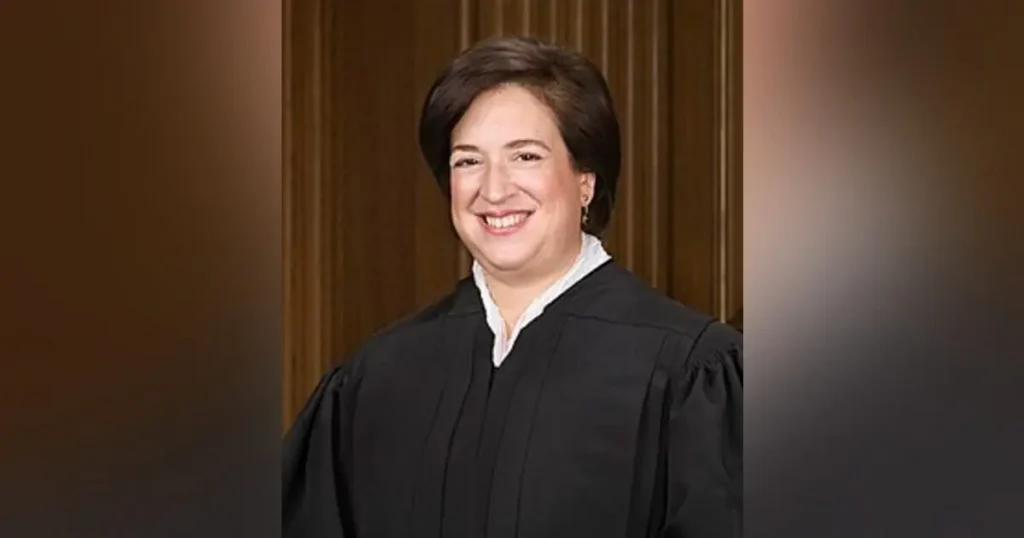
Supreme Court Justice Elena Kagan has criticized the conservative majority for their role in deepening political polarization and undermining American democracy. Speaking at the Catholic University of America’s law school in Washington, D.C., Kagan accused the 6-3 majority of failing to address partisan gerrymandering, which she argues has fueled political division and allowed parties to manipulate election maps for partisan advantage.
Gerrymandering and Judicial Oversight
Kagan argued that the Court’s refusal to intervene in disputes over partisan gerrymandering has contributed to an increasingly divided political landscape. She described a ‘race to the bottom’ in redistricting efforts, where both major parties engage in extreme gerrymandering, making an already polarized country even more so.
Kagan also criticized the Court’s 2019 decision in Rucho v. Common Cause, which ruled that partisan gerrymandering claims are non-justiciable political questions. The 5-4 ruling, authored by Chief Justice John Roberts, concluded that the Constitution places primary responsibility for congressional election regulations with state legislatures and Congress, leaving room for state courts to enforce state-law restrictions.
Broader Criticisms of Conservative Rulings
Kagan’s concerns extend beyond gerrymandering. She also criticized recent Supreme Court decisions that have narrowed aspects of the Voting Rights Act and loosened restrictions on political campaign spending. These rulings, she argued, have weakened protections against political manipulation and fostered public cynicism about the electoral process.
While Kagan acknowledged that the conservative majority has ruled against President Donald Trump on major legal issues, she emphasized that the Court’s recent decisions reflect a broader ideological shift toward reducing judicial oversight of election practices and campaign finance.
Midterm Elections and Constitutional Questions
The remarks come as the nation prepares for the November midterm elections, with Republicans and Democrats locked in a bitter battle over congressional boundaries. At the heart of Kagan’s criticism is a constitutional question: who should control America’s election maps, elected lawmakers or unelected federal judges?
Source: The Gateway Pundit