China Premieres AI-Generated Film ‘Sanxingdui: Future Past’
China’s first fully AI-generated film opens with mixed reception and regulatory significance.
2 min read
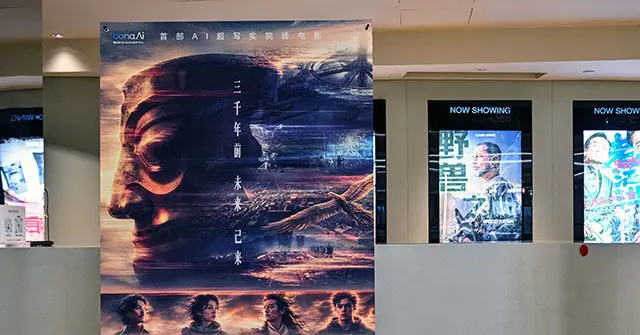
China has premiered its first fully AI-generated feature-length film, ‘Sanxingdui: Future Past,’ which opened in theaters with modest advance ticket sales. The film, based on a real-world archaeological discovery in Sichuan province, blends historical elements with sci-fi themes, marking a significant milestone in the use of artificial intelligence in cinema.
Historical Inspiration and AI Innovation
The film is inspired by the Sanxingdui archaeological dig, which began in 1986 and uncovered ancient artifacts, including bronze masks and sculptures, that have puzzled historians for decades. The dig site, later revealed to be a crumbled city, has sparked debates about its mysterious disappearance and the advanced civilization it once represented.
‘Sanxingdui: Future Past’ presents a more fantastical interpretation, involving future scientists seeking guidance from the lost civilization as technology dominates the world. The film’s AI-generated visuals, including the iconic ‘Bronze Sacred Tree,’ were created using ByteDance’s Jimeng AI, with a team of 100 creators working for two years to produce over 1.2 million images.
Regulatory Approval and Industry Impact
The film received approval from China’s National Film Administration, a landmark event as it was the first AI-generated movie to be authorized. This approval highlights the growing intersection of AI and the film industry, with debates emerging about its impact on traditional moviemaking and audience expectations.
Producer Qu Jixiaojiang emphasized the film’s potential to redefine the cinematic experience, stating, ‘We hope to make the audience feel that these 100 minutes are worth it.’ Despite its innovative approach, the film faced initial skepticism, with early box office figures showing limited audience interest.
Industry Perspectives and Challenges
Production company CEO Jiang Defu defended the use of AI, arguing that the film’s creation was as rigorous as any traditional production. He noted the team’s meticulous review of every frame for quality and consistency, despite the film being substantially reworked multiple times as AI technology evolved.
However, some viewers found the film’s experience lacking, with criticisms of stiffness and unconvincing visuals. As the film’s impact continues to unfold, it represents a bold step into the future of cinema, raising questions about the role of AI in creative industries.
Source: Breitbart