Iran’s Tactics Target U.S. Voters Amid Escalating Regional Tension
Iran’s actions in the Strait of Hormuz may influence U.S. midterms, raising concerns over foreign policy and election timing.
4 min read
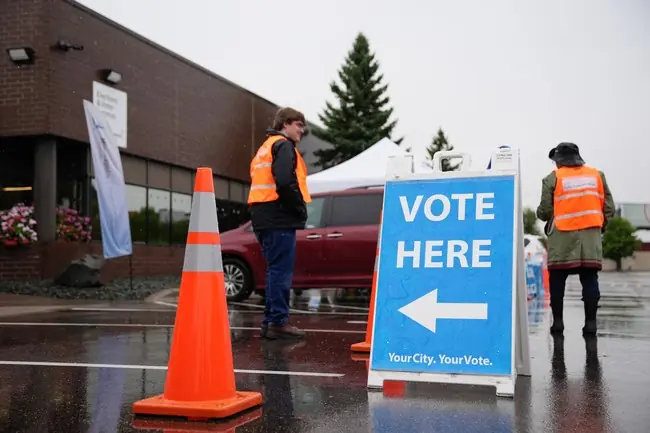
The Strait of Hormuz, thousands of miles from the nearest American voting booth, is now a focal point of a geopolitical chess game that could influence the outcome of the U.S. midterms on November 3. A missile fired into these waters may have far-reaching consequences for American voters, illustrating how modern geopolitics has transformed warfare into a complex interplay of military, economic, and political strategies.
A War Already in Motion
The war with Iran is already underway, with tensions escalating since February 28, when the United States and Israel launched attacks on Iran. In response, Iran struck back at Israel and Gulf countries hosting American military bases. The situation has since evolved into a series of attacks on shipping, military threats, and stalled negotiations, leaving the region bracing for further escalation.
Now, an American election has been added to the equation. According to Reuters, two senior Iranian officials revealed that Tehran is changing its tactics against ships in the Strait of Hormuz to keep oil prices high and influence the U.S. midterms. Other Iranian officials told Reuters that prolonged negotiations were partly aimed at weakening President Donald Trump politically, while fear of renewed attacks and distrust of Washington also contributed to its reluctance to reach a deal.
Oil Prices as a Political Weapon
The price of gasoline has become a political weapon, with American consumers bearing the brunt of the conflict. This strategy is not new; history offers a cautionary tale. In 1979, Iranian revolutionaries seized the American embassy in Tehran, holding 52 Americans hostage for 444 days. The crisis culminated on January 20, 1981, the day Ronald Reagan took office, and became a symbol of American vulnerability.
President Jimmy Carter’s defeat had multiple causes, including inflation and economic distress. However, the hostage crisis became an enduring symbol of American vulnerability. While the situations are different—hostages were human beings, and today the pressure is applied through a critical waterway and the global economy—the comparison highlights how a foreign crisis can become inseparable from a president’s political fortunes.
Historical Precedents and Military Decisions
In August 1964, following reports of attacks involving American destroyers in the Gulf of Tonkin, Congress approved a resolution giving President Lyndon Johnson broad authority to expand military operations in Southeast Asia. Subsequent research concluded that the reported second attack did not occur as officials had described. The resolution helped open the door to a catastrophic escalation in Vietnam.
In 2003, Americans were assured that Saddam Hussein possessed weapons of mass destruction. The invasion proceeded, but the stockpiles used to justify the war were never found. These historical failures do not prove every claim about Iran is false. Iran’s attacks on shipping, support for armed regional groups, and threats to neighboring countries raise serious security concerns. Protecting American personnel and maintaining freedom of navigation are legitimate national interests.
However, recognizing a threat is not the same as authorizing an unlimited response. Questioning military policy is not an act of disloyalty. It is precisely what a constitutional republic requires. The Constitution gives Congress the power to declare war and makes the president commander in chief. Congress can also authorize limited uses of force; the scope of a president’s authority to act without that authorization remains contested.
Legislative Responses and Political Accountability
This year, Congress has not been entirely silent. In June, both the House and Senate passed a concurrent war-powers resolution directing an end to U.S. military activity against Iran. Its legal effect was disputed, and it did not end the conflict. The House has continued to press the issue. On September 15, it voted 220–204 for another resolution directing the removal of U.S. forces from hostilities with Iran. The Senate later narrowly rejected a measure to halt the campaign.
Votes matter, and so does what follows them. If Congress believes its authority is being bypassed, the public deserves to see lawmakers debate the available legal and funding tools—and be accountable for whether they use them. Congress cannot claim to be a coequal branch only when it is convenient to issue a statement.
President Trump has stated that the United States would not launch another attack before the November 3 election, while also saying another military operation may be possible. We cannot know his private motivations, and a statement about timing is not proof that an attack has been ordered or that the election is the sole reason for delaying one. However, when a president publicly places a potential military operation on an election timeline, Americans have every right to ask how political considerations are being weighed against national security, diplomacy, and the lives at stake.
Conclusion and National Interests
National-security decisions should be measured against national interests, not campaign calendars. And Tehran deserves no moral exemption simply because Washington’s decisions warrant scrutiny. Threatening commercial shipping and using economic disruption to influence elections is a dangerous game with far-reaching consequences for global stability.
As the situation continues to unfold, the challenge remains: how to balance the need for national security with the imperative of political accountability. The United States must navigate this complex landscape with care, ensuring that its actions reflect both its interests and its values.
Source: PJ Media