Senate Blocks Data Center Bill With No Enforcement
Senate fails to advance GOP data center bill lacking enforcement, as Democrats oppose mandatory measures.
2 min read
The U.S. Senate on Wednesday blocked a Republican-led bill that would have required states to consider making data centers cover rising electricity costs, but without any enforcement mechanism. The legislation failed to secure the necessary 60 votes to move forward, passing only 57 to 43.
Legislation Lacks Teeth
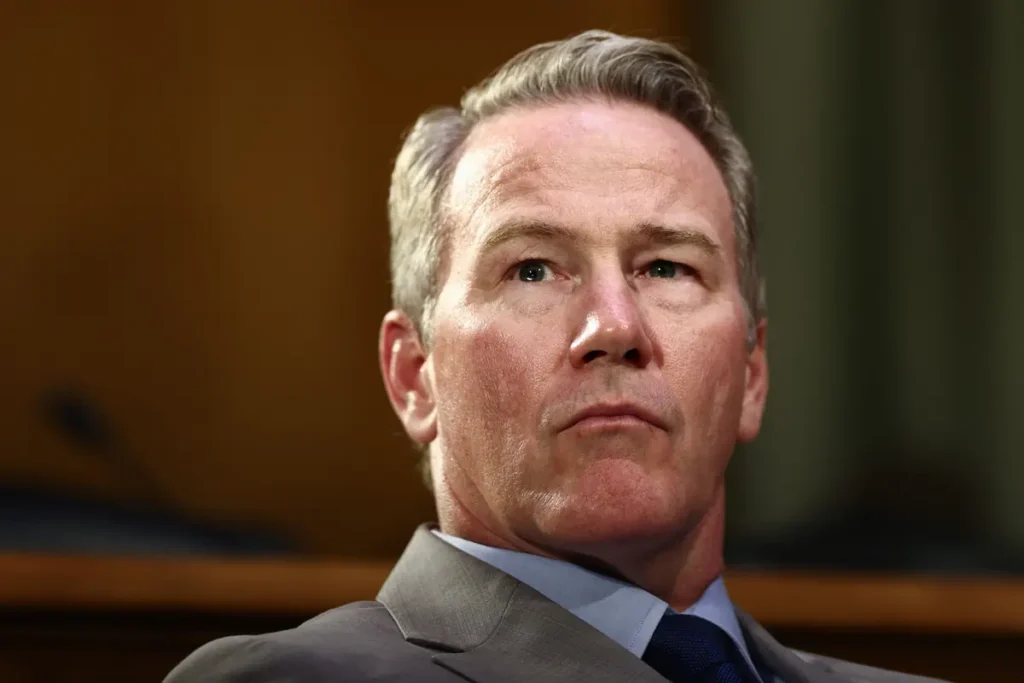
The bill, introduced by Republican Ohio Senator Jon Husted, would have required states to implement a federal standard to ensure data centers cover grid upgrades and electricity costs. However, it would not have mandated that states actually make data centers pay for these expenses. Democratic senators Amy Klobuchar, Jon Ossoff, Raphael Warnock, and Maggie Hassan supported the legislation, voting to advance it.
Husted, facing a competitive race against former Democratic senator Sherrod Brown, introduced the bill as part of broader efforts to address energy costs. However, the Senate attempted to fast-track the bill’s passage on September 17 through a recorded vote, which was halted by Democratic New Mexico Senator Martin Heinrich. Heinrich, who later introduced the Guarding Ratepayers from Increased Demand-costs (GRID) Savings Act of 2026, argued that the original bill lacked real enforcement power.
“I don’t think it’s enough to just take their word for it,” Heinrich stated. “Rather than making pledges or suggestions to states, Congress needs to pass real legislation with real teeth. That’s why today I introduced the GRID Savings Act to require, not a voluntary agreement, to require large load customers like data centers to pay for the facilities needed to connect them to the grid.”
Energy Costs and Data Center Impact
According to Consumer Reports, a single large-scale data center can use up to 100 megawatts of electricity, enough to power 100,000 homes. U.S. electricity prices have risen by about 27% since 2019, outpacing standard inflation. In high concentration states, electric bills have surged faster than the national average, with Virginia, Illinois, and Ohio seeing increases of 13%, 16%, and 12%, respectively.
Data center construction has also seen a significant rise, with a 57% increase from July 2025 to July 2026. Natural gas consumption for data centers is projected to increase by 15 billion cubic feet per day through 2035, making U.S. data centers likely to consume more natural gas than nearly every other country.
The bill passed the House in a 417 to 3 vote, with three Democratic representatives voting against it. This highlights the growing political divide over how to address energy costs and the role of data centers in driving them.
Source: Daily Caller