Rachel Maddow Warns Trump Aims to Remove Human Oversight on AI Weapons
Rachel Maddow claims Trump’s administration actively blocked AI weapon regulations, allowing robots to kill without human intervention.
2 min read
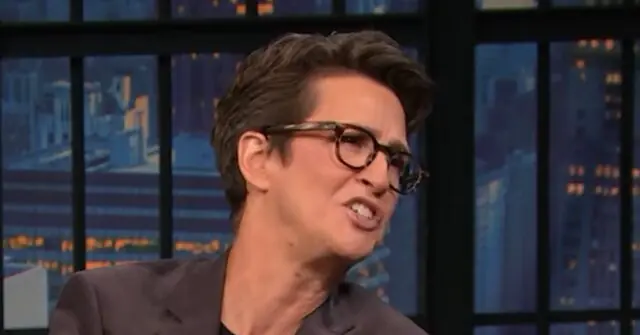
During Tuesday’s Late Night on NBC, Rachel Maddow criticized President Donald Trump for allegedly allowing artificial intelligence (AI) systems that could enable robots to kill humans. The segment, hosted by Seth Meyers, touched on the growing concerns about the future of AI and its potential consequences.
Meyers raised the issue, asking, “I don’t want to be — AI, right? Like, we’re living this moment where—certainly in the last, like, two weeks, scarier prognostications about what the future of AI will be. I don’t necessarily think if we had Democrats in power, we’d be better set for this moment. But we do seem like we have a guy in charge who doesn’t want to think about it at all. Is this the wrong guy to solve AI?”
Maddow responded by highlighting the Washington Post’s recent report that Trump’s administration had actively worked to block international discussions aimed at preventing AI from being used in military weapon systems. She pointed out that the administration ensured that AI programs would not be allowed to kill people without human oversight.
“So, Trump moved explicitly to make sure no human can interfere with robots’ ability to kill us,” Maddow said. “It’s, like, been hard, I think, to imagine, ‘How is it that the AI Apocalypse would happen? How is it that AI might kill us?’ Well, the really easy thing to imagine is them using military weapons to kill us, and Trump is intervening to make sure they can.”
Maddow’s comments come as global concerns about AI regulation and its potential for misuse continue to rise. The discussion underscores the growing debate over the ethical and legal implications of AI in warfare and national security. As the technology evolves, the role of government in shaping its development and ensuring accountability remains a central issue.
The segment also highlighted the broader implications of AI in military applications, including the potential for autonomous weapons to make life-or-death decisions without human input. Critics argue that such systems pose significant risks, including the possibility of unintended casualties and the erosion of human control over lethal force.
While the conversation centered on the Trump administration’s approach, it also raised questions about the broader responsibilities of policymakers in shaping the future of AI. As the technology continues to advance, the need for clear guidelines and international cooperation becomes increasingly urgent.
Source: Breitbart