China Expands Nuclear Sites Amid U.S. Concerns
Satellite images reveal China’s rapid nuclear site expansion, raising U.S. alarms over testing and arms race.
2 min read
Recent satellite image analysis has uncovered rapid expansion at multiple nuclear sites across China, raising concerns among U.S. officials about the country’s nuclear activities. The findings, published by The Telegraph, highlight active construction at seven key locations, including Pingtong, Zitong, Lop Nur, Jiuquan, Mianyang, Jinta, and Guangyuan. These sites are reportedly being developed with the flattening of nearby villages and farms to accommodate advanced testing facilities where Chinese scientists use super-powered lasers to study material reactions under nuclear bomb conditions.
U.S. Accuses China of Concealing Nuclear Tests
Earlier this year, the United States raised concerns about a “secret nuclear test” conducted by China in 2020. Chinese Ambassador Shen Jian responded to the accusations, accusing the U.S. of exacerbating the arms race. He criticized the U.S. for perpetuating the so-called China nuclear threat narrative, stating, “China firmly opposes such false narratives.”
U.S. Under Secretary of State for Arms Control and International Security Thomas DiNanno claimed that China has been using “decoupling” techniques to obscure its nuclear testing activities. This method, he said, reduces the effectiveness of seismic monitoring, allowing China to hide its nuclear tests from global oversight.
China’s Nuclear Strategy and Stockpile
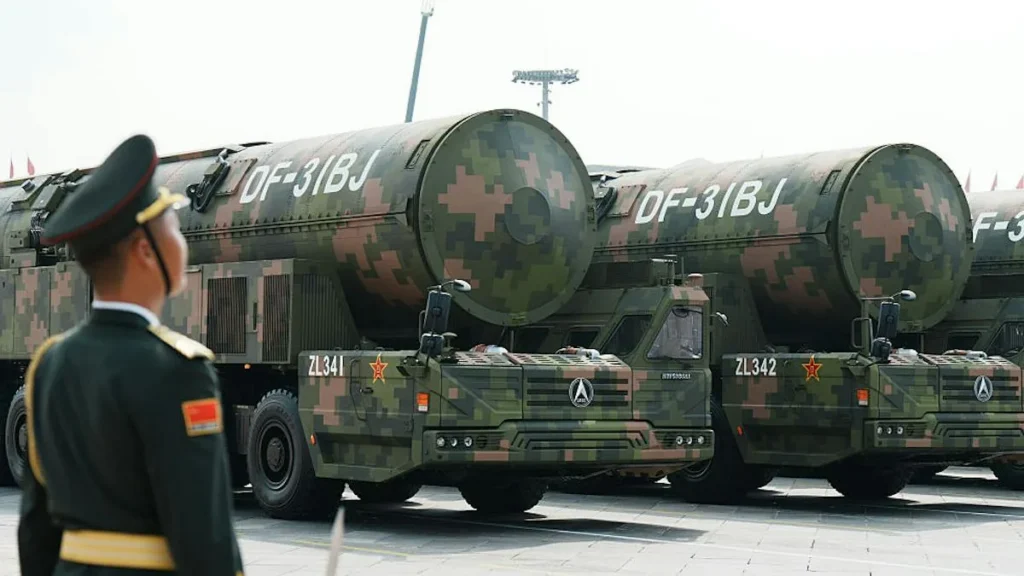
China maintains a strict “no-first-use” nuclear policy, promising never to use nuclear weapons first. However, its nuclear warheads have more than doubled since the start of President Xi Jinping’s tenure. With a current stockpile of 600 warheads, China ranks third behind Russia and the United States, which hold 5,500 and 5,300 warheads respectively.
China initiated its nuclear program in the 1950s with Soviet assistance and successfully tested its first nuclear weapon on October 16, 1964. Under Xi Jinping, the country has significantly expanded its nuclear capabilities, raising international scrutiny.
U.S.-China Nuclear Talks and Future Agreements
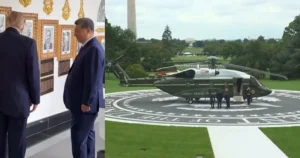
As Xi Jinping meets with former U.S. President Donald Trump in Washington, D.C., discussions on nuclear arms remain uncertain. However, the U.S. has urged China to sign onto a major nuclear arms agreement, with Trump suggesting China could join the U.S.-Russia START I treaty. The New START Treaty, which expired in February 2026, was previously a key framework for nuclear arms control between the U.S. and Russia.
DiNanno emphasized that the current geopolitical landscape necessitates a broader approach to nuclear security, stating, “a bilateral treaty with only one nuclear power is simply inappropriate in 2026 and going forward.” Shen, however, argued that China’s smaller nuclear stockpile makes participation in U.S.-Russia negotiations unlikely, urging the U.S. to abandon Cold War thinking and embrace cooperative security.
Source: Daily Wire