Ukraine Builds Drones in Days, U.S. Takes Years
Ukraine’s rapid drone innovation contrasts with the U.S. slow defense procurement process.
2 min read
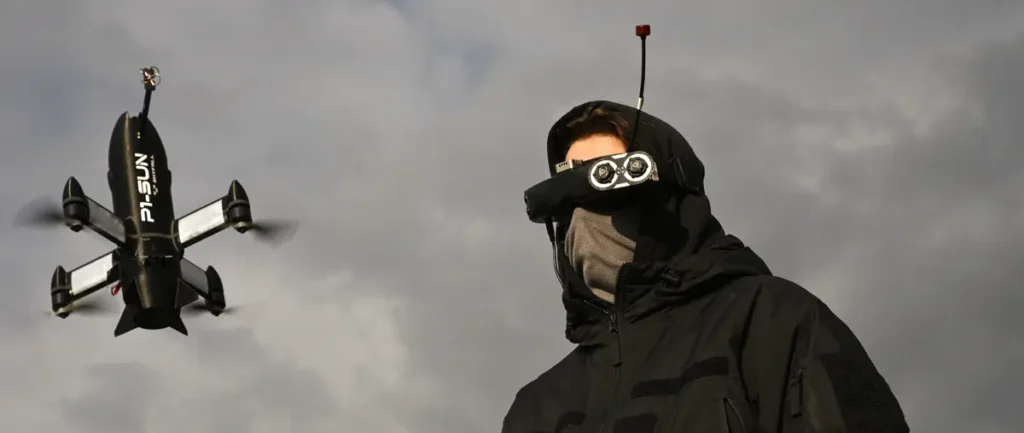
As global conflicts intensify, the Russia-Ukraine war has emerged as a critical lesson for the U.S. on the importance of economical and efficient warfare. A fireside chat hosted by Razom for Ukraine and attended by the DCNF highlighted the growing role of drone warfare, showcasing procurement, training, and even the use of shotguns as anti-drone measures.
Drone Warfare as a Strategic Advantage
Daniel Balson, Razom for Ukraine’s advocacy director, emphasized that drone warfare involves more than just unmanned aircraft. It encompasses electronic warfare, detonation protocols, AI, and procurement systems—all essential for dominating the modern battlefield. According to Geopolitical Intelligence Services (GIS Reports), 70-80% of kinetic operations in the Russo-Ukraine war involved drones by 2025, underscoring their strategic importance.
Dr. Paul Schwennesen, an Air Force veteran and analyst, explained that the innovation cycle in drone warfare is measured in days, not years. ‘If you’re out of the game for a few months, the game is almost unrecognizable,’ he said, highlighting the rapid pace of technological advancement in this field.
Contrasting U.S. and Ukrainian Defense Systems
The U.S. defense acquisition system, however, operates on a much slower timeline. Schwennesen noted that the process is multi-phase and often takes decades, relying on large contractors like Lockheed Martin and Boeing. This creates a bottleneck for high-speed innovation, which is crucial in modern warfare.
In contrast, Ukraine’s system allows for rapid innovation. Manufacturers receive direct input from frontline commanders, enabling them to design, produce, and deploy new drones within four to seven days. ‘What we see in Ukraine is horizontal decision making—innovation happening at a kitchen table level,’ Schwennesen explained.
Implications for Global Security
Dr. Schwennesen also pointed out that drones have become a powerful tool for lower GDP countries and non-state actors. ‘Iran, for example, doesn’t have F-35s, but all it needs is $500 drones and a cell phone to disrupt advanced defense systems,’ he said. This highlights the growing threat posed by low-cost, high-impact drone technology.
Source: Daily Caller