Ancient Ramses II Statues Unearthed by Egyptian Farmer
Egyptian farmer discovers 3,000-year-old statues of Pharaoh Ramses II, sparking archaeological excavation.
2 min read
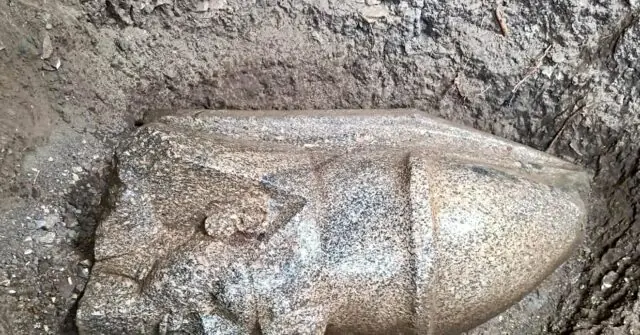
An Egyptian farmer has made a groundbreaking archaeological discovery in the village of Behebat al-Hijara, located in Egypt’s Nile Delta. While working on his property, he stumbled upon a stone covered in inscriptions, which led to the unearthing of two colossal statues believed to represent Pharaoh Ramses II, who ruled over 3,000 years ago. The find, which has sparked a larger excavation, has provided new insights into the ancient temple complex that once stood in the area.
Discovery Sparks Excavation
The initial discovery was made by a homeowner in Behebat al-Hijara, an area about 60 miles north of Cairo. Upon finding the stone, he promptly alerted local archaeological authorities. This led to the involvement of Egypt’s Supreme Council of Antiquities, which launched a full-scale excavation. The team uncovered the remains of two massive royal statues, along with a block of pink granite bearing hieroglyphic inscriptions.
One of the statues was identified as depicting King Ramses II, who reigned over 3,000 years ago. According to Hisham El-Lithi, secretary-general of the Supreme Council of Antiquities, the size of the head suggests the full statue, including its base, may have originally stood approximately 28 feet tall. The second statue is believed to also depict the ancient pharaoh, offering further clues about his reign and legacy.
Significance of the Find
The discovery is significant not only for its historical value but also for the role it highlights in understanding the ancient temple complex that once stood in the area. Egypt’s Minister of Tourism and Antiquities, Sherif Fathy, commended the farmer for reporting the find quickly, emphasizing the importance of ordinary citizens in protecting Egypt’s heritage for future generations.
Archaeologists believe the artifacts could provide valuable new insights into the religious and political structures of Ramses II’s time. This find continues to underscore the rich cultural and historical tapestry of ancient Egypt, offering a glimpse into the past that continues to captivate historians and the public alike.
Source: Breitbart