Two Ships Sink Near Strait of Hormuz After ‘Projectile’ Attacks
Two vessels sink near Strait of Hormuz after mysterious attacks, raising concerns over regional tensions and international law.
4 min read
Two ships sank near the Strait of Hormuz after suffering attacks from unidentified projectiles, escalating tensions in the region and drawing condemnation from international maritime authorities. The incidents occurred on Tuesday and Wednesday, with the Singapore-flagged container ship GFS Pride and the dry bulk carrier Cape Dao among the casualties. The Maritime and Port Authority of Singapore (MPA) confirmed that the GFS Pride sustained damage and caught fire before sinking, with all 21 crew members safely evacuated. The Cape Dao, flagged to Antigua and Barbuda, was damaged in an attack on September 23 and sank near the strait, leaving one crew member dead.
Iran Claims Mine Attack, U.S. and UK Condemn Unprovoked Strikes
The Islamic Revolutionary Guard Corps (IRGC) claimed on Thursday that one of the sinking ships struck a mine laid in the strait, though the exact details remain unclear. The MPA expressed deep concern over the attacks, calling them unprovoked and a breach of international law. Meanwhile, the United Kingdom Maritime Trade Operations (UKMTO) reported that two unnamed container ships were struck by unknown projectiles on Tuesday evening but managed to continue their journeys with only minor damage.
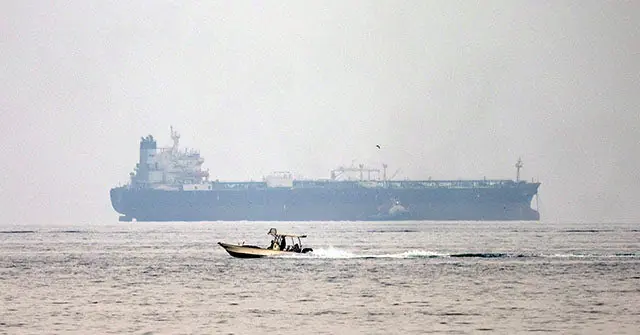
Iranian state media reported an oil tanker caught fire while passing through a “prohibited zone” in the strait with its tracking systems turned off, though they did not claim responsibility for the attack. The incident has raised questions about the extent of Iranian involvement in targeting commercial shipping, as the attacks have continued since the U.S.-Iran conflict escalated at the end of February.
Iranian Tactics and U.S. Response
Two senior Iranian officials told Reuters that Iran has adopted “new tactics” to attack civilian vessels in the strait, aiming to keep oil prices high and hurt President Donald Trump’s re-election prospects. These tactics, which began about ten days ago, have led to a surge in incidents as ships attempt to transit the area. One of these tactics reportedly involves using small spotter boats to target vessels, a shift from relying on radar systems that were largely destroyed by American airstrikes. A U.S. military official confirmed that at least one of these spotter boats was destroyed last week.
The UKMTO and maritime tracking services also noted that Iran appears to be expanding its targeting area beyond the Strait of Hormuz, including the waters of Oman and the UAE. Iranian officials predicted that their attacks would completely shut down the strait before the U.S. elections in November, describing the situation as a “game of chess” where they would push prices higher to disrupt the political landscape.
Historical Context of Attacks
This is not the first time commercial vessels have been targeted in the strait. The first incident occurred on March 4, when the Malta-flagged container ship Safeen Prestige was hit by a missile and abandoned. A UAE-flagged tugboat, Mussafah 2, attempted to assist on March 6 but was also struck by Iranian missiles. The Safeen Prestige eventually sank off the coast of Oman on or about April 1, following fires on board.
Social media videos reportedly showed cargo, including mobile phones and luxury goods, floating in the water near the strait, with people in small boats collecting items. This was likely cargo left behind by the sinking Cape Dao, which had been damaged in an attack on September 23. The incident highlights the broader impact of these attacks on global trade, as the Strait of Hormuz is a critical artery for global oil shipments.
Regional and International Reactions
The attacks have drawn widespread condemnation from international maritime authorities and governments. The MPA emphasized that the attacks were unprovoked and a violation of international law, underscoring the need for accountability and adherence to global norms. Meanwhile, the U.S. military has been actively monitoring the situation, with reports indicating that Iranian tactics are evolving to evade detection and strike with greater precision.
Iran’s continued aggression in the region has raised concerns about the stability of global energy markets and the potential for further escalation. The attacks have also sparked debates about the role of international law in preventing such incidents and the responsibility of states to protect commercial shipping in international waters.
Broader Implications for Global Trade and Politics
The sinking of the two ships has broader implications for global trade and politics. The Strait of Hormuz is a critical route for approximately 20% of the world’s oil supply, and any disruption can have significant economic consequences. The Iranian officials’ claim that their attacks are aimed at keeping oil prices high is a clear indication of the strategic and economic motivations behind the attacks.
As the situation continues to unfold, the international community is closely watching the developments in the region. The attacks have not only raised concerns about maritime security but also highlighted the complex interplay between regional politics and global economic stability. The long-term impact of these incidents remains uncertain, but the potential for further escalation is a pressing concern for all stakeholders involved.
Source: Breitbart