ISS Air Leak Forces Russia to Seal Off Critical Docking Port
Russian space agency seals off a key ISS docking port due to unfixable air leaks, complicating future resupply missions.
4 min read
It’s official: A persistent air leak in the Zvezda module of the International Space Station has forced Russia to permanently seal off the Transfer Chamber (PrK), one of the station’s few docking ports from pressurized access. The issue, which has been a growing concern for months, has now reached a critical point where NASA and Roscosmos have had to make difficult decisions about the future of the station’s operations.
A Persistent Problem with a Long History
The problem with the PrK, a critical access point for Russian Progress cargo ships, has been ongoing since 2019, when minor air leaks were first detected. These leaks, described as ‘persistent cracks,’ have grown over time, leading to significant concerns about the integrity of the module. Russian astronauts have attempted various fixes, including the use of a sealant called Germetall-1, but these efforts have not resolved the issue.
In June, the situation escalated when NASA directed its astronauts to seek emergency refuge in the Crew Dragon spacecraft. This decision was prompted by the fear that the PrK’s leaks could lead to a depressurization event, endangering the astronauts. The move was an extreme step, reflecting the severity of the issue and the potential risks to crew safety.
The Decision to Seal Off the PrK
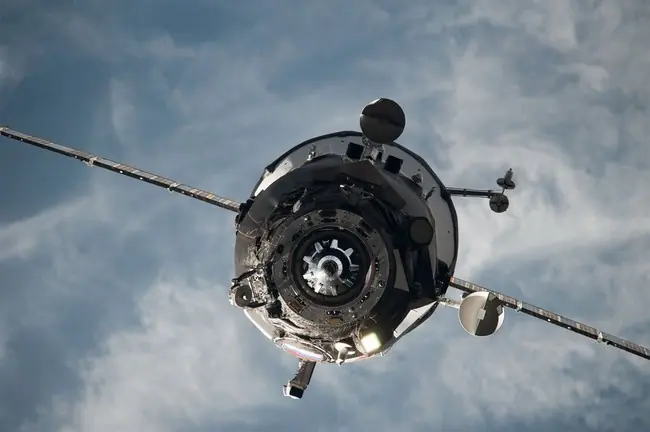
Both NASA and Roscosmos have known for four months that the leaks were unfixable, and sealing off the PrK was the only viable option. This decision has had significant implications for the station’s operations, particularly for resupply missions. The PrK was primarily used by Progress cargo ships to deliver essential supplies, including food, water, oxygen, equipment, and experiments. It was also the preferred port for boosting missions, where Progress capsules used their engines to give the ISS an orbital boost to maintain its altitude.
Now that the PrK is sealed off, the scheduling of docking operations has become more complex. The station’s docking ports are among the most valuable resources, and their use is scheduled well in advance. The sealing of the PrK has disrupted this schedule, leading to a more chaotic arrangement for resupply missions.
Adapting to the New Normal
Russian Space Web reported that the next Progress MS-36 resupply mission will be the first to use different docking ports for unloading cargo and performing orbit corrections. This mission will dock and unload its cargo through the Poisk module, then move back to the PrK to give the ISS an orbital boost. After that, the Progress will return to Poisk to take on trash and any other items needing to be transferred back to Earth.
This shift in docking operations is reminiscent of the game ‘space Jenga,’ where each move affects the stability of the entire structure. The changes are part of the new normal for the ISS, which is expected to remain in orbit until at least 2030, possibly even 2032.
Age and Stress as Contributing Factors
One of the factors contributing to the unsealable cracks in the Zvezda module is its age. Launched in 2000, the module has endured the extreme conditions of Low Earth Orbit for over two decades. The repeated stress from boosting missions, where the module serves as a connection point for the thrust of Progress capsules, has likely contributed to the structural issues.
As the ISS continues to operate, the challenge of maintaining its aging infrastructure will become increasingly complex. The sealing of the PrK is a clear indication that the station’s systems are reaching the limits of their design and that adaptive measures are necessary to ensure continued functionality.
Looking Ahead
The sealing of the PrK has forced both NASA and Roscosmos to adapt their strategies for resupply and maintenance. The changes in docking procedures will require careful coordination to ensure that the station’s operations remain stable. While the situation presents challenges, it also highlights the resilience and adaptability of the international space community.
As the ISS continues its mission, the lessons learned from this incident will be crucial for future space exploration. The sealing of the PrK is a reminder of the importance of proactive maintenance and the need for continued innovation in space technology. The future of the station remains uncertain, but the determination of the astronauts and engineers involved will be key to its continued success.
Source: PJ Media