Supreme Court to Address Excessive Fines in Landmark Cases
Supreme Court to address excessive fines as cases involving pilots, professors, and property owners challenge government overreach.
4 min read
Imagine being fined $900,000 by your local government for operating a greenhouse, only to be told they assume you’re growing marijuana without a permit. Or being slapped with a $100,000 fine for parking your car on your own property. These scenarios may sound absurd, but they are real and have reached the U.S. Supreme Court. The cases highlight a growing concern over excessive fines and the potential for government overreach, with implications for individual rights and the rule of law.
A Pilot’s Fight Against Unlawful Search
Ken Jouppi, a pilot in Alaska with 30 years of experience, found himself at the center of a legal battle after state troopers searched his plane before takeoff. The search revealed beer in a box of groceries, leading to a three-day jail sentence and the seizure of his primary source of income. Jouppi’s lawyer, Mike Greenberg, argued that the search was an invasion of privacy and an abuse of power. “They think pilots should search people’s luggage,” Jouppi said, expressing his deep distress over the violation of his dignity.
Greenberg explained that the issue is not just about the search itself but the broader implications of such actions. “The state has every interest in going after valuable assets rather than actually fighting the supposed harms of alcohol,” he noted. The case has been ongoing for 14 years, with the plane still sitting on a tarmac, symbolizing the absurdity of the situation. The Institute for Justice, Greenberg’s law firm, has taken the case to the Supreme Court, where it is expected to be heard in the coming months.
A Professor’s Tax Bill: $400,000 for a One-Page Form
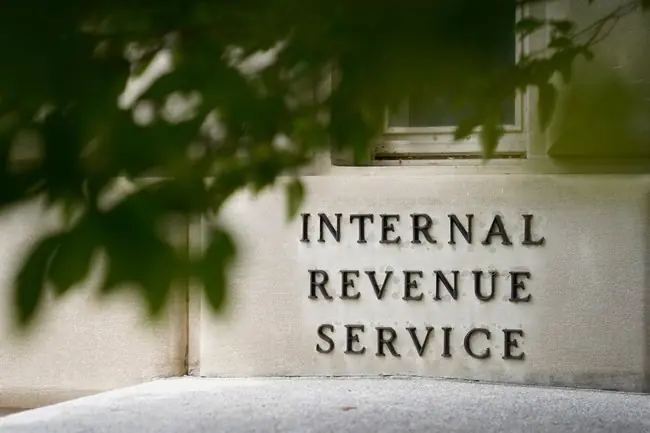
Tuncay Saydam, a retired professor, is facing a $400,000 tax bill from the IRS for not filling out a one-page form about an old bank account in Turkey. The IRS argues that the fine is necessary to recover a significant tax loss, despite the fact that Saydam’s unpaid taxes were less than $30,000. A California court upheld the penalty, with Judge Donna Ryu writing that the government had suffered a significant tax loss.
Saydam described the fines as a life-altering burden, stating, “The fines will destroy my life… We have never been rich.” This case highlights the potential for government agencies to impose disproportionate penalties, especially when there is a lack of transparency or clear guidance for citizens.
Greenhouses and the War on Marijuana
In Humboldt County, California, authorities have been using aerial photos to search for unlicensed marijuana farms. When they spotted greenhouses, they issued massive fines, often exceeding $900,000. Blu Graham, one of the affected property owners, was fined $900,000 for growing vegetables in his greenhouse, despite the absence of any marijuana. Greenberg, who has been representing Graham, pointed out that the authorities were simply guessing that greenhouses were connected to marijuana.
“There actually was no marijuana on the property,” Greenberg said, emphasizing that the fines were based on assumptions rather than evidence. A lawsuit eventually led to the county agreeing to end its “ruinous fine system,” but the damage had already been done, with many property owners left financially ruined.
The Motive Behind Excessive Fines
Greenberg explained that the primary motive behind these excessive fines is financial gain. “Unlike other forms of punishment, fines make the government money. The prosecutor’s office, state troopers, they get to keep the proceeds,” he said. This creates an incentive for government officials to continue prosecuting cases, even when the evidence is weak.
The lack of transparency and accountability in these cases has led to a system where innocent individuals are punished for minor mistakes. Greenberg argued that the Constitution’s prohibition against excessive fines is a critical safeguard against such abuses. However, the system remains in place, with many cases going unchallenged and fines continuing to be imposed without regard for the consequences on individuals.
A Call for Justice and Reform
As these cases move toward the Supreme Court, there is hope that the judiciary will intervene and put an end to these abuses. The potential for reform is significant, with the possibility of setting a legal precedent that protects individuals from excessive fines and overreach by government agencies.
Greenberg expressed confidence in the Supreme Court’s ability to address these issues, stating, “I trust that the Supreme Court will put a stop to these abuses.” The cases involving Jouppi, Saydam, and Graham represent a broader trend of government overreach, with the potential to affect countless other individuals across the country.
Conclusion: The Need for Legal Safeguards
The cases of Ken Jouppi, Tuncay Saydam, and Blu Graham underscore the urgent need for legal safeguards against excessive fines and government overreach. As these cases reach the Supreme Court, the outcome could have far-reaching implications for individual rights and the rule of law. The fight for justice continues, with the hope that the legal system will finally address the systemic issues that have allowed these abuses to persist.
Source: PJ Media