Headless Horseman’s Legend Roots in 1776 Battle
Explore the spooky origins of the Headless Horseman in the American Revolution, tied to the Battle of White Plains.
2 min read
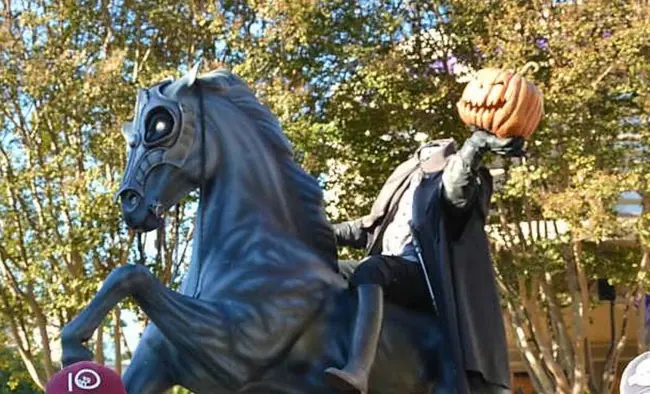
As Halloween approaches, the legend of the Headless Horseman continues to captivate the American imagination. This iconic figure, central to Washington Irving’s The Legend of Sleepy Hollow, has deep historical roots, tracing back to the American Revolution in 1776.
A Haunting Tale from History
The story of the Headless Horseman is believed to have originated from the Battle of White Plains, which took place on October 28, 1776, just days before Halloween. During this crucial moment in the Revolutionary War, American forces faced a significant defeat against the Hessians and British. A cannonball reportedly severed the head of a Hessian artilleryman, an event that would later inspire the ghostly legend of the Headless Horseman.
Washington Irving, who lived near Tarrytown, New York, wove this historical event into a tale of horror and superstition. The story, as told by old Dutch housewives to Irving’s character Ichabod Crane, blends history with myth, creating a chilling narrative that has endured for generations.
The Real Inspiration Behind the Legend
While the exact origins of the legend remain a subject of debate, the New-York Historical Society suggests that the Headless Horseman was inspired by real events from the Revolutionary War. The Dutch settlers in the area were known for their superstitions and love of ghost stories, often tying them to historical events or battles.
Ichabod Crane, the schoolmaster in Irving’s tale, is said to have been obsessed with ghost stories and infatuated with Katrina Van Tassel, a wealthy local woman. His pursuit of her leads to a confrontation with Brom Bones, who uses the legend of the Headless Horseman to scare Crane away. The tale ends with Crane’s disappearance, attributed to the ghostly figure he encountered.
Legacy in Tarrytown and Beyond
Today, visitors can still explore the Old Dutch Cemetery in Tarrytown, where the legend of the Headless Horseman is said to have originated. The colonial tombstone of Catriena Van Tassel, the inspiration for Katrina, remains a popular site for those interested in the history behind the tale. The wooden bridge that once marked the race between Crane and the Horseman is gone, but a marker still indicates where the story unfolded.
Tarrytown maintains its quaint charm, and on gloomy days or during October, it seems to echo with the spirit of the Headless Horseman. The legend continues to live on in the American imagination, a testament to the power of storytelling and historical memory.
Source: PJ Media