Blue States Push Women’s Sports Ballot Measures Amid Growing Backlash
Five states, including Washington and Colorado, face ballot measures to redefine school sports based on biological sex.
2 min read
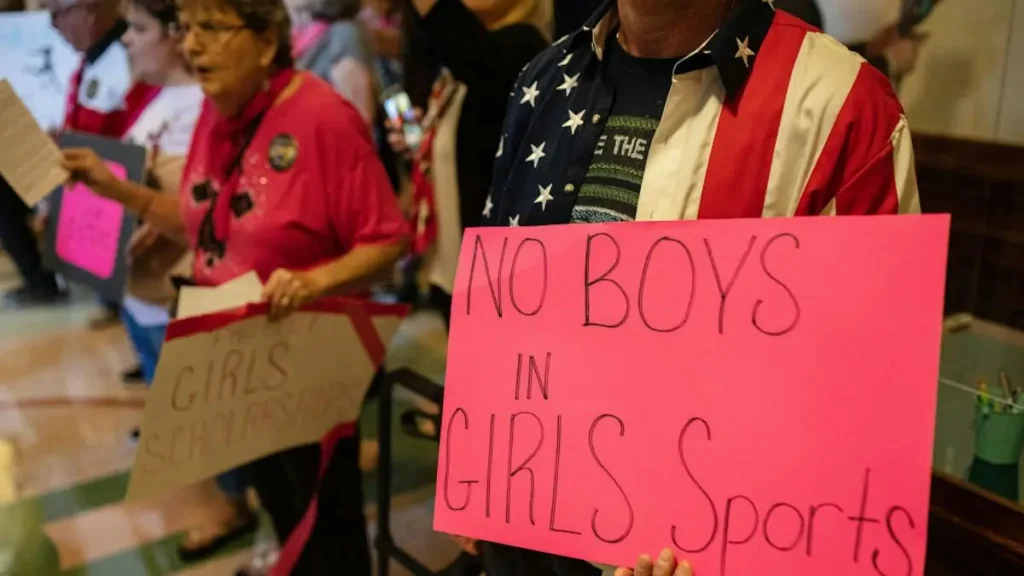
For the first time, voters are deciding whether school sports should remain sex-based, with five states, including two deep-blue states, placing measures on the November 3 ballot. The initiative marks a shift in the debate over transgender participation in women’s sports, as ordinary parents and athletes are speaking out against the perceived threat to fairness and female competition.
Washington and Colorado Lead the Charge
In Washington, Initiative 638 seeks to keep biologically male students out of girls’ K-12 competitions and requires verification of biological sex for girls’ events. A poll of 7,500 likely voters showed 56% support, including nearly half of Democrats, indicating a growing concern over male athletes competing against female counterparts. The measure comes amid real-world incidents, such as Camas High School girls walking off a cross-country start line to avoid racing against a teammate who self-identified into girls’ races after initially competing in the boys’ division.
Colorado’s Proposition 134 would require K-12 and college teams to be designated male, female, or co-ed based on biological sex. The measure, backed by grassroots efforts and not big-money donors, faces opposition from groups like Families Not Politics, which has raised over $4.4 million. The ACLU and Planned Parenthood have also contributed, with the latter promoting the idea that the measure would lead to genital checks and harm girls, despite the text not requiring such checks.
Pressure Mounts in Portland
Last weekend in Portland, a group of women wearing XX-XY Athletics shirts unfurled a “Save Women’s Sports” banner at a Thorns match. They were met with physical force and removal by stadium security, with the Department of Justice reviewing the incident. While Portland has no ballot measure, the event highlights the growing tension as voters in neighboring states push for change.
Legal and Social Implications
Colorado has already made refusing to use preferred names or pronouns a form of discrimination under its anti-discrimination law, effectively silencing debate on the issue. The measures, while not changing culture by themselves, reflect a broader shift as parents and girls who have lost opportunities due to transgender participation are no longer willing to remain silent.
The debate is rooted in the reality of male advantage in sports, which has been a cornerstone of women’s athletic achievements. As the facade of gender neutrality cracks, the focus is on protecting the fairness and dignity of female sports.
Source: Daily Wire