El-Sayed’s Antisemitism Emerges in Controversial Interview
Abdul El-Sayed faces backlash over his ambiguous stance on Israel’s right to exist during a tense interview with Ross Douthat.
4 min read
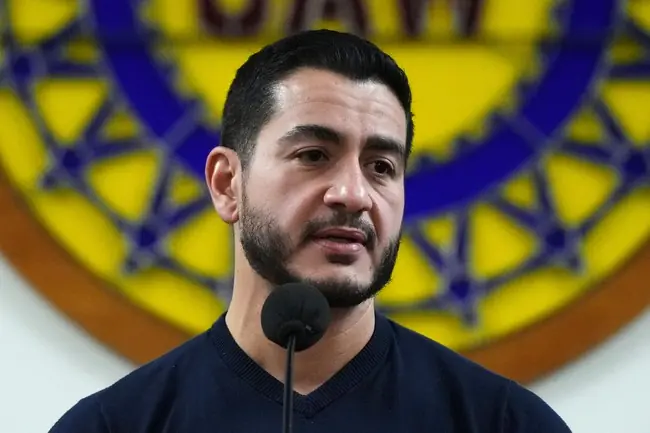
Abdul El-Sayed is facing mounting pressure as his campaign for the Michigan Senate race continues to spiral into controversy. The former Democratic primary candidate, who narrowly lost to Haley Stevens in 2022, is now finding himself at the center of a political firestorm over his controversial remarks during a recent interview with Ross Douthat of 60 Minutes. The interview, which aired in the final days of the race, has drawn sharp criticism for its implications about El-Sayed’s stance on Israel and Palestine, raising concerns about his potential antisemitism.
El-Sayed’s Controversial Stance on Israel
During the interview, Douthat asked El-Sayed directly, “Does Palestine have the right to exist?” El-Sayed responded with a clear “Yes,” without hesitation. However, when Douthat followed up with the same question about Israel, El-Sayed’s response was markedly different. He hesitated and offered a conditional answer, stating, “So, uh, yes, if there is a shared understanding…” Douthat interrupted, pressing El-Sayed to clarify his position. El-Sayed then attempted to pivot to a more philosophical argument, emphasizing the need for principles of equality, peace, and self-determination for both Palestinians and Israelis.
Despite his attempt to frame the discussion in terms of shared values, El-Sayed’s remarks were interpreted by many as implicitly supporting the idea of a single state that would replace the current Israeli state. His suggestion that a shared state could be an acceptable outcome for both sides was seen as a veiled endorsement of a vision that would effectively eliminate the Jewish state. This interpretation has raised serious concerns about his commitment to Jewish interests, especially as he continues to seek the support of Jewish voters in a crucial Senate race.
Impact on Democratic Party and Jewish Voters
El-Sayed’s ambiguous stance on Israel’s right to exist has come at a particularly sensitive time for the Democratic Party. The party is currently struggling to retain the support of Jewish voters, a key demographic that has been increasingly concerned about the direction of the party’s platform on Israel. El-Sayed’s failure to clearly affirm Israel’s right to exist has been seen as a major misstep, especially given the recent history of antisemitic rhetoric in some Democratic circles.
His campaign has also faced internal criticism, with a Michigan Democratic Party staffer, Abdoul Beckwith, making controversial remarks about El-Sayed’s reluctance to denounce Islamic terrorist groups. Beckwith claimed that El-Sayed’s hesitation to condemn groups like the Muslim Brotherhood could alienate his Muslim base. These comments further underscore the internal tensions within the party and raise questions about the priorities of El-Sayed’s campaign.
Democratic Party Rift and Endorsement Shifts
El-Sayed’s campaign has also been affected by a shift in endorsements. Originally, Rep. Haley Stevens, who had been his primary opponent in 2022, had endorsed him after their race. However, she later flipped her support to El-Sayed’s Republican opponent, former Rep. Mike Rogers. This shift has contributed to a growing rift within the Democratic Party, with some members feeling that El-Sayed’s positions are not aligned with the values of the party.
Stevens’ endorsement of Rogers is seen as a significant blow to El-Sayed’s campaign, especially given the importance of endorsements in a closely contested race. The Democratic Party is now facing the challenge of uniting its base behind a candidate who has made controversial statements about Israel and who has failed to denounce antisemitic rhetoric in his campaign.
Broader Implications for the Senate Race
The controversy surrounding El-Sayed’s remarks has broader implications for the Michigan Senate race. As the race enters its final stretch, the Democratic Party is scrambling to regain momentum and attract key voter groups, including Jewish voters. El-Sayed’s campaign, which has already been plagued by internal strife and a lack of clear messaging, now faces the additional challenge of addressing the concerns raised by his recent interview.
El-Sayed’s inability to clearly affirm Israel’s right to exist has led many to question his commitment to Jewish interests and his ability to represent the values of the Democratic Party. His campaign has also been criticized for its failure to condemn antisemitic ads that have been used against his opponents, a move that has further damaged his credibility among Jewish voters.
Conclusion and Future Outlook
As the Michigan Senate race approaches its final days, the controversy surrounding El-Sayed’s remarks has become a significant obstacle to his campaign. His failure to clearly affirm Israel’s right to exist, coupled with his reluctance to denounce antisemitic rhetoric and Islamic terrorist groups, has raised serious concerns about his suitability for the Senate. The Democratic Party is now facing the challenge of finding a candidate who can unite its base and effectively represent the interests of key voter groups, including Jewish voters.
Source: PJ Media