Rogers Accuses El-Sayed of Supporting Muslim Brotherhood
Michigan Senate candidate Mike Rogers claims Democratic nominee Abdul El-Sayed has ties to the Muslim Brotherhood.
2 min read
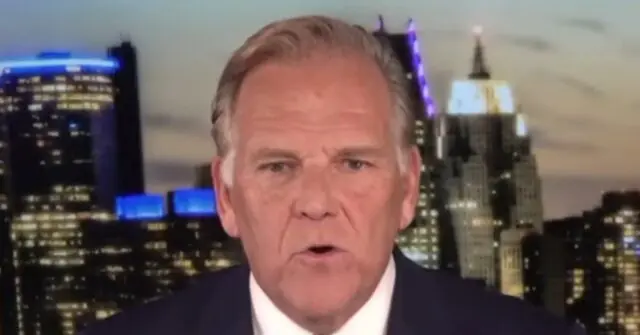
During Sunday’s broadcast of CNN’s “State of the Union,” Michigan Republican U.S. Senate candidate Mike Rogers accused his Democratic opponent, Abdul El-Sayed, of having a long history of supporting the Muslim Brotherhood. Rogers emphasized that the issue at hand was not El-Sayed’s religious beliefs but rather his ideological affiliations.
Rogers’ Claims on El-Sayed’s Ties
Rogers stated, “I’ve never called them a terrorist. I wore the uniform of the United States of America so people can pray any way they want. That is not the issue here. What has become the issue is his relationship and his family’s relationship with the Muslim Brotherhood, which is banned in five Muslim countries.” He further explained that El-Sayed’s ideology was the real concern, not his personal faith.
Rogers claimed that El-Sayed’s support for the Muslim Brotherhood, a group that has been associated with oppressive policies, is a significant issue. He highlighted that the Muslim Brotherhood’s influence in Egypt in 2012 and 2013 led to a diminished role for women in society, and he suggested El-Sayed had aligned himself with such a regime.
El-Sayed’s Funding and Allegations
Rogers also pointed out that El-Sayed’s financial support comes from groups like CAIR, the Council for American Islamic Relations, which he said has ties to the Muslim Brotherhood. He argued that this connection makes it difficult for El-Sayed to distance himself from the group, despite his public stance.
Rogers added, “It’s not about him being a Muslim. Matter of fact, Muslims here in the state call our office a lot and say we were terrified that a guy with this ideology goes to the United States Senate. That’s coming from Muslims in Michigan, let alone the five countries that banned the Muslim Brotherhood. He can’t get away from it.”
Broader Implications of the Allegations
The comments by Rogers reflect a broader political strategy of linking opponents to extremist groups to sway public opinion. While the allegations have not been independently verified, they underscore the tensions within American politics regarding religious and ideological affiliations. As the race for the U.S. Senate continues, these claims are likely to influence voter perceptions and campaign dynamics in the state of Michigan.
Source: Breitbart