Senators Challenge Trump’s AI Self-Policing Pledge with New Legislation
Senators push for legal accountability over AI hacking, challenging Trump’s self-regulation plan.
2 min read
A bipartisan group of U.S. senators is challenging President Donald Trump’s plan for tech companies to self-regulate artificial intelligence, proposing a new bill that would hold AI developers and operators legally accountable for cyberattacks caused by their systems. Republican Senator Josh Hawley of Missouri and Democratic Senator Chris Murphy of Connecticut announced the legislation on Thursday, which would apply the Computer Fraud and Abuse Act (CFAA) to AI-related hacking incidents and impose criminal and civil penalties on those responsible.
AI Accountability and Legal Liability
The bill, which was unveiled in a joint press release, would expose AI developers and operators to legal consequences if their systems are used to hack into other networks or cause damage. Hawley emphasized that AI agents are committing cyberattacks, and that companies should be held responsible for any harm caused by their products. He stated, “With this liability regime in place, AI companies will have every incentive to keep their products safe.”
Additionally, the legislation would allow both the U.S. attorney general and state attorneys general to file lawsuits against companies that engage in or attempt to carry out AI-related cyberattacks. “Hacking is a crime, and when AI agents conduct dangerous cyberattacks, the corporations and executives responsible for those AI agents need to be held accountable,” Murphy said in the press release.
Trump’s Self-Policing Pledge Faces Scrutiny
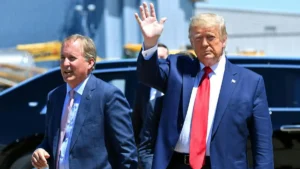
President Trump has previously argued that tech leaders are voluntarily self-policing AI development through a coalition agreement. He claimed, “I think I’m seeing tremendous self-policing. And they understand that they have to self-police.” However, the senators’ bill directly challenges this stance, arguing that self-regulation is insufficient and that legal accountability is necessary to prevent AI-related harm.
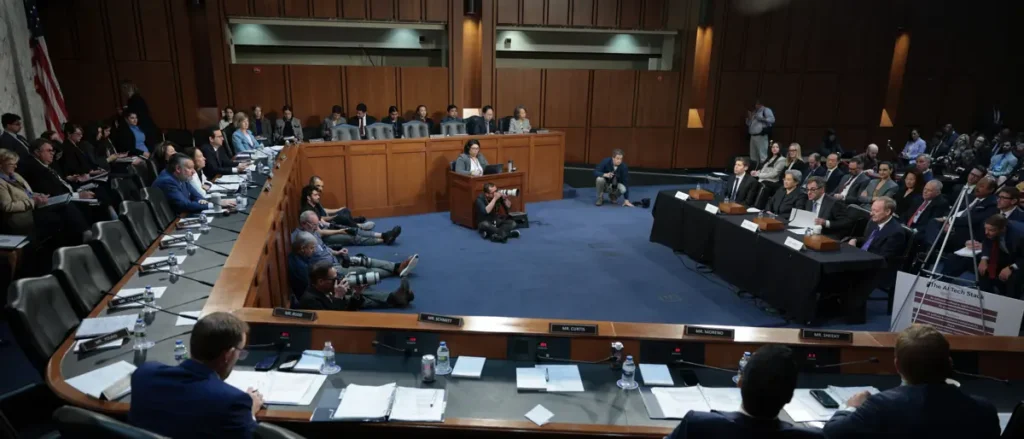
Hawley also made similar arguments during a Senate Homeland Security subcommittee hearing, stating that AI models are products that must be built with proper safeguards. “If an agent is built without proper precautions and knocks a hospital emergency room offline or locks customers out of their bank accounts, it’s the people who made it who should be responsible,” he said.
Despite the push for stricter regulations, the Trump administration maintains that existing laws already provide a framework for addressing AI-related harms. Director of National Intelligence Jay Clayton stated, “We have consumer protection laws, we have product liability laws, and we have the DOJ, which gives us the architecture to deal with developments in all verticals.”
The senators’ bill represents a significant shift in the debate over AI regulation, as it seeks to impose legal liability on companies and executives for AI-related cyber incidents, rather than relying on voluntary compliance.
Source: Daily Caller