Jeffries Avoids Direct Answer on ICC and Netanyahu
House Minority Leader Hakeem Jeffries sidesteps question on ICC membership and Netanyahu arrest, focusing on peace in Middle East.
2 min read
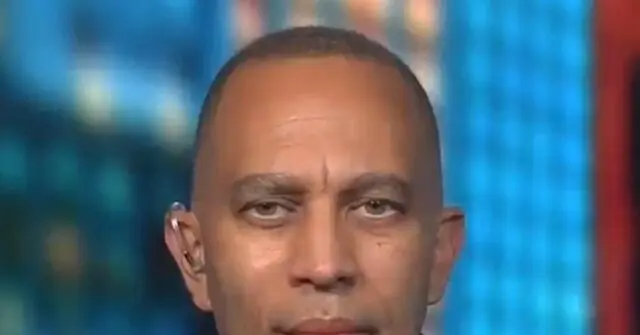
On Friday’s broadcast of CNN’s ‘OutFront,’ House Minority Leader Rep. Hakeem Jeffries (D-NY) addressed a question regarding New York City Mayor Zohran Mamdani’s (D) call for the United States to arrest Israeli Prime Minister Benjamin Netanyahu and join the International Criminal Court (ICC). Jeffries did not directly answer whether he supports Mamdani’s stance, instead emphasizing the need for a peaceful resolution to the conflict in the Middle East.
Jeffries Focuses on Peace and Security
Host Erin Burnett asked Jeffries if he agrees with Mamdani’s call for the U.S. to join the ICC and enforce warrants against Netanyahu for alleged crimes against humanity and war crimes. Jeffries responded by stating, ‘I haven’t talked to him about this particular foreign policy issue, or, for that matter, any foreign policy issue.’ He praised Mamdani’s work as mayor, highlighting his efforts to keep the city safe and advocate for affordable housing.
Jeffries then shifted focus to the broader Middle East conflict, emphasizing the importance of preventing another ‘October 7’ and the devastation seen in Gaza over the past three years. He called for a path toward a ‘just and lasting peace’ with a secure Israel and a Palestinian state that ensures dignity and self-determination for Palestinians.
Mamdani’s Stance on ICC and Netanyahu
Burnett played a clip of Mamdani, who stated, ‘I believe that the U.S. government should join the ICC, it should enforce its warrants for every one that has been issued. And when it comes to the Prime Minister, it’s been issued for crimes — alleged crimes against humanity and war crimes.’ Mamdani described Netanyahu as ‘the architect of a horrific genocide,’ and urged the U.S. to honor every ICC warrant.
Jeffries did not comment on the ICC’s role or the merits of the warrants, instead focusing on the necessity of a secure and democratic Israel alongside a Palestinian state. His remarks underscored a broader debate within U.S. political circles about the role of international institutions in addressing the Israel-Palestine conflict.
Broader Implications for U.S. Foreign Policy
The discussion highlights the growing tension between U.S. foreign policy and international institutions such as the ICC. While some leaders, like Mamdani, advocate for the U.S. to support the ICC’s enforcement actions, others, like Jeffries, emphasize the need for diplomatic engagement and peace negotiations. This divergence reflects the complex and often polarizing nature of U.S. involvement in the Middle East.
Source: Breitbart