Kilauea Volcano Activity Closes Trails, Issues Aviation Warning
Hawaii’s Kilauea volcano shows increased activity, prompting trail closures and aviation alerts.
2 min read
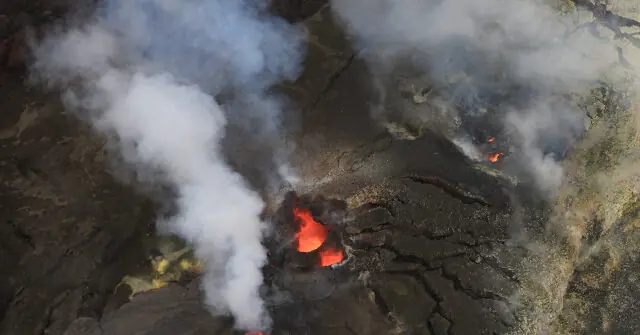
Hawaii’s iconic Kīlauea volcano has entered a heightened state of activity, leading to temporary trail closures and an aviation warning. The U.S. Geological Survey (USGS) issued an alert on October 7, marking the volcano as being at a serious alert level with a cautionary color code of ‘orange’ for aviators. This level signifies a high risk of eruption, prompting the National Park Service (NPS) to close two trails in Hawaii Volcanoes National Park due to the threat of falling rocks.
Seismic Activity and Risk of Rockfalls
Recent data from the Hawaiian Volcano Observatory indicates that more than 200 shallow earthquakes were recorded beneath Kīlauea’s summit during the past week. On September 30, small rocks fell along the caldera’s north wall following a 3.4-magnitude earthquake. These events highlight the ongoing seismic activity that has led to the closure of trails and increased safety precautions for visitors.
Aviation Alert and Uncertainty Over Eruptions
The four aviation color codes are used to alert aviators about potential volcanic eruptions. Orange is the second-highest level on the scale, indicating that an eruption is possible within days to weeks. Scientists have noted that they cannot forecast when or if the volcano’s 55th episode of lava fountaining will occur, adding to the uncertainty surrounding the situation.
Visitor Advisories and Safety Measures
The NPS has issued several advisories to visitors, including a guide titled ‘Protect Yourself from Volcanic Tephra.’ This document warns that volcanic ash, rock, and glassy strands (tephra) can irritate skin, eyes, and the respiratory system. Visitors are advised to avoid handling tephra and to wear protective gear such as eye protection, long sleeves, long pants, a hat, closed-toe shoes, and a dust mask.
High Visitor Numbers and Park Significance
Despite the closures, the park remains a popular destination, with over 1.8 million recreational visits recorded in 2025. The NPS reports that visitors flock to the park during eruptive episodes to witness the volcanic activity. These visits underscore the park’s significance as both a natural wonder and a scientific research site.
Source: Breitbart