New Clues Link Cartel to 43 Missing Students’ Disappearance
New evidence points to a cartel-linked funeral business in the 2014 disappearance of 43 Mexican students.
3 min read
Twelve years after 43 Mexican college students vanished after being detained by police, federal investigators say new evidence points to a cartel-linked funeral business that ran the local morgue. Special prosecutor Mauricio Pazarán said Monday that a fresh analysis of phone records from 2014 and 2015 had identified 17 people never before investigated in the case. The records revealed previously undetected links among members of the Guerreros Unidos cartel, municipal and state police, public officials, and people connected to funeral homes.
Cartel Ties and Forensic Evidence
At the center of the new findings is Rodolfo “N,” whose family owned two funeral homes in Iguala, held the concession to run the city’s forensic morgue, and helped manage a cemetery. Cartel members communicated with him on the night the students disappeared, according to prosecutors. Investigators determined that Rodolfo “N” used the cellphone of Julio César Mondragón, a student killed in the attacks, on October 4, 2014. They also found that Mauro “N,” a former Iguala municipal official, used the phone of Jorge Antonio Tizapa Legideño, another one of the missing 43 students. He has been wanted on an arrest warrant since August for organized crime and forced disappearance.
Searches and Discoveries
The discovery led to searches of the funeral homes and the morgue in October 2025. Authorities found a human femur, a firearm, documents, and a crematorium oven without official registration. The Washington Post reported that a second search of the morgue found unregistered skeletal remains, duplicate body records, remains dated to 2014, and charred bone and dental fragments inside a mattress behind the morgue. Authorities have not linked any of the remains to the 43 students. Officials said Tuesday that none of the remains discovered in the latest searches had so far tested positive as belonging to the missing students, with forensic analysis continuing.
Historical Context and Ongoing Investigation
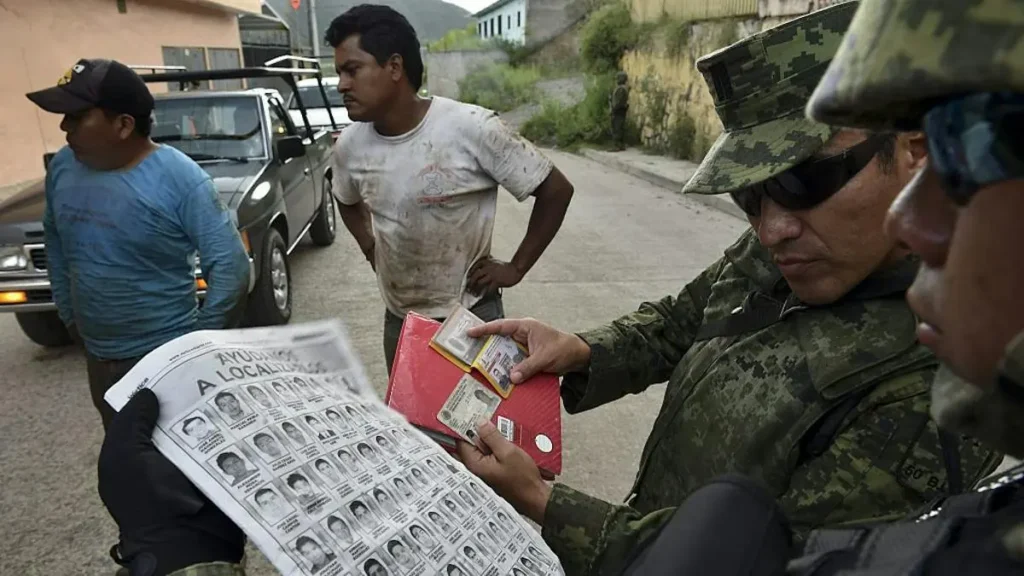
On September 26, 2014, students from the Ayotzinapa Rural Normal School traveled to Iguala, where they planned to commandeer buses to travel to Mexico City for an annual demonstration commemorating the 1968 Tlatelolco massacre. Police opened fire on the students and others, killing six people and injuring more than a dozen. Some students fled, but 43 students were detained and subsequently disappeared. Mexican authorities initially claimed that municipal police handed the students over to Guerreros Unidos, which killed them, burned their bodies, and disposed of the remains in the San Juan River. That account, dubbed the government’s “historical truth,” was later challenged by international investigators, and subsequent Mexican investigations concluded that government officials and security forces were implicated in the disappearances and their cover-up.
Government Response and Ongoing Efforts
Former President Andrés Manuel López Obrador’s administration formally characterized the disappearances as a “state crime” in 2022. Despite years of arrests and investigations, however, the case has never produced a definitive account of what happened to all 43 students. Only a small number of remains have been identified. Mexican President Claudia Sheinbaum has taken a different approach, with authorities re-examining millions of pages of case files and applying new technological methods to telephone records and other evidence.
Source: Daily Wire