Supreme Court Rejects Out-of-State Carry Permit Case
Supreme Court declines to hear case on concealed carry across state lines, allowing Minnesota’s ruling to stand.
3 min read
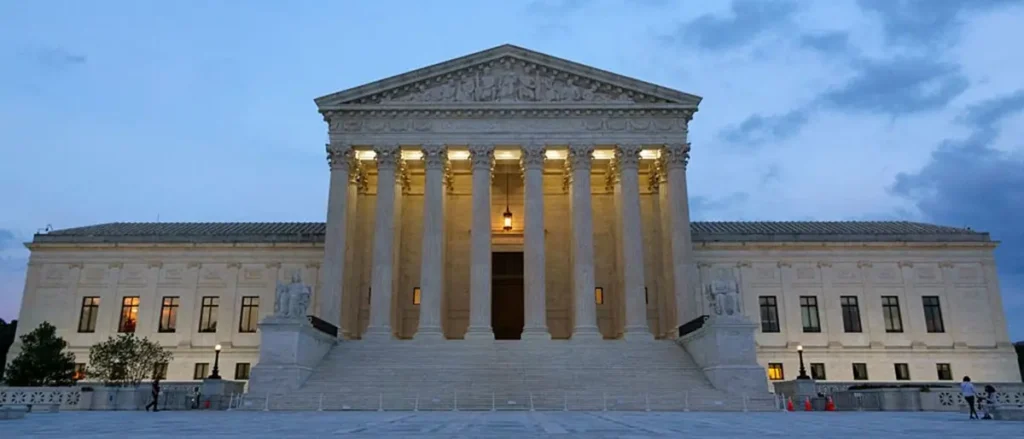
The U.S. Supreme Court has declined to hear a case challenging Minnesota’s refusal to honor concealed carry permits from other states, allowing the state’s ruling to remain in effect.
Liberty Justice Center sued Minnesota on behalf of Jeffrey Johnson in January 2025, challenging the state’s policy of not recognizing permits issued by Georgia and Florida. The case was initially filed with the Supreme Court in August 2025 after the U.S. Court of Appeals for the Eighth Circuit ruled in favor of Minnesota. The Supreme Court’s decision, posted on Monday, listed the case among those it chose not to hear.
“In the Eighth Circuit’s view, an individual’s Second Amendment rights are confined to the borders of the state of where he holds a firearm permit,” the petition stated. “No matter how many times an ordinary law-abiding citizen proves his worth through a state’s firearm licensing process, another state can force him to do it again before he can exercise his ‘constitutional right to bear arms in public for self-defense.’”
The Second Amendment is one of the few constitutional rights that cannot be reasonably exercised when crossing state lines. Johnson is a trucker with valid carry permits from Florida and Georgia but cannot carry in Minnesota due to the state’s refusal to recognize the permits. https://t.co/pdX5GK7lxk
The justices did not comment on their decision, allowing the Eighth Circuit’s ruling to stand. The high court is still considering other cases, including Duncan v. Bonta, a challenge to California’s ban on large-capacity magazines. This case has been discussed in 24 conferences, setting a record. A similar ban in New Jersey was recently struck down by the Third Circuit on Second Amendment grounds, creating a “circuit split.”
Circuit splits occur when federal appeals courts disagree on rulings, making it more likely the Supreme Court will intervene. Two other major cases with Second Amendment implications also involve such splits. In Beckwith v. Frey, the First Circuit upheld Maine’s three-day waiting period on firearm purchases, while the Tenth Circuit struck it down in August 2025.
In Daniel Defense v. Lowy, a federal district judge dismissed the lawsuit, and the Fourth Circuit sided with Lowy, prompting the firearms company to appeal to the Supreme Court in August. The petition stated, “The Fifth, Sixth, and Eleventh Circuits all hold that when a third party not before the court directly caused the plaintiff’s injuries, Article III requires the plaintiff to show that the defendant’s challenged conduct had a determinative or coercive effect on that third party.”
“The Fourth Circuit expressly rejected that standard here, joining the Second Circuit in holding that traceability is satisfied in such cases so long as a plaintiff plausibly alleges that the defendants’ conduct had some kind of ‘predictable effect’ on the individual who actually injured them. And since the decision below came down, the Ninth Circuit has cast its lot with the latter group.”
“There is thus now a 3-3 split on the appropriate standard for determining whether traceability is satisfied in cases where someone other than the defendant bears direct responsibility for the plaintiff’s injuries,” the petition continued.
The Supreme Court’s next conference, where justices will debate whether to accept cases, will be on Friday.
Source: Daily Caller