Supreme Court to Rule on Terror Chef’s Asylum Case
Supreme Court to decide if cooking for Nigerian terrorists qualifies as material support for asylum.
2 min read
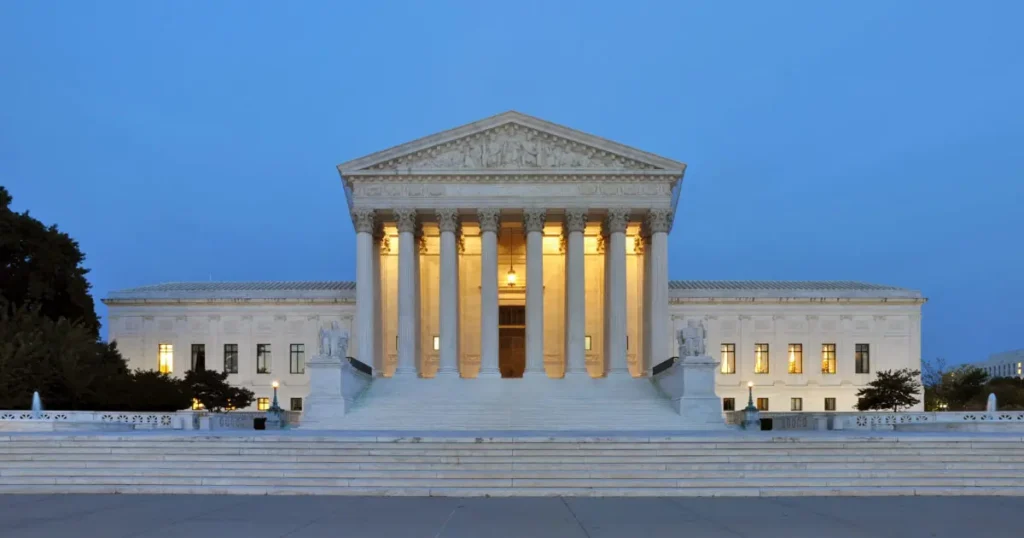
The U.S. Supreme Court has agreed to hear a case that has sparked intense debate over the definition of ‘material support’ for terrorism. The case, Blanche v. Ozurumba, centers on Izuchukwu Ozurumba, a Nigerian man who allegedly cooked for a terrorist group in Nigeria before fleeing to the United States. The court’s decision could redefine how the country handles asylum claims involving individuals with ties to terrorism.
Background of the Case
Ozurumba entered the U.S. illegally in July 2023 after spending six months in 2022 as a cook for the ‘Unknown Gunmen,’ a group classified as a Tier III terrorist organization. U.S. officials determined that his role provided material support to the group, making him ineligible for asylum. He was eventually deported to Nigeria.
Ozurumba claims he was lured by a job offer and later forced to continue working under threat. However, the Board of Immigration Appeals ruled that the statute does not allow for a duress exception in such cases.
Legal Dispute and Circuit Court Ruling
In September 2025, a divided panel of the Fourth Circuit Court of Appeals reversed the earlier ruling, with Judge Andrew Wynn stating that providing meals for the group did not constitute material support. He argued that the food and supplies were already provided by the group itself, and thus did not aid in the organization’s terrorist activities.
Judge Julius Richardson dissented, arguing that feeding the leaders of a terrorist organization is functionally material support, as it frees up resources for their operations.
Supreme Court Involvement
The Trump administration, through Attorney General Todd Blanche and Solicitor General D. John Sauer, petitioned the Supreme Court, arguing that the Fourth Circuit’s ruling undermines the material-support bar and increases the burden on the government in excluding aliens linked to terrorism.
The Department of Justice warned that if the Fourth Circuit’s interpretation is upheld, it could set a dangerous precedent, allowing individuals to claim asylum even for actions that support terrorist activities.
Implications of the Case
The Supreme Court’s decision will determine whether providing meals to a terrorist organization qualifies as material support under U.S. law. If the court rules that such actions do not count, it could open the door for a wide range of activities to be considered as support, raising complex legal and security questions.
Source: The Gateway Pundit