U.S. Navy Blockade in Strait of Hormuz Reveals Tense Radio Exchanges
New audio recordings reveal the U.S. Navy’s enforcement of a blockade in the Strait of Hormuz, including warnings and threats to vessels.
3 min read
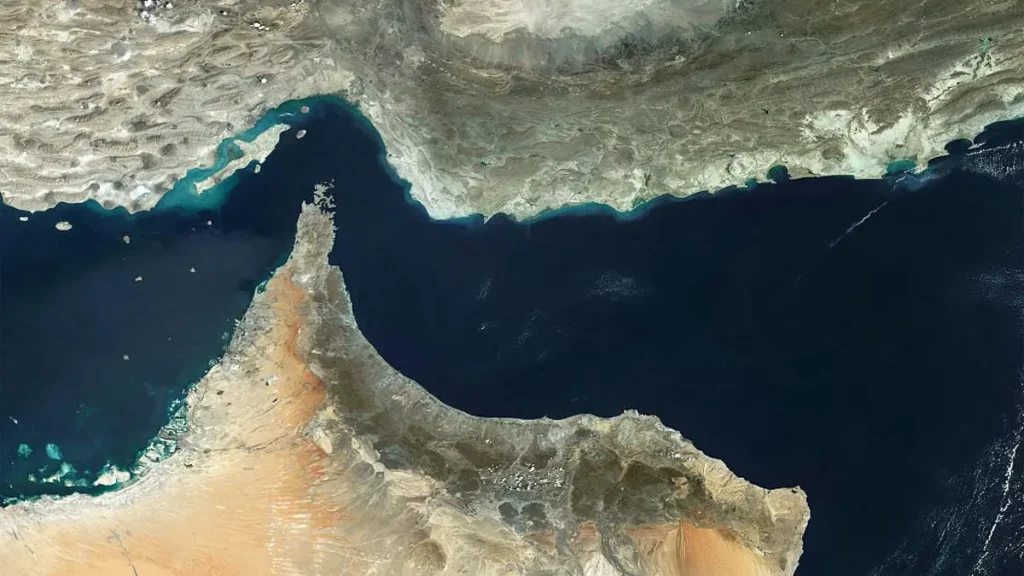
The U.S. Navy has enforced a blockade in the Strait of Hormuz for several months, restricting vessels from entering and leaving Iranian ports. Newly released audio recordings provide insight into the tense interactions between U.S. forces and commercial ships navigating the region.
Radio Exchanges and Confusion
The audio captures U.S. forces warning commercial vessels about approaching the blockade, ordering them to change course, and, in some cases, warning that American forces are preparing to fire. The exchanges also highlight the confusion that arises during the operation, with crews struggling to identify which vessels the Navy is addressing and some foreign crews attempting to understand warnings in English.
Dozens of recordings, shared by mariners in the Persian Gulf and Gulf of Oman, were collected and reviewed by the Wall Street Journal. The recordings span several months of the blockade, which the U.S. resumed on July 14 after an initial effort began in April.
Examples of Tense Encounters
In one exchange, a U.S. Navy vessel warned a commercial ship approaching Iran: “I am preparing to fire at your engine room. You have 15 minutes to clear your crew from your engine room. Over.” The response was confused, with the ship’s crew asking for the vessel’s name.
In another instance, an American military aircraft warned a ship that it was noncompliant. “Echo Echo, this is Warcat three three, you are noncompliant by continuing towards Iran. You have been warned several times, I am preparing to fire at your engine room, you have three minutes to clear your crew from your engine room.”
Some Vessels Escape, Others Do Not
On July 25, the U.S. Navy warned the Panama-flagged bulk carrier Liao Fan after it had stopped at the Iranian port of Bandar Abbas. The ship’s Chinese captain, speaking in broken English, explained the vessel had already departed Iran and was anchored at Khor Fakkan, a UAE port outside the strait.
A Chinese mariner warned the captain: “Turn back now, brother. This is not the time to call the shipowner. The U.S. really will fire on you.” The U.S. ultimately did not attack Liao Fan, which eventually made it through the blockade and was later tracked off Malaysia.
Other vessels were not as fortunate. On July 24, the U.S. Navy gave the sanctioned liquefied-petroleum-gas tanker Lavine 15 minutes to clear its crew from the engine room. Exactly 15 minutes after the warning, Lavine issued a distress call. The following day, U.S. Central Command confirmed that American forces had disabled the ship after its crew repeatedly violated the blockade and ignored warnings.
Broader Impact of the Blockade
The blockade has involved more than just radio warnings. CENTCOM announced that American forces had redirected 130 commercial vessels since the enforcement resumed on July 14 and disabled three ships that refused to comply. The command also said U.S. forces had destroyed 13 commercial vessels over the preceding 12 weeks, describing them as either violating the blockade or participating in the Islamic Revolutionary Guard Corps’ shadow network.
The operation has significantly impacted Iran’s ability to export oil. No known tanker carrying Iranian crude has crossed the U.S. blockade line since July, according to ship trackers cited by the Wall Street Journal.
Source: Daily Wire