U.S. Warned Against 100,000 Student Exchange with China
Yale scholars’ Xinjiang visit raises concerns about China’s academic exchange program and propaganda efforts.
2 min read
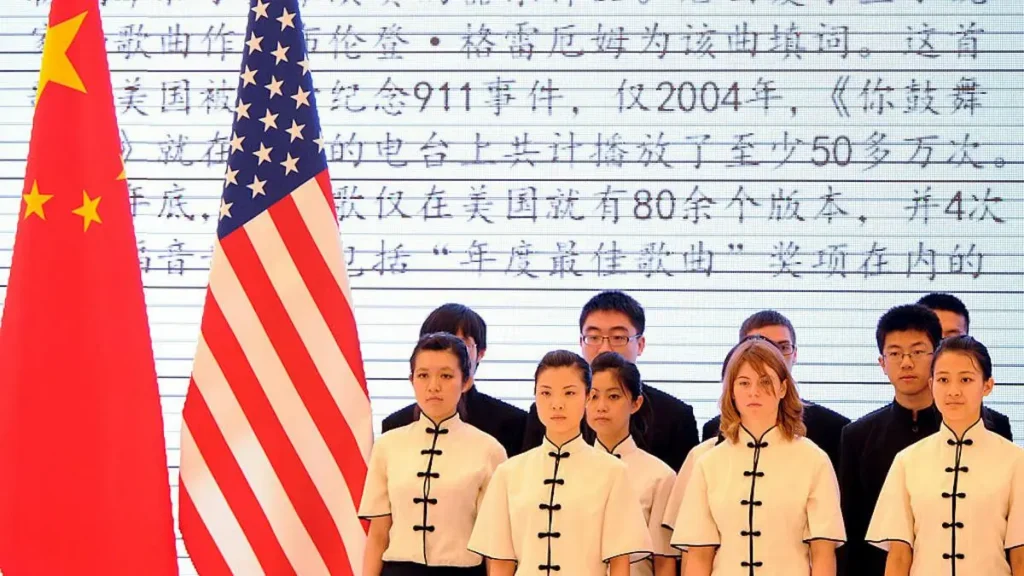
President Xi Jinping recently extended an invitation to 100,000 young Americans to study in China over the next five years, framing it as a gesture of friendship and mutual understanding. However, the U.S. government and academic experts are raising serious concerns about the implications of this proposal, particularly in light of China’s human rights record and its efforts to shape the narrative around Xinjiang.
China’s Academic Exchange Program
Xi’s offer doubles a previous pledge from 2023, which aimed to host 50,000 American students. However, the U.S. has seen a dramatic decline in the number of American students studying in China, from nearly 15,000 in 2012 to under 2,000 in 2026. In contrast, Chinese students studying in the U.S. remain at around 266,000, highlighting a stark imbalance in educational exchange.
Yale Scholars’ Xinjiang Visit
A recent report by Strategy Risks sheds light on the curated nature of China’s academic exchange program. In June 2024, Yale scholars Mary Evelyn Tucker and John Grim attended an academic conference in Xinjiang, organized by the Chinese government. Their itinerary was tightly controlled, with visits to sites like the Id Kah Mosque and the Kashgar Comprehensive Bonded Zone, all under the supervision of Chinese authorities.
Xinjiang has been under intense scrutiny for alleged human rights abuses against Uyghur Muslims, including arbitrary detention, cultural and religious restrictions, and mass surveillance. Despite these concerns, the U.S. government has been unable to fully investigate the region due to restrictions on foreign journalists. The Chinese government has also been accused of using state media to promote a sanitized version of the region’s situation.
Propaganda and Curated Narratives
The visit by Yale scholars was part of a broader strategy by the Chinese government to shape international perceptions of Xinjiang. The government has been actively inviting diplomats and academics to visit the region under tightly controlled conditions, ensuring that they only see the government-approved version of events. This has led to concerns that these visits are not genuine academic exchanges but rather propaganda efforts to promote a specific narrative.
The Chinese government has also been accused of using state media to amplify the voices of those who visit Xinjiang, further reinforcing the official narrative. This has raised concerns among U.S. officials and experts, who warn that the invitation to 100,000 American students may be part of a larger effort to influence public opinion and shape the global perception of China.
Source: Daily Wire