Ukraine’s Largest Steel Plant Closes Amid Russian Drone Attacks
Ukraine’s largest steel plant shuts down after Russian drone strikes, as jet-powered Geran drones dominate the battlefield.
4 min read
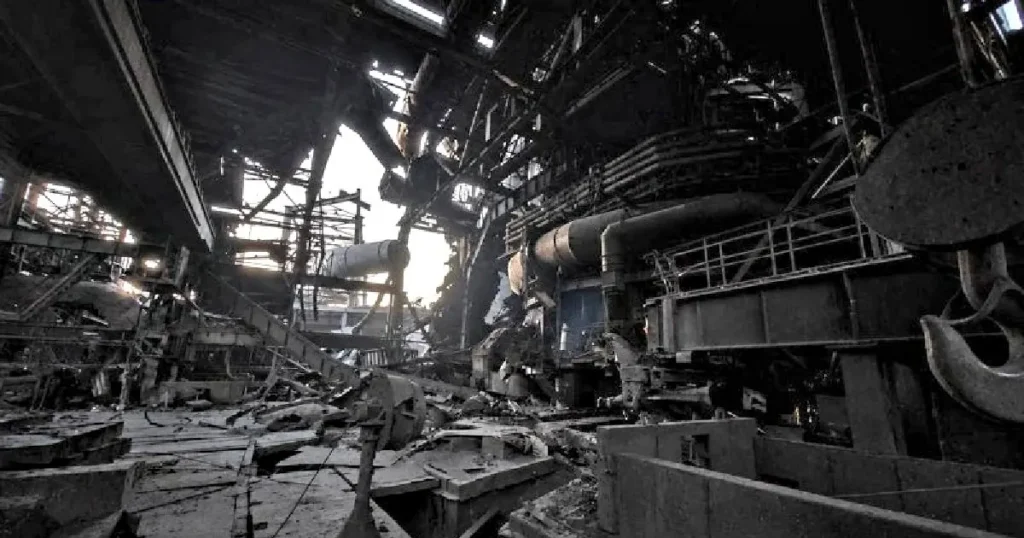
As tensions escalate in the ongoing conflict between Russia and Ukraine, the country’s largest steel plant has been forced to shut down operations following a series of devastating missile strikes. The ArcelorMittal plant in Kryvyi Rih, Ukraine’s biggest steel facility, has become a key target for Russian forces, with repeated attacks resulting in fatalities, injuries, and extensive damage to the infrastructure. This development has raised concerns about the long-term economic impact on Ukraine, as the steel industry is a vital component of the country’s industrial base.
Russian Jet-Powered Drones Transform the Battlefield
Recent developments in the war have seen a significant shift in the weaponry used by Russian forces. The Geran drones, which have become infamous for their destructive capabilities, have been upgraded to jet-powered versions, significantly increasing their speed and lethality. These drones, which were rare just a year and a half ago, are now a dominant force on the battlefield, capable of striking targets behind enemy lines with precision.
According to Ukrainian military officials, Russian forces have launched thousands of these jet-powered drones into Ukraine, with the number surging from 350 in June to 1,500 in July and then to 2,850 in August. Col. Yuriy Ignat, the main spokesperson for Ukraine’s air force, reported that by September 25, 2026, the total number of turbojet drones launched into Ukraine had reached 7,700. Of these, 1,900 were the faster, more advanced variants, indicating a significant escalation in Russia’s drone warfare capabilities.
Impact on Ukraine’s Economy
The economic toll of the war has been severe, with Russian strikes targeting not only military and industrial infrastructure but also civilian facilities such as shopping malls, warehouses, and distribution centers. These attacks have disrupted the operations of major Ukrainian retailers, publishing houses, pharmaceutical companies, and Nova Poshta, the country’s largest private postal carrier. Supermarket shortages in Kiev have also begun to appear, though they remain sporadic at this stage.
The steel industry, which has been a cornerstone of Ukraine’s economy, has suffered particularly heavy losses. ArcelorMittal, one of the largest steel producers in the country, announced that its plant in Kryvyi Rih would be shuttered after being targeted by numerous missile attacks. The strikes resulted in the deaths of five employees and forced the company to cease operations in Ukraine, leading to a $1 billion impairment charge. The plant, which produces long steel rods and beams for construction and includes an iron ore mine, is Ukraine’s largest operational steel plant.
Ukraine lost control of two of its largest steel plants, Azovstal and Ilyich, to Russia during the 2022 siege of Mariupol. Kryvyi Rih, the location of the ArcelorMittal plant, is also the hometown of President Volodymyr Zelenskyy, adding a personal dimension to the ongoing conflict. The destruction of the steel industry has raised concerns about the country’s ability to rebuild its industrial base and sustain its economy in the face of continued attacks.
Challenges in Defending Against Drones
Ukraine’s air defenses are struggling to keep up with the rapid evolution of Russian drone technology. The jet-powered Geran 5 drones, which can fly several kilometers in the air and approach the speed of a commercial plane, have posed a particularly acute problem for Ukraine’s air defenses. The country is still scrambling to find cheap, mass-producible countermeasures to intercept these advanced drones.
Ukrainian war observers noted an increase in sightings of Shahed drones equipped with jet engines starting in early 2025. The surge in production of these drones indicates that Russia has significantly expanded its access to vital components, which Ukrainian intelligence has stated can only be procured on the global market. This development has complicated Ukraine’s efforts to defend against the growing threat of Russian drone attacks.
Global Economic and Energy Impacts
The economic impact of the war extends beyond Ukraine, with Russian strikes on energy infrastructure disrupting power generation and distribution facilities. These attacks have had a ripple effect on global energy markets, contributing to fluctuations in diesel prices worldwide. The situation has prompted US President Donald J. Trump to pressure Ukrainian leader Volodymyr Zelenskyy to halt the attacks, highlighting the broader economic implications of the conflict.
Media outlets have reported that the focus on economic targets has been disproportionately featured in mainstream media, with a particular emphasis on the effects on Moscow’s oil and gas production. However, the reality is that Russia’s economic strikes have been far more destructive, targeting a wide range of civilian and commercial infrastructure. The disruption of these facilities has had far-reaching consequences, affecting not only Ukraine but also the global economy.
Looking Ahead
As the war continues, the focus on Ukraine’s steel industry and the threat posed by Russian jet-powered drones remains a critical concern. The closure of ArcelorMittal’s plant in Kryvyi Rih marks a significant blow to Ukraine’s industrial capacity, with implications for the country’s economic recovery and long-term stability. The challenge of defending against advanced drone technology will continue to test Ukraine’s military and economic resilience in the face of ongoing attacks.
Source: The Gateway Pundit