Virginia, Learn What ‘AR’ Stands For Before Banning AR-15s
Virginia should understand what ‘AR’ means in AR-15s before pushing for bans, experts say.
3 min read
Before politicians rewrite the rules governing a constitutional right, they ought to understand the equipment they’re discussing. Nobody would welcome a transportation secretary who confused a pickup with a passenger jet, then explained that both have engines and can go very fast.
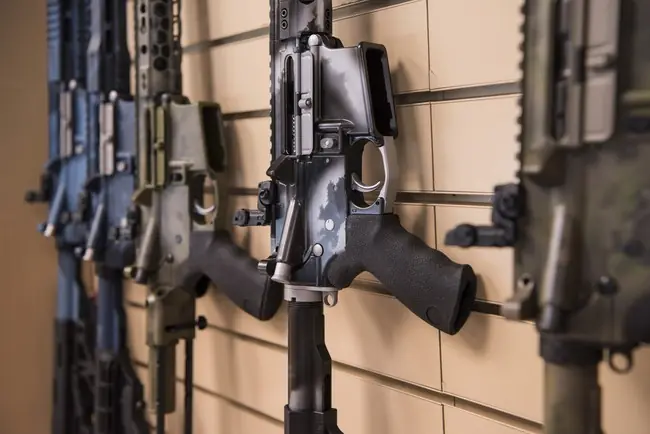
Virginia Attorney General Jay Jones has offered the firearms equivalent. A passage reproduced from his Supreme Court brief supporting Cook County, Illinois’s gun restrictions declares: “AR-15s are machine guns,” except that they have semiautomatic rather than automatic fire.
That exception does a lot of work, rather. It’s like announcing that your neighbor’s housecat is a tiger, except for the size, species, and ability to eat the mailman.
Jones made his remarkable ignorance on guns and the Second Amendment known on Wednesday in the form of a brief to the Supreme Court, which is slated to weigh a challenge to an Illinois county’s ban on the possession and transfer of so-called “assault weapons”: AR-15s and similar semiautomatic firearms. In the document filed in support of Cook County’s firearm prohibitions, Jones argues that “AR-15s bear nearly all the same features that take machineguns outside the Second Amendment’s protection.”
He kicks off the brief by lying that AR-15s were restricted by states “since shortly after” they “became broadly available to American consumers.” Colt began selling ArmaLite’s semiautomatic rifle to Americans in the 1960s, but it wasn’t until 1989 that California sought to interfere in those transfers.
Start with the name. AR stands for ArmaLite Rifle, reflecting the original developer, rather than “Automatic Rifle” or “Assault Rifle.” The letters identify a design’s lineage; they don’t tell you that holding down its trigger produces continuous fire.
Virginia lies in its opening sentence. AR15s were available in the 1960s and on to consumers, and the first ban didn't come until 1989 in California. Even by 2000, only seven states banned them. Today 12 do if you count Virginia's enjoined provision, but five of those came during the post-Bruen tantrum since 2022. These are outlier laws. Virginia tries to get ahead of this criticism by saying AR15s were rare until the 1990s. Even if that were true, AWBs do not only affect AR15s; tons of other common guns were banned too.
Anyone making the “Automatic Rifle” mistake should correct it before lecturing gun owners. And anyone defending a ban should be especially careful about language that encourages the public to confuse a commonly sold semiautomatic rifle with an automatic weapon.
A standard semiautomatic AR-15 fires one round for each trigger pull. Its mechanism loads the next cartridge, but you must pull the trigger again to fire. A machine gun fires more than one shot automatically with a single trigger pull.
Federal law makes that trigger distinction central to its machine-gun definition. Similar appearance, shared components, or a frightening photograph can’t substitute for the defining mechanical operation.
Jones’ quoted comparison acknowledges the difference and then tries to talk past it. He can argue that semiautomatic rifles should face restrictions, but the argument must address the firearms people actually own, rather than borrow the identity of another category.
The distinction matters because political persuasion often begins with a label. Call an object a machine gun often enough, and people unfamiliar with firearms may reasonably assume it works like one. The misunderstanding then becomes part of the public case for prohibiting it.
Gun owners are expected to know the rules, follow them, and accept the consequences of mistakes. Officials seeking to restrict their choices ought to meet a comparable standard of accuracy, especially when speaking with the authority of public office.
Source: PJ Media