Zelenskyy Criticizes Trump’s Oil Deal With Putin
Ukrainian President Zelenskyy condemns Trump’s Russia diesel deal as a ‘weak’ move, citing risks to global peace.
4 min read
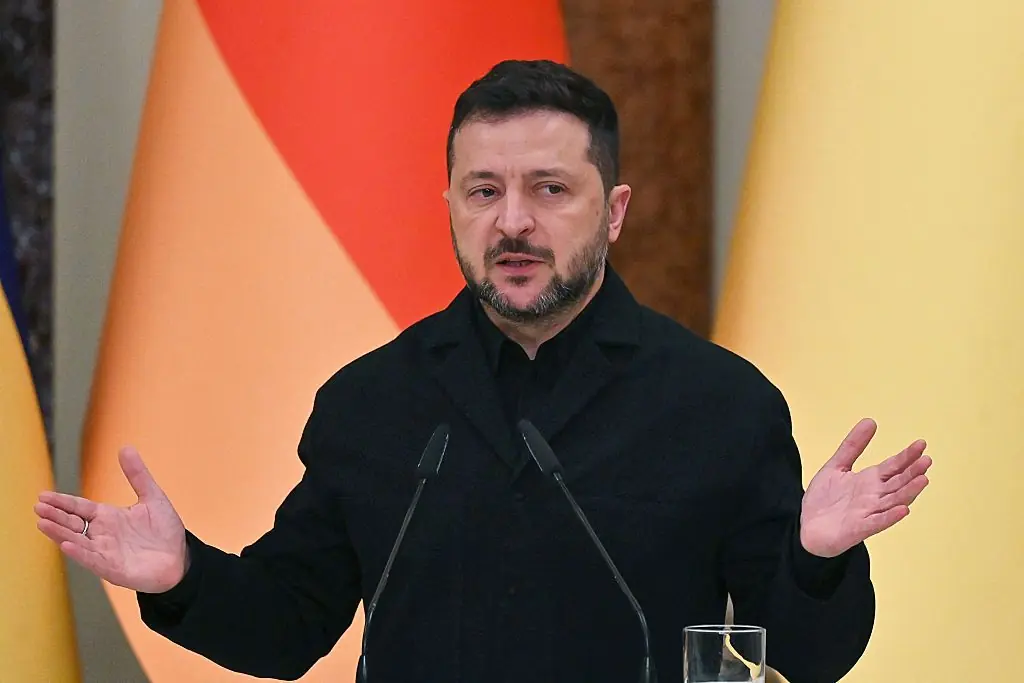
Ukrainian President Volodymyr Zelenskyy criticized President Donald Trump’s recent diesel deal with Russian President Vladimir Putin, calling it a sign of weakness in a lengthy X post. Zelenskyy argued that easing sanctions on Russia without a broader de-escalation agreement would only fuel further conflict and undermine global stability.
Trump announced the deal in a Truth Social post, claiming that Russia would supply over 300,000 tons of diesel fuel to the U.S. and global markets immediately, with additional shipments in November and beyond. He framed the agreement as a major victory, stating that it would significantly lower diesel prices for Americans and the world.
“Between our TOTAL CONTROL of the Strait of Hormuz, and this great announcement on Russian Energy,” Trump wrote, “Diesel Prices for Americans and, indeed, the World, will be COMING DOWN, IN RECORD NUMBERS, AND FAST!”
During a press briefing outside the White House, Trump praised the deal, calling it a “big deal” and thanking Putin for his cooperation. He emphasized the importance of the diesel supply, stating that it would benefit the U.S. and the global economy.
Peace never comes through weakness. Today, representatives of the U.S. Congress were in Kyiv – a bipartisan delegation – and I am grateful to them for visiting Ukraine at such a difficult time. They asked: what is needed to end the war? The answer must be strong. There must be sanctions under the Lindsey Graham bill, there must be support for Ukraine in protecting lives, and there must be pressure on Russia for its war. And today, there was a conversation between the leaders of America and Russia. A conversation that leads to something different. Recently, there was a European decision to lift sanctions on Russian oligarchs. Since then, Russian strikes and the torment of people have only increased. This past week alone, there was a brutal Russian missile strike on a residential building in Pryluky, aerial bombs were dropped on Kramatorsk – on ordinary city buses – and there have been constant attacks on Kyiv’s energy infrastructure and on the life-sustaining infrastructure in Dnipro, Kharkiv, Odesa, and our other cities. Dozens of people have been killed and hundreds wounded. The Russians are compensating for their inability to achieve their objectives on the battlefield with this kind of terror. This year, Russia is weaker on the battlefield than at any other point in the war. That is why Putin is relying on terror. That is why he is relying on attempts to strike backroom deals to secure some form of pressure relief for Russia, in order to buy more time and more opportunities for war. Any easing of sanctions against Russia without a clear and lasting de-escalation agreement with Russia is an obvious weakness. It plays into Russia’s hands – allowing it to kill more, wage war for longer, have even less respect for America, and inflict even greater losses and damage on the world. Ukraine is ready to take symmetrical de-escalatory steps, and the American team knows our position. Our strikes on Russian oil refineries and other oil facilities are a response to Russia’s years-long campaign of terror against Ukraine’s energy sector. Ukraine will not set Russian oil refineries on fire if Russia does not destroy our energy infrastructure. This is the kind of agreement we are proposing to America, and we believe the United States has enough power to achieve such a compromise. Gifts to Putin will not bring peace or any benefit to the civilized world. Russia will “repay” the diesel with further terror and perfidy. Allowing Russia to sell petroleum products is an investment in a war that must be ended, not prolonged. What is needed is real de-escalation with Russia on a reciprocal basis. We count on America’s fair support for our defense of life, for our defense of people in Ukraine – and on the United States having a correspondingly strong conversation with Russia. A strong one, not a weak one.
A reporter informed Trump that Zelenskyy had called him “weak” for the deal, prompting the president to ask who made the statement before simply replying “Okay.”
Diesel prices in the U.S. have reached a historic high of $6.53 per gallon in late September, a stark contrast to the $3.69 per gallon recorded last year. Despite falling oil prices, the demand for diesel has surged, driving up costs for consumers and businesses.
Zelenskyy’s criticism of the deal extended to the broader implications of U.S.-Russia relations. He wrote, “Gifts to Putin will not bring peace or any benefit to the civilized world. Russia will ‘repay’ the diesel with further terror and perfidy. Allowing Russia to sell petroleum products is an investment in a war that must be ended, not prolonged.”
He also emphasized Ukraine’s reliance on U.S. support for its defense, calling on Trump to engage in a “strong conversation with Russia” to address the ongoing conflict. The strained relationship between Zelenskyy and Trump has been a recurring point of contention since their meeting shortly after Trump’s second term began, when Trump accused Zelenskyy of “gambling with World War Three.”
Source: Daily Caller