ICE Deploys Robot Dogs for Border and Cartel Enforcement
ICE acquires robot dogs to inspect dangerous areas, enhancing safety in high-risk operations.
2 min read
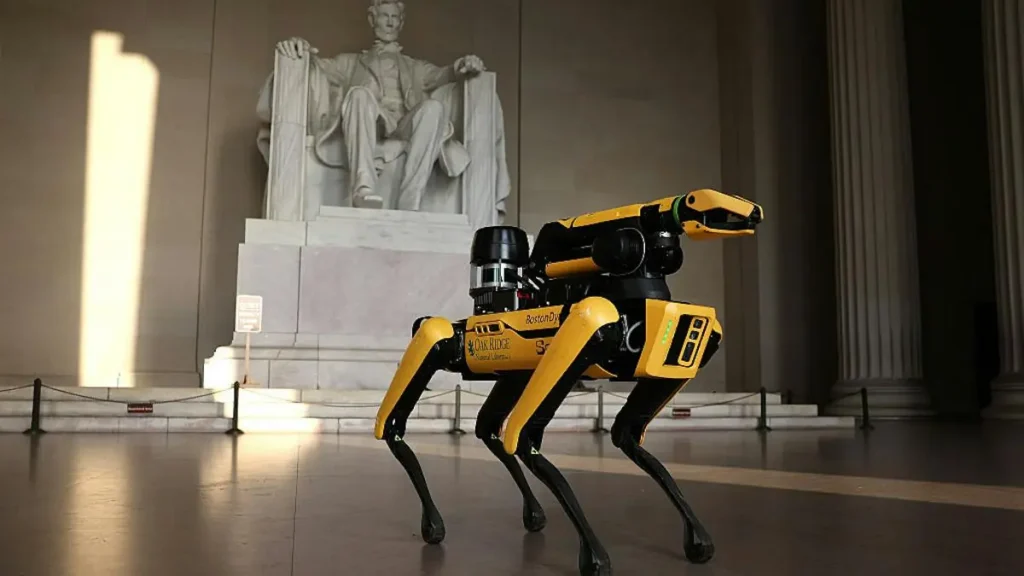
Immigration and Customs Enforcement (ICE) has acquired four robot dogs as part of a $1.3 million contract with Connecticut-based Radeco, marking a new enforcement tool for the agency. These robots, equipped with a robotic arm, thermal camera, and sensors to detect explosives, are designed to inspect hazardous environments before human officers enter.
Enhancing Safety in High-Risk Situations
The technology is described as an additional tool to safely assess potentially dangerous situations, reducing risks to personnel and the public. A spokesperson for ICE emphasized the importance of the robots in providing real-time situational awareness in hazardous, confined, or tactically uncertain environments. This allows officers to make more informed decisions and, when possible, resolve incidents without immediately exposing themselves to danger.
The contract states that the purchase supports the Subterranean Border Defense Act and Executive Order 14159, titled ‘Protecting the American People Against Invasion.’ Without such tools, the Department of Homeland Security (DHS) would have fewer options to evaluate high-risk environments, which could increase the risk to personnel, delay response activities, and reduce mission effectiveness during time-sensitive or dangerous operations.
Combating Cartels and Human Trafficking
The robot dogs will also be used to combat cartels operating in the United States, as well as human smuggling and trafficking networks. The systems can detect radiation, toxic gas leaks, and explosive threats in urban environments or disaster zones, enabling remote observation, inspection, documentation, and hazard assessment.
Named Cerberus, after the mythical three-headed canine guarding the gates of hell, the robots are likely to be used by Homeland Security Investigations agents and other tactical teams to search buildings and reduce officers’ exposure to danger, according to multiple Homeland Security sources.
Scott Mechkowski, a former ICE New York field office deputy director, noted that such robots are not new to law enforcement. He explained that equipment like this is typically used by tactical teams rather than officers on routine arrests, with deployment decisions made at a supervisory level or in accordance with agency guidelines.
Agents can remotely operate the robot dogs from a distance of 1,500 kilometers, or roughly 900 miles, according to the contract.
Source: Daily Wire