Unemployment Claims Fall to 197,000, Lowest Since Mid-July
U.S. unemployment claims drop to 197,000, signaling a resilient job market and low layoffs.
1 min read
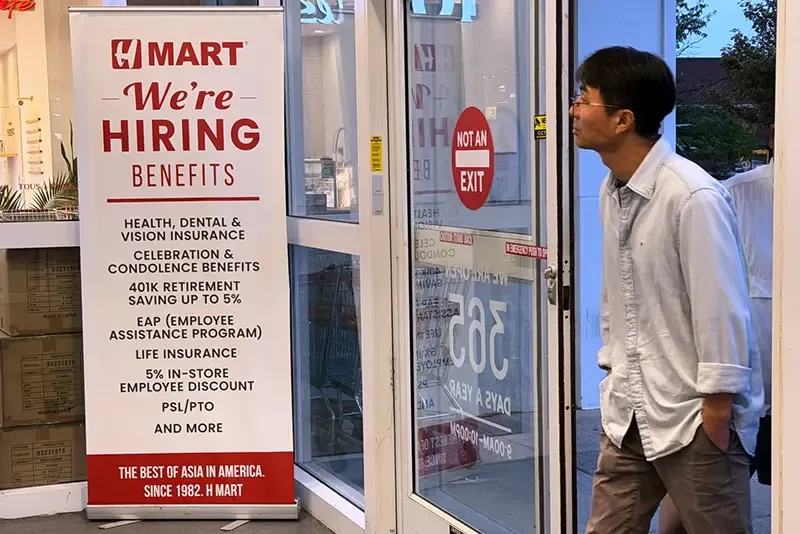
U.S. unemployment claims fell to 197,000 last week, marking the lowest level since mid-July, according to the Labor Department. This decline reflects continued stability in the job market and a low rate of layoffs, signaling a strong labor environment.
The Labor Department reported that 197,000 people applied for unemployment benefits last week, a decrease from the revised 198,000 applications the previous week. The four-week average of claims also dropped to 202,250, down from 204,000, indicating a smooth trend in the labor market.
Job Market Remains Resilient Amid Economic Pressures
Jobless claims serve as an indicator of layoffs, and economists closely monitor them to gauge the direction of the job market. This year, claims have mostly stayed below 220,000, a historically low level. Despite higher energy prices that have impacted both businesses and consumers since the conflict with Iran began in February, the U.S. job market has remained robust.
Employers, remembering the labor shortages that followed the end of pandemic lockdowns, are hesitant to lay off staff. While hiring is ongoing, the pace remains modest compared to recent years. Companies, government agencies, and nonprofits have added an average of 80,000 jobs per month so far this year, including a notable 162,000 in August.
Improvement Over a Dismal 2025
This marks an improvement from the poor performance of 2025, when monthly job creation averaged just 9,700 due to high interest rates and the unpredictable trade policies of former President Donald Trump. The upcoming September jobs report is expected to show that employers added 52,500 jobs, with the unemployment rate remaining low at 4.1%, according to forecasters.
Despite these gains, hiring remains well below the 166,000 jobs created on average in 2023 and 2024, and even further from the 491,000 a month recorded during the 2021-2022 hiring boom following the end of the pandemic.
Source: OANN