Intel’s Ohio Chip Plant Hits Major Construction Milestone
Intel celebrates first major structural truss installed at its Ohio chip plant, delayed from 2025 to 2030.
2 min read
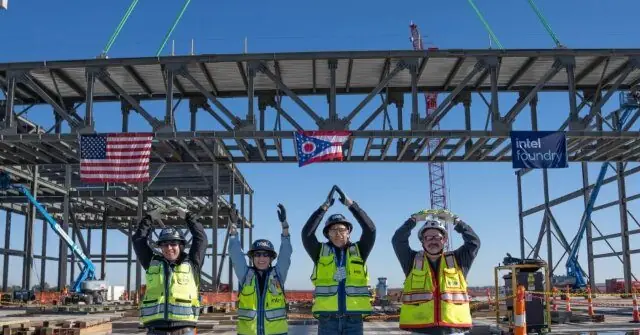
Intel has marked a significant milestone in its long-delayed Ohio chip plant project with the installation of the first major structural truss at its new facility in New Albany, Ohio. The company, which envisions the site as a new “Silicon Heartland,” has faced years of delays, with construction of the first fab now set to wrap up by 2030 and a second fab planned for 2031.
Delayed Timeline Reflects Strategic Shift
The slower timeline reflects a broader rethinking of Intel’s foundry strategy under CEO Lip-Bu Tan, who took over in 2025. The Ohio build-out began under former CEO Pat Gelsinger, but Tan has adopted a more cautious approach, prioritizing confirmed customer demand before committing to further expansions.
Intel’s next Arizona fab, which is already in high-volume production for 18A chips, is now expected to begin operations by the end of 2028. Despite this, the company has not yet secured a major outside customer for its 18A chips, which are currently used for its own processors.
Interest in Ohio Site Grows
There are signs of growing interest in the Ohio site, with reports in September suggesting that SK Hynix could lease foundry space there to produce memory chips. However, neither company has confirmed a deal. Analyst Dan Hutcheson of TechInsights noted that major chipmakers are looking beyond Taiwan Semiconductor Manufacturing Co. (TSMC), the industry’s dominant player, which has struggled to meet AI-driven demand for chips.
“People want a second source to be able to twist TSMC’s arm and keep them honest on pricing,” Hutcheson said. He added that “all the big ones have been testing there,” referring to interest in Intel’s fabs.
Trump’s 10 Percent Stake and Capital Market Criticism
Donald Trump negotiated a 10 percent stake in Intel for the United States in 2025, a move that has drawn attention from critics like Julius Krein of American Affairs. Krein argues that America’s capital markets are structurally incapable of funding the industries the nation needs, pointing to a long-standing preference for maximizing shareholder value over strategic investment.
Krein’s analysis highlights how the U.S. has underinvested in capital-intensive industries like semiconductors, energy hardware, aerospace, and defense. He argues that Wall Street’s preference for “asset-light” software firms has led to the outsourcing of the industrial backbone to Asia, despite the country’s self-proclaimed “tech dominance.”
Source: Breitbart