Justice Jackson Dissents in New Hampshire Voter ID Ruling
Supreme Court Justice Ketanji Brown Jackson breaks with colleagues in New Hampshire voter ID case.
2 min read
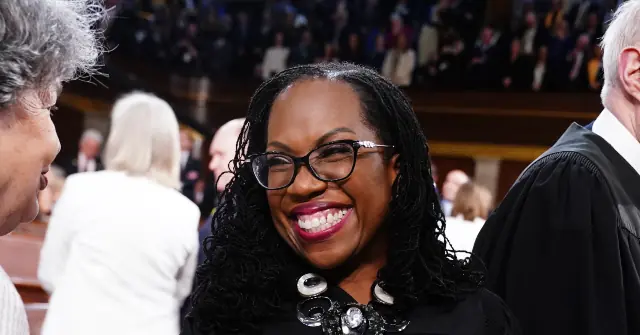
Supreme Court Justice Ketanji Brown Jackson has publicly dissented in a recent ruling that allowed New Hampshire to block the use of student ID cards in the upcoming midterm elections. This marks the first time Jackson has openly opposed her fellow justices on a court decision, according to Fox News.
Unique Dissent in Voter ID Case
While other justices may have also dissented, they chose not to be identified in the court order, leaving Jackson as the only justice to publicly express her disagreement. She argued that the proximity to an election should not prevent the proper application of the law.
“I respectfully dissent because — even, and perhaps especially, when an election is looming — I would not disturb a clearly justifiable federal-court order issued to ensure that the public receives accurate information about a State’s electoral processes,” Jackson wrote in her dissent.
State Law and Court Ruling
Under current state law, student IDs are not recognized as valid identification for voting. The U.S. Supreme Court granted an emergency request by the state, which was supported by the Republican National Committee, allowing New Hampshire to block the use of student ID cards in the midterms.
Other justices cited the longstanding precedent that lower federal courts should not alter election rules on the eve of an election. They argued that the lower courts failed to demonstrate that the specific case in New Hampshire warranted an exception to this tradition.
Confirmation Controversy
Before her confirmation in March 2022, Jackson was unable to define the word “woman” during her confirmation hearing, an event that drew significant attention. Former President Donald Trump later criticized her for this, suggesting that her inability to define “woman” made her unqualified to interpret the Constitution.
Conservatives also raised concerns about her judicial philosophy, describing her as having “radical anti-life views” and claiming she would be a “rubber stamp” for liberal dark money groups. However, Jackson has since broken from her colleagues in several key areas, including campaign finance, immigration, and congressional map litigation.
Her dissent in the New Hampshire case highlights her willingness to challenge the majority on issues of voter access and legal interpretation, even in the face of political and ideological pressures.
Source: Breitbart