El-Sayed Confronts Fox Over Past Egypt Ties in Senate Race
Michigan Senate nominee Abdul El-Sayed clashes with Fox News over past ties to Egypt’s Muslim Brotherhood during heated interview.
4 min read
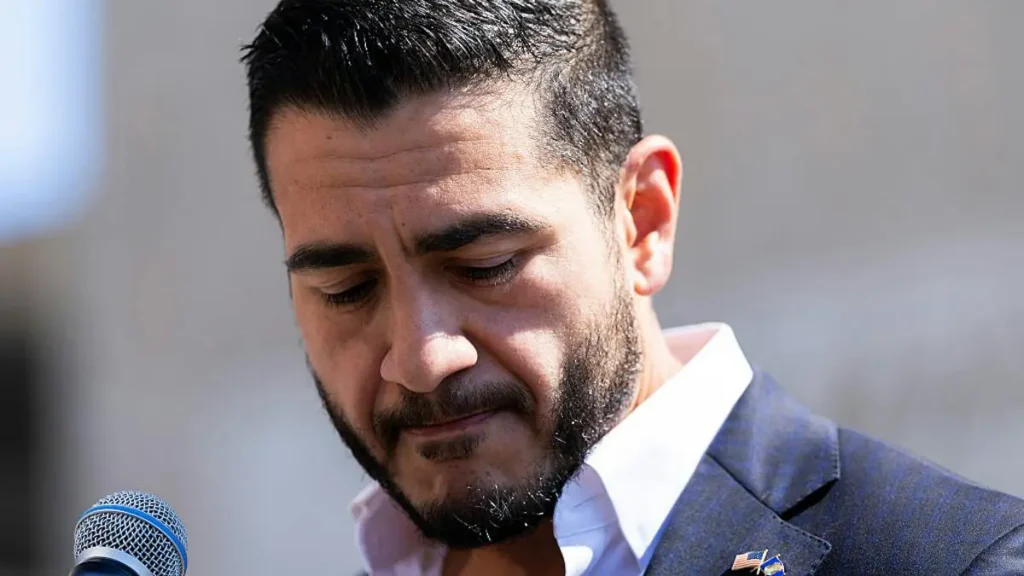
A tense exchange unfolded during a recent interview between Michigan Democratic Senate nominee Abdul El-Sayed and Fox News anchor Bret Baier, as El-Sayed was pressed about his past support for Egypt’s Muslim Brotherhood and questions about his family’s reported ties to the Islamist movement. The discussion, which took place on Friday, highlighted growing concerns over El-Sayed’s background amid a heated Senate race.
El-Sayed Accuses Baier of Questioning Loyalty
During the interview, Baier brought up Republican Senate nominee Mike Rogers’ criticisms of El-Sayed’s background, including a 2012 letter that El-Sayed signed supporting decisions by then-Egyptian President Mohamed Morsi, a Muslim Brotherhood leader. Rather than directly address the letter’s contents, El-Sayed accused Baier of questioning his loyalty to the United States because of his faith.
“You are asking this question to raise a question about … about whether or not I have dual loyalty,” El-Sayed said, cutting in before Baier could finish his question.
Baier clarified that he was raising claims made by Rogers’ campaign and attempted to steer the conversation to the 2012 statement. El-Sayed responded with a sharp retort: “Don’t be Rogers’ campaign,” he said, before declaring that he had never been a member of the Muslim Brotherhood and would never be.
“I have never been a member of the Muslim Brotherhood. I never will be a member of the Muslim Brotherhood,” El-Sayed said. “I am interested in serving the United States. I’m interested in swearing an oath to the Constitution that every senator has sworn an oath to.”
He added that it was “sad and beneath” Rogers and President Donald Trump to make his faith a campaign issue, arguing that the Constitution guarantees Americans the right to practice their religion.
Background on the 2012 Letter
Baier had not explicitly accused El-Sayed of belonging to the organization. He was attempting to ask about a letter reportedly signed by El-Sayed in 2012, when Morsi was consolidating power in Egypt. The letter, published in Arabic on the Egyptian news website Al-Ahram Gate, called on Morsi to “purge the media and the police as quickly as possible” and expressed support for what it described as his “revolutionary decisions.”
The Washington Free Beacon first reported the letter, and The New York Times later covered it in a report examining scrutiny of El-Sayed’s family history. El-Sayed’s campaign has not publicly established that the letter’s language reflected support for authoritarian measures.
Family Ties to the Muslim Brotherhood
The controversy extends beyond the letter. Social media posts from El-Sayed’s maternal half-sister, University of Chicago professor Eman Abdelhadi, have described their family as having a longstanding connection to the Muslim Brotherhood. In a June 2012 post, Abdelhadi wrote, “My family has long been MB,” using an abbreviation for the group. In a separate post days later, she described talking with their mother about the mother’s Muslim Brotherhood activism as a college student in the early 1970s.
Prior reporting has examined his mother’s former employment with the Islamic American Relief Agency, a charity that was designated by the U.S. government for supporting terrorist organizations. The organization later pleaded guilty to conspiring to violate U.S. sanctions. El-Sayed’s mother was not charged in that case, and the reported family connections do not establish that El-Sayed himself supported or participated in terrorism.
National-Security Concerns in the Senate Race
The dispute has become a national-security issue in Michigan’s Senate race. Rogers, a former chairman of the House Intelligence Committee, has argued that El-Sayed’s ideology and reported associations raise questions about his suitability for the Senate. Republican senators, including Ted Cruz and Tim Sheehy, have also voiced concerns about the prospect of El-Sayed receiving access to classified information.
El-Sayed has characterized the attacks as politically motivated efforts to cast suspicion on a Muslim candidate. His campaign has said the allegations are bad-faith attacks on his faith and family.
Broader Interview on Key Issues
The confrontation came during a wide-ranging interview in which Baier also questioned El-Sayed about inflation, the war in Iran, Medicare for All, and whether he would accept the results of a close election.
On health care, Baier pressed El-Sayed on a past interview in which, asked about families waiting for MRIs under a government-run system, he was quoted as replying, “Well, sucks for them.” El-Sayed denied saying it and accused Baier of lifting the quote out of context, then pivoted to delays under the current system, arguing that long waits to see specialists are exactly why the country needs Medicare for All.
Baier also asked El-Sayed about his prediction that he would win the Senate race by seven points, despite polling showing a close contest. El-Sayed said his campaign was building a coalition and argued that voters were frustrated with Trump’s policies.
Broader Implications and Political Context
El-Sayed’s campaign has faced significant scrutiny over his past associations, with critics arguing that his background raises questions about his suitability for public office. The controversy has also drawn attention from national political figures, including Senator Sanders, who has publicly backed El-Sayed amid a $9 million AIPAC spending push.
As the race intensifies, the focus on El-Sayed’s past continues to shape the political landscape in Michigan, raising broader questions about the intersection of faith, politics, and national security in modern American elections.
Source: Daily Wire