George W. Bush’s Social Security Reform Plan Won, But Stalled
Bush’s 2004 Social Security reform plan faced political resistance but still won election. Why hasn’t reform happened since?
2 min read
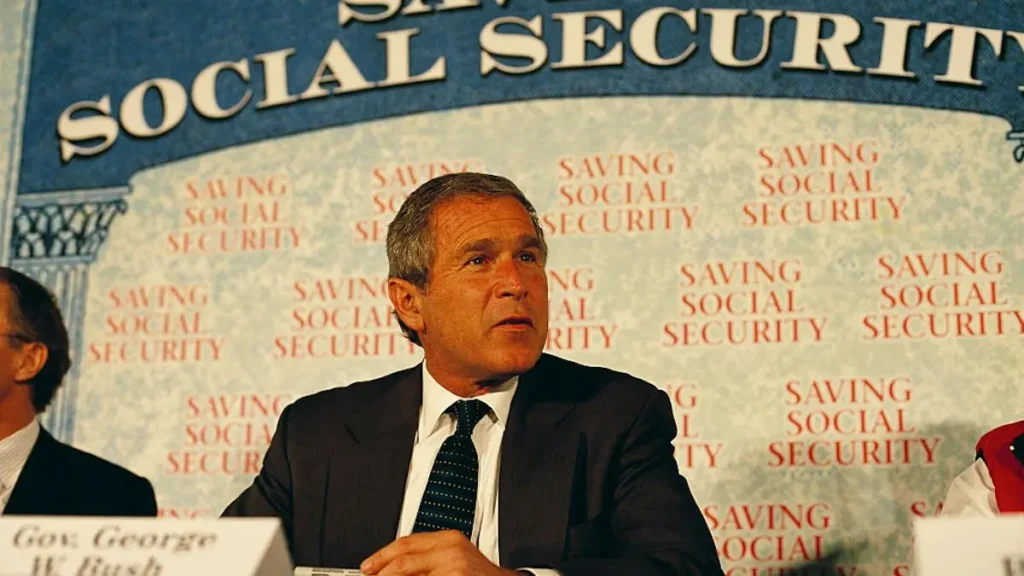
For years, Social Security has been considered a political third rail — any attempt to reform it is seen as a career-ending move. Yet, the last politician to run on Social Security reform won. And it wasn’t just any politician — it was George W. Bush, the 43rd president of the United States.
Reform Was Possible
Bush introduced his plan to privatize Social Security in his 2004 State of the Union address. The idea was to give younger workers the option to save part of their Social Security taxes into personal retirement accounts. He called it the “ownership society” — a vision where Americans would have more control over their retirement savings.
Bush made the plan a centerpiece of his reelection campaign, arguing that the current system was unsustainable and that reform was necessary for future generations. Despite opposition from Democrats and the media, Bush won the election and continued to push for reform. In his 2005 State of the Union, he reiterated his commitment to making Social Security a better deal for younger workers.
Public Support Remained High
According to a March 2005 Gallup poll, 92% of Americans were worried about the future of Social Security. Even by 2006, the number had risen to 94%, showing that public concern was not waning. Yet, despite this widespread support, Bush’s plan never made it through Congress.
Democrats, led by Harry Reid, blocked the reform effort, citing concerns about the impact on seniors and the need for bipartisan support. Meanwhile, public opposition grew as the political climate shifted. By the end of Bush’s second term, the focus had moved to other issues like Hurricane Katrina and the wars in the Middle East, and reform was put on hold.
Why Reform Stalled
Even though the public was united in its worry about Social Security’s long-term viability, the political will to reform it remained absent. The fear of taking on a powerful interest group — the AARP — and the lack of a clear legislative path made it difficult for any politician to take a stand.
Today, the debate over Social Security reform continues, but the political consensus remains that it’s too dangerous to touch. Yet, the example of Bush’s reform plan shows that it’s not impossible — and that the fear of political backlash may be the biggest obstacle to change.
Source: Daily Wire