Haley Stevens Defends Endorsement of Mike Rogers Amid Democratic Backlash
U.S. Rep. Haley Stevens defends her endorsement of Mike Rogers, facing criticism from Democrats for her shift in support.
4 min read
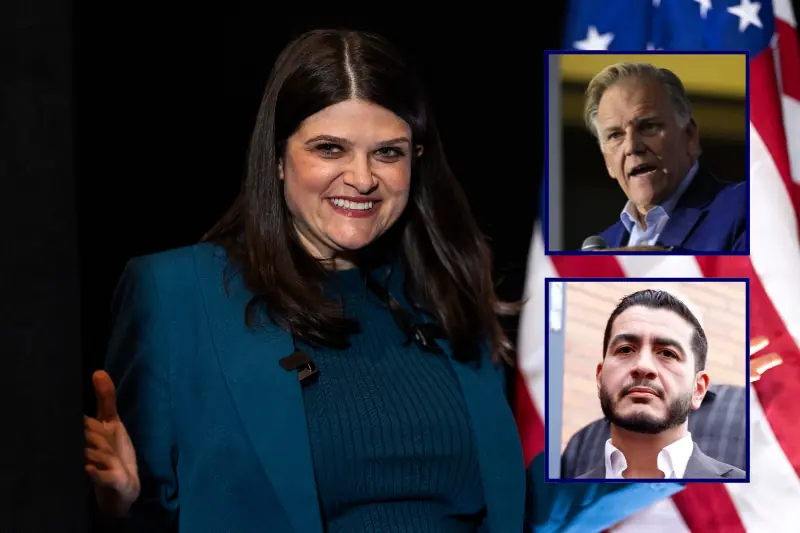
U.S. Representative Haley Stevens, who lost the Michigan Democrat Senate primary to Abdul El-Sayed, has publicly defended her decision to endorse Republican candidate Mike Rogers, despite backlash from Democratic leaders. In a detailed post on X, Stevens explained her rationale for the endorsement, emphasizing her commitment to the Democratic Party and her belief that the decision was rooted in her personal judgment rather than external influence.
Stevens, a lifelong Democrat, clarified that her endorsement of Rogers was not impulsive and was not made by anyone else. She reiterated her support for core Democratic values such as legal abortion, organized labor, fixed-rate utility bills, and universal health care. She also expressed her belief that endorsing El-Sayed after losing the primary would have prioritized party interests over the broader goal of moving forward together.
Disagreements with El-Sayed’s Campaign Ads
Stevens took issue with the content of El-Sayed’s campaign ads, which she argued were misleading and damaging to the Democratic Party’s image. She highlighted two specific ads: one that linked the cost of groceries to America’s support for Israel, and another that featured Tucker Carlson, a Fox News host known for his racist and anti-Black rhetoric. Stevens noted that these ads deeply hurt Black and Jewish voters, who were directly impacted by the messaging.
She also criticized El-Sayed for his association with Hasan Piker, a controversial online political commentator known for his divisive rhetoric about Jewish Americans. Stevens stated that El-Sayed’s decision to campaign alongside Piker raised serious questions about his judgment and ability to unify people. She called on El-Sayed to distance himself from Piker’s rhetoric, noting that while El-Sayed claimed to disagree with some of Piker’s comments, he ultimately excluded Stevens from his campaign events.
Rejection of Criticism on Fiancé’s Influence
Stevens also addressed criticism that her fiancé influenced her decision to support the GOP candidate. She dismissed such claims as “sexism dressed up as political analysis,” emphasizing that she made the decision independently. “I have my own views. I made this decision, and I am proud of it,” she asserted. She urged critics to respect her independence, regardless of their disagreement with her conclusion.
Concerns Over Democratic Party Response
Stevens expressed deep concern over the Democratic Party’s reaction to her endorsement, which she described as troubling. She noted that instead of engaging with her decision, some leaders rushed to condemn her, question her motives, and push her out of the party. She argued that this behavior reveals a deeper issue within the Democratic Party: the inability to tolerate dissent and the failure to foster an inclusive environment.
She warned that the party’s inability to handle disagreement internally would prevent it from fulfilling its promise to heal a divided country. “We cannot preach inclusion while punishing dissent,” she wrote. “We cannot promise to heal a divided country if we cannot tolerate disagreement among ourselves.” She emphasized that loyalty to the party should not come at the cost of abandoning one’s values and judgment.
Political Reactions and Responses
President Donald Trump, who has campaigned for Rogers in recent months, praised Stevens for her “bravery” and “loyalty” to the people of Michigan, especially its African American and Jewish populations. Trump’s support for Stevens underscored the growing political divide between the two parties and the impact of her endorsement on the broader election landscape.
El-Sayed, meanwhile, dismissed Stevens’s endorsement, stating, “I actually don’t think about Haley Stevens.” His response highlighted the tension between the two candidates and the deepening rift within the Democratic Party. Stevens’s decision to support a Republican candidate in a Democratic primary has not only sparked internal debate but also drawn attention to the broader challenges facing the party as it seeks to unite its base.
Implications for the Democratic Party
Stevens’s endorsement has raised important questions about the future of the Democratic Party. Her criticism of El-Sayed’s campaign ads and associations has highlighted the party’s struggles with internal cohesion and the risk of alienating key voter groups. Her defense of her decision underscores the growing divide between party loyalty and personal judgment, a dynamic that could shape the party’s strategy in the coming months.
As the midterm election approaches, Stevens’s actions have become a focal point for discussions about the Democratic Party’s ability to adapt and remain relevant. Her stance reflects a broader trend of internal dissent and the challenges of maintaining unity in an increasingly polarized political climate.
Source: OANN